
Home/Projects/Norcross hardwood floor water damage
Project · Norcross, GAWater Damage Under a Glued-Down Bamboo Floor
Water had worked its way under the bamboo floor of a Norcross home, through the bathroom, along the hallway and into the kitchen and entry.
One Stop Restoration traced the wet area with meters, lifted the flooring and opened the walls where the readings called for it, then sealed off the work area and dried the structure in place.
Why a Glued-Down Floor Hides Water
Water that gets under a glued-down floor does not stay where it started. It travels along the seams and the adhesive bed, out of sight.
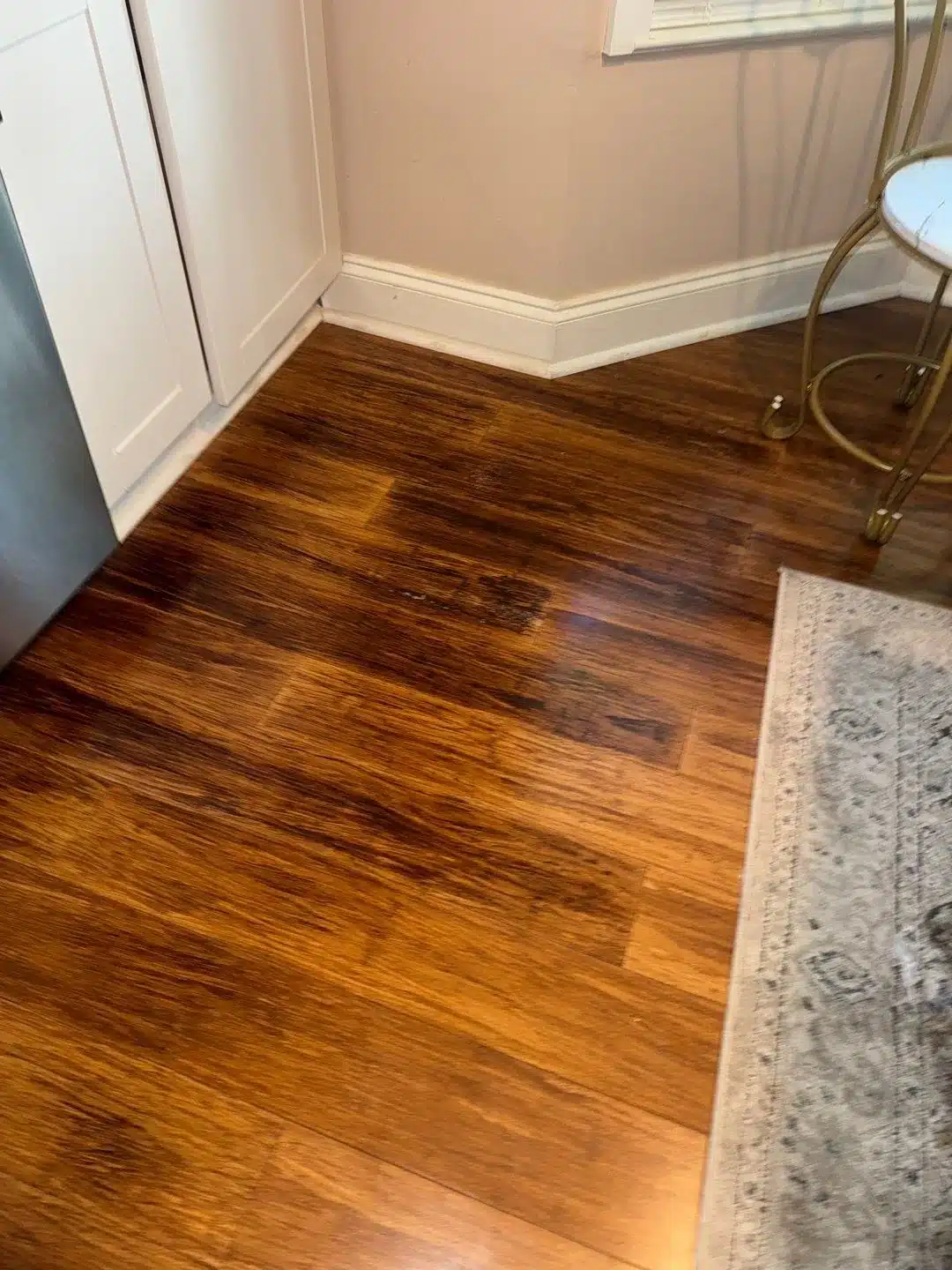
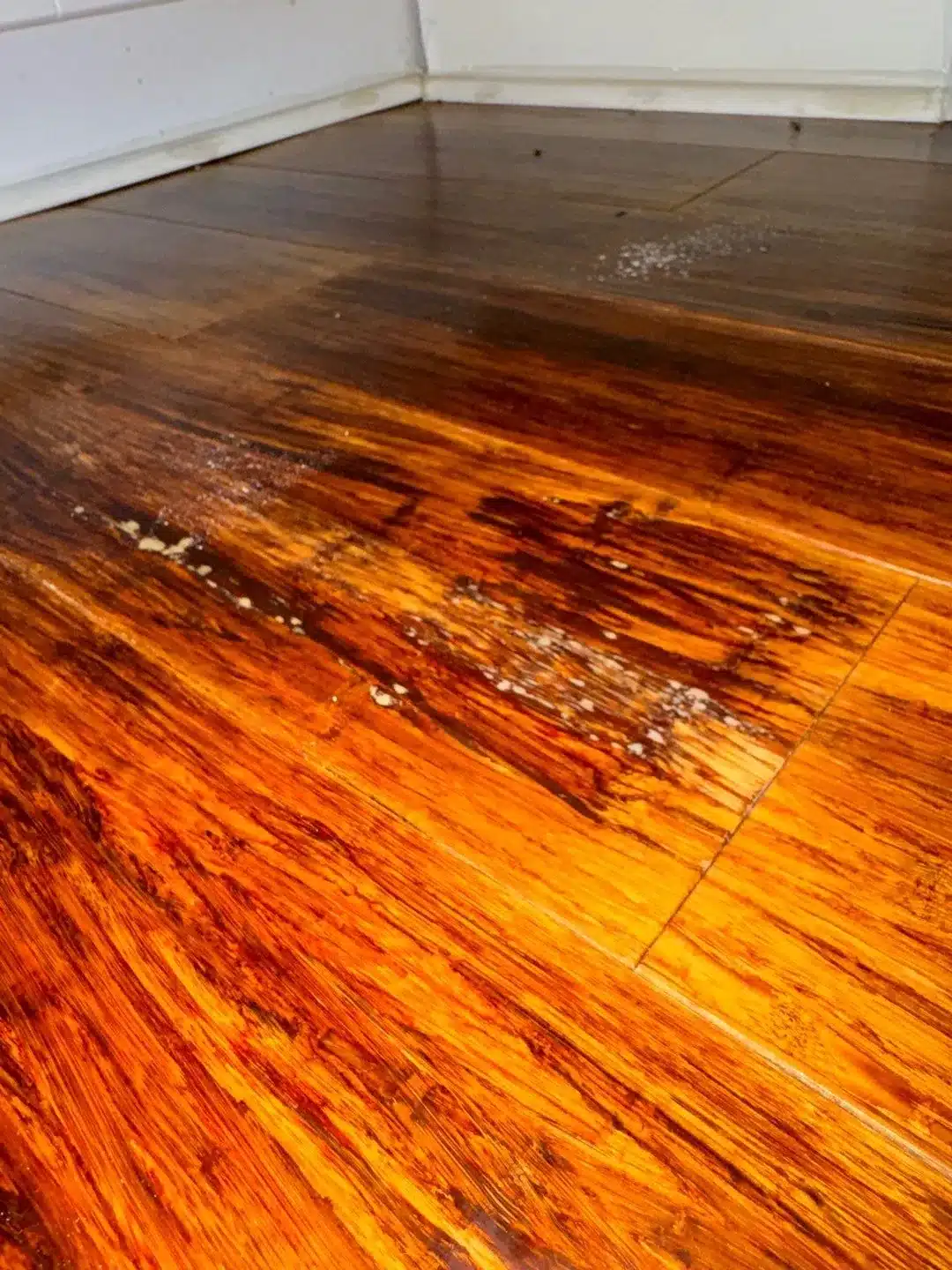
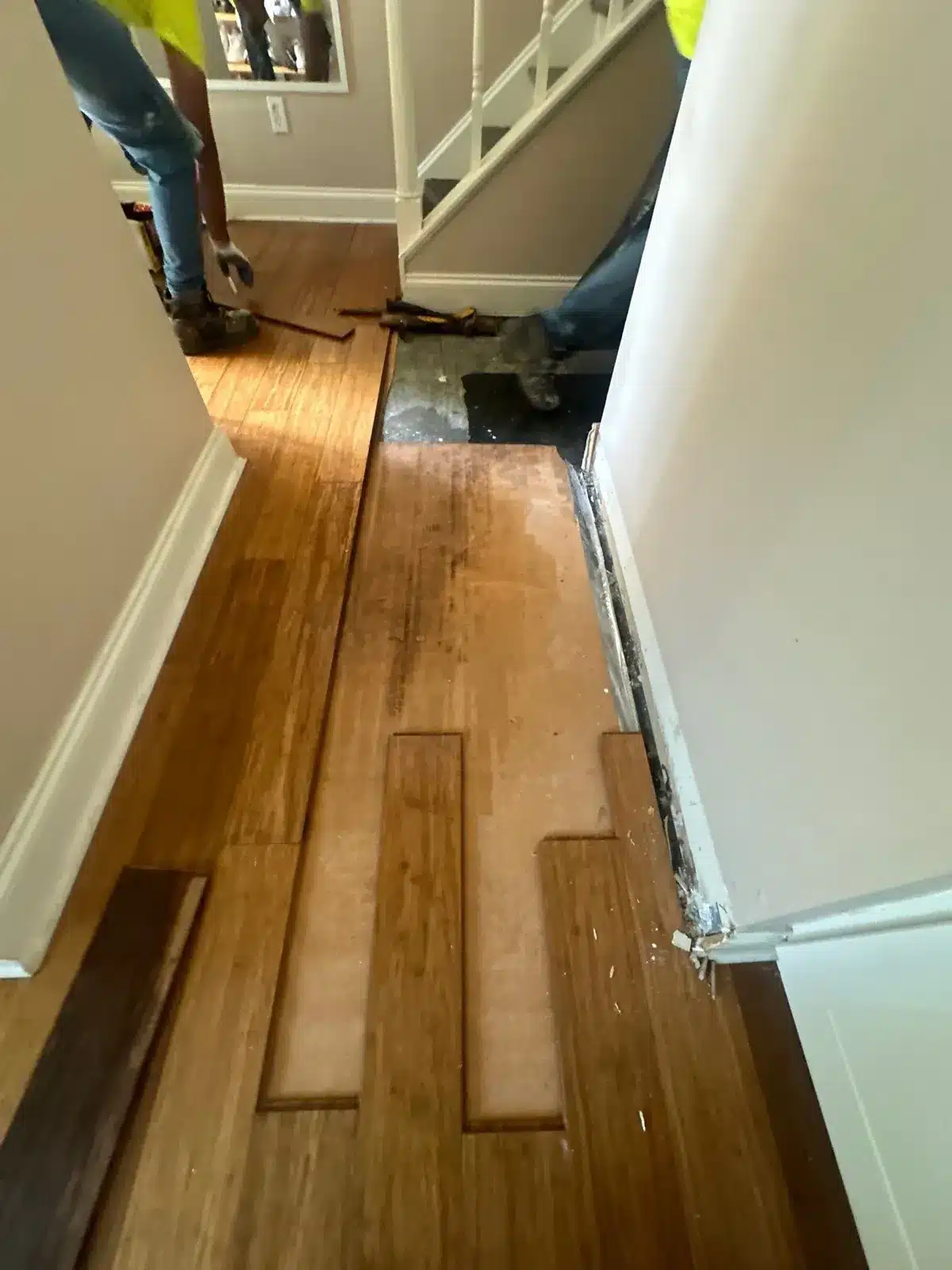
This home had a glued-down bamboo floor running through the bathroom, hallway, kitchen and entry. By the time the damage showed on the surface, the planks had darkened and the finish had started to lift well away from the bathroom, along the lines the water had followed underneath.
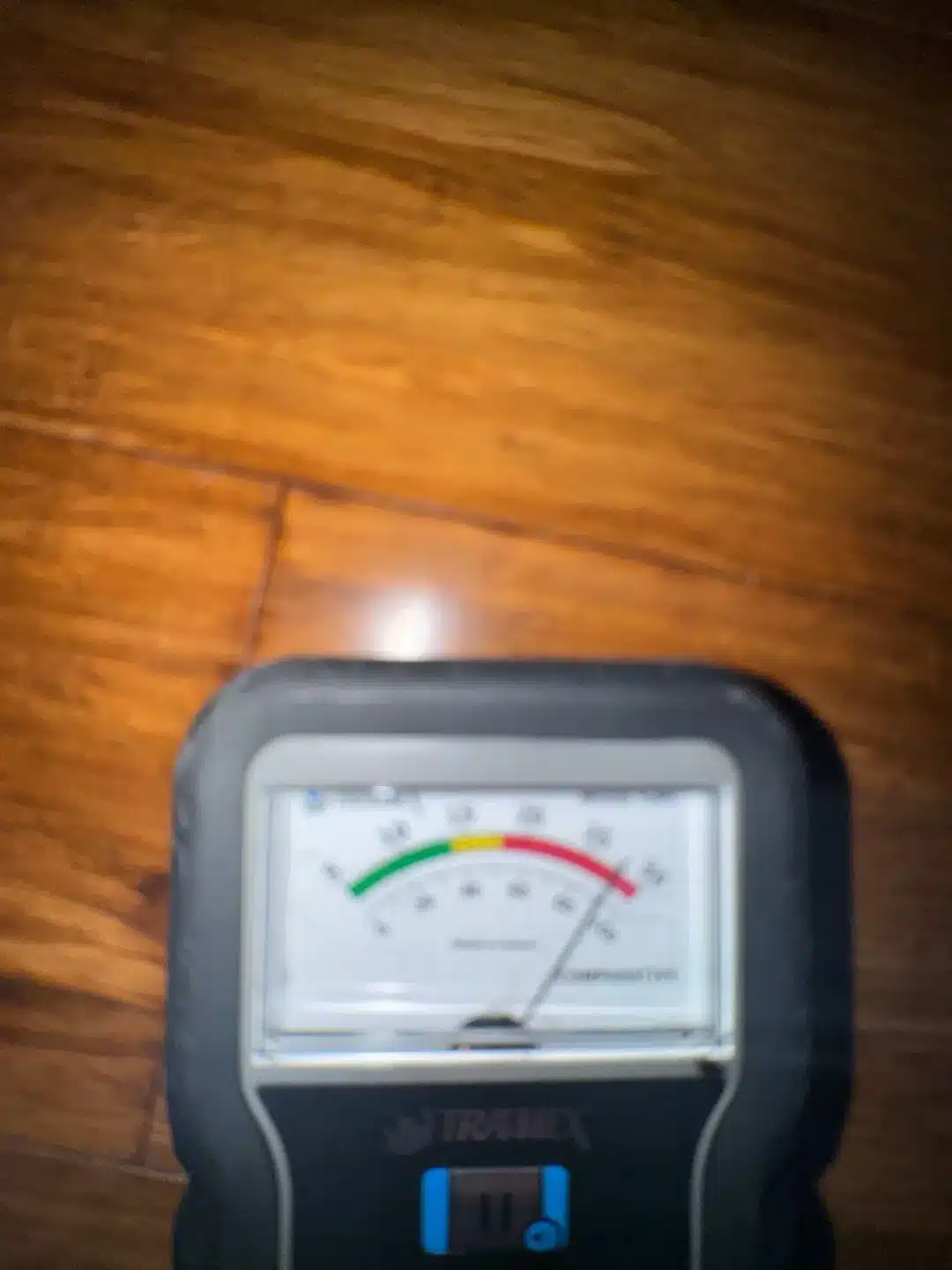
Surface readings only tell part of the story on a floor like this. We took meter readings across the planks before anything was lifted, then followed the wet readings room by room to set where removal would start and stop, rather than judging it by the visible staining. That approach is laid out on our moisture detection page.
Removing Only What the Readings Marked
Glued-down planks that have taken on water do not dry back flat. Leaving them in place traps moisture against the subfloor.
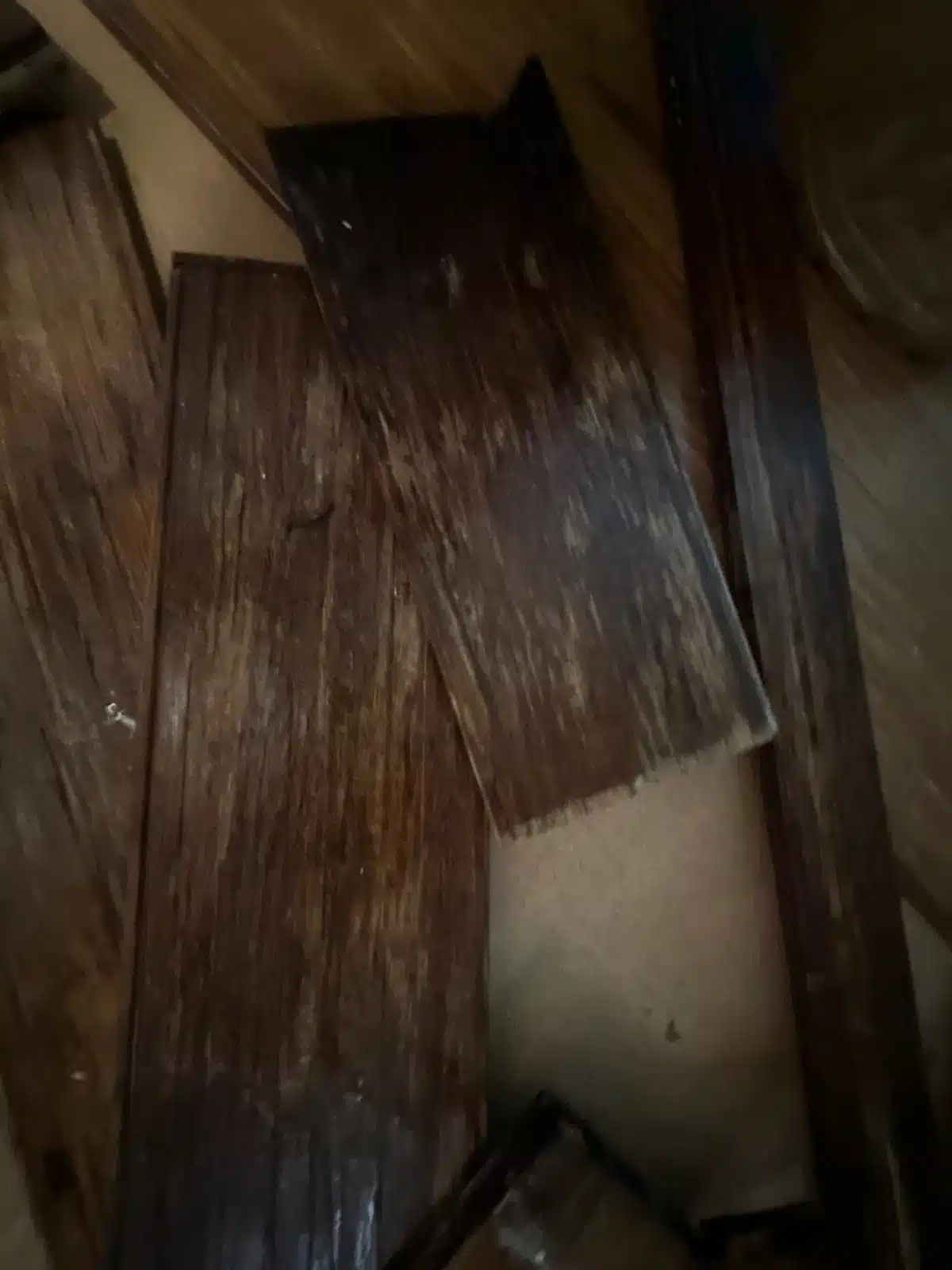
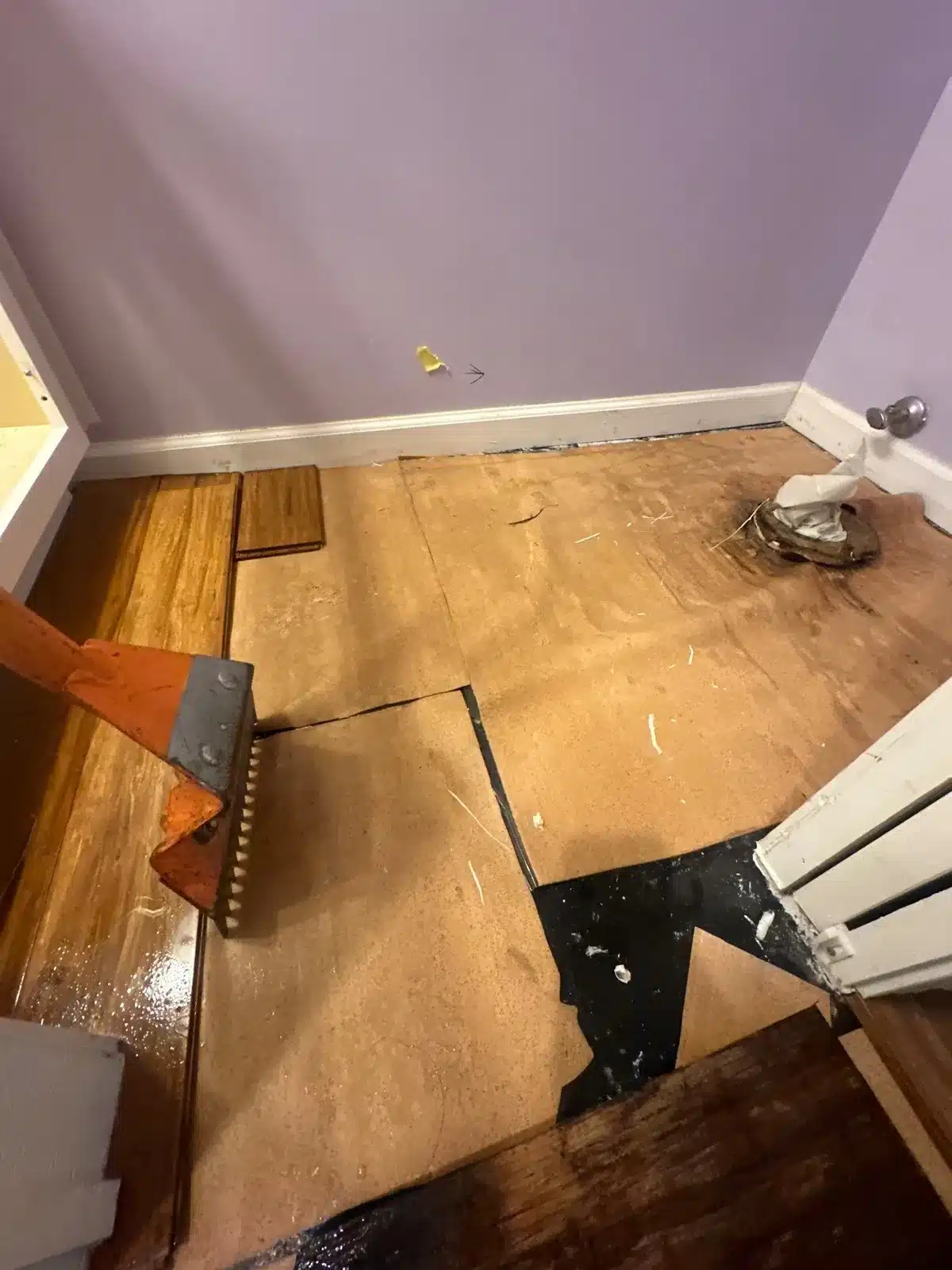
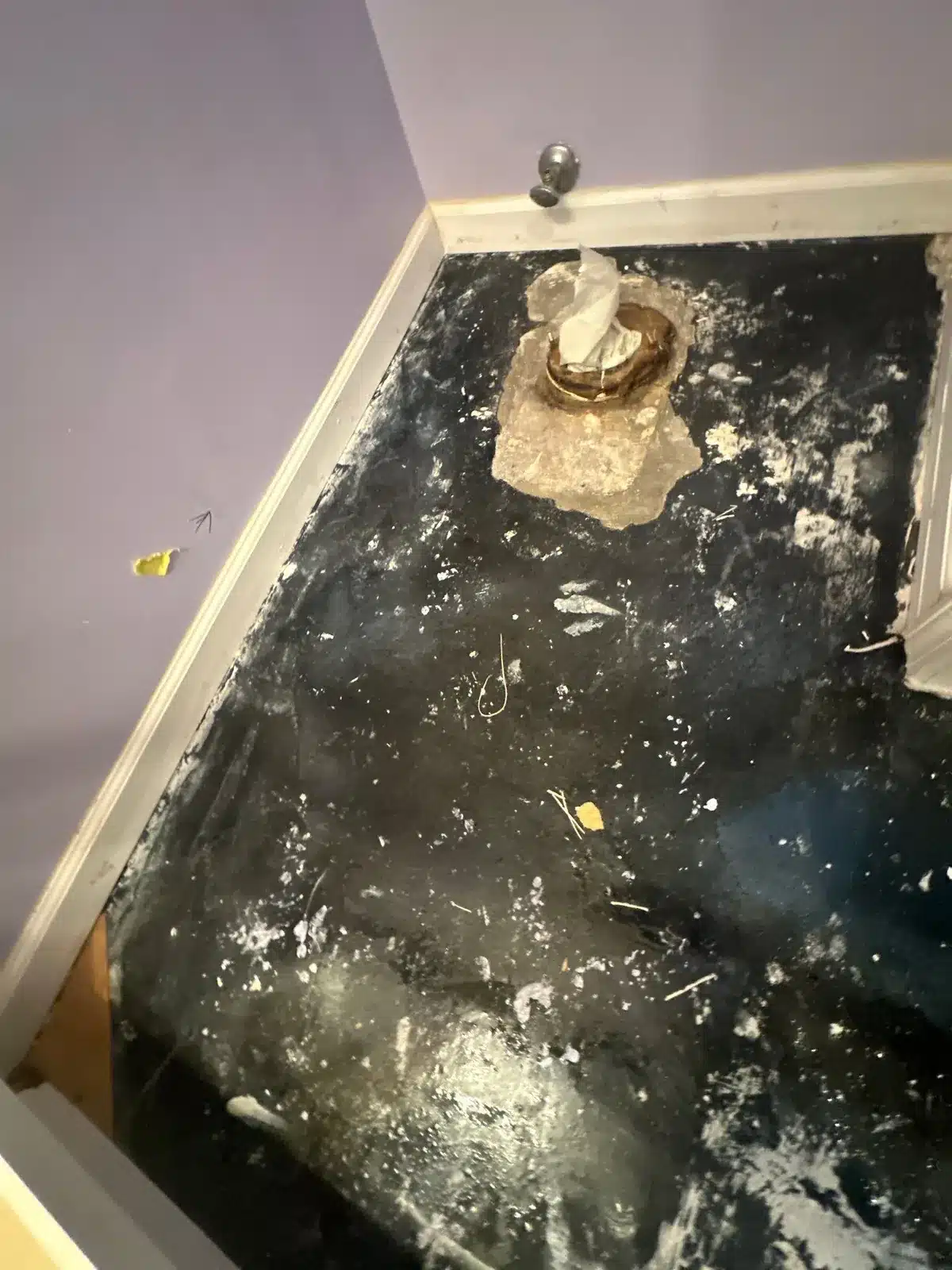
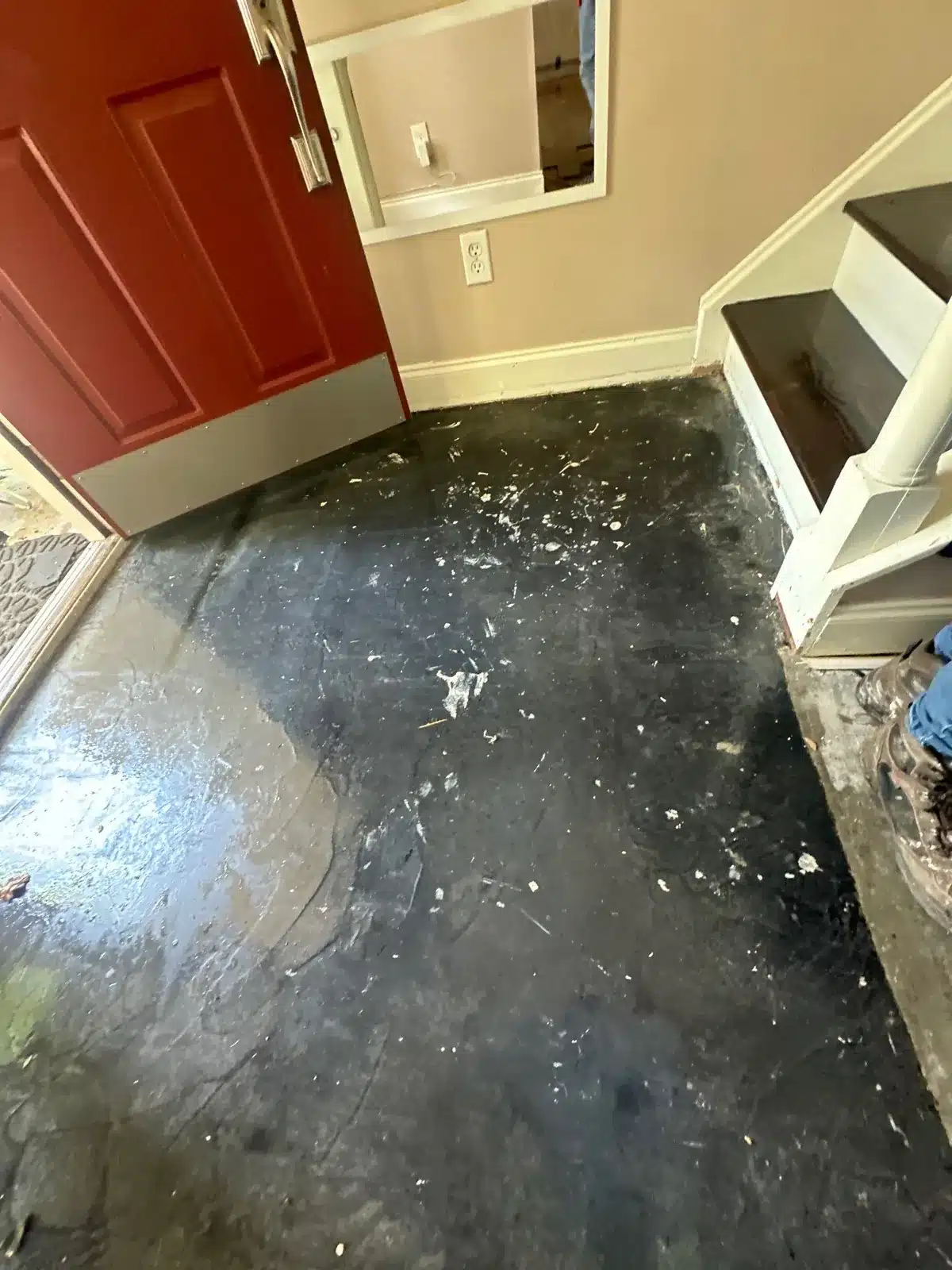
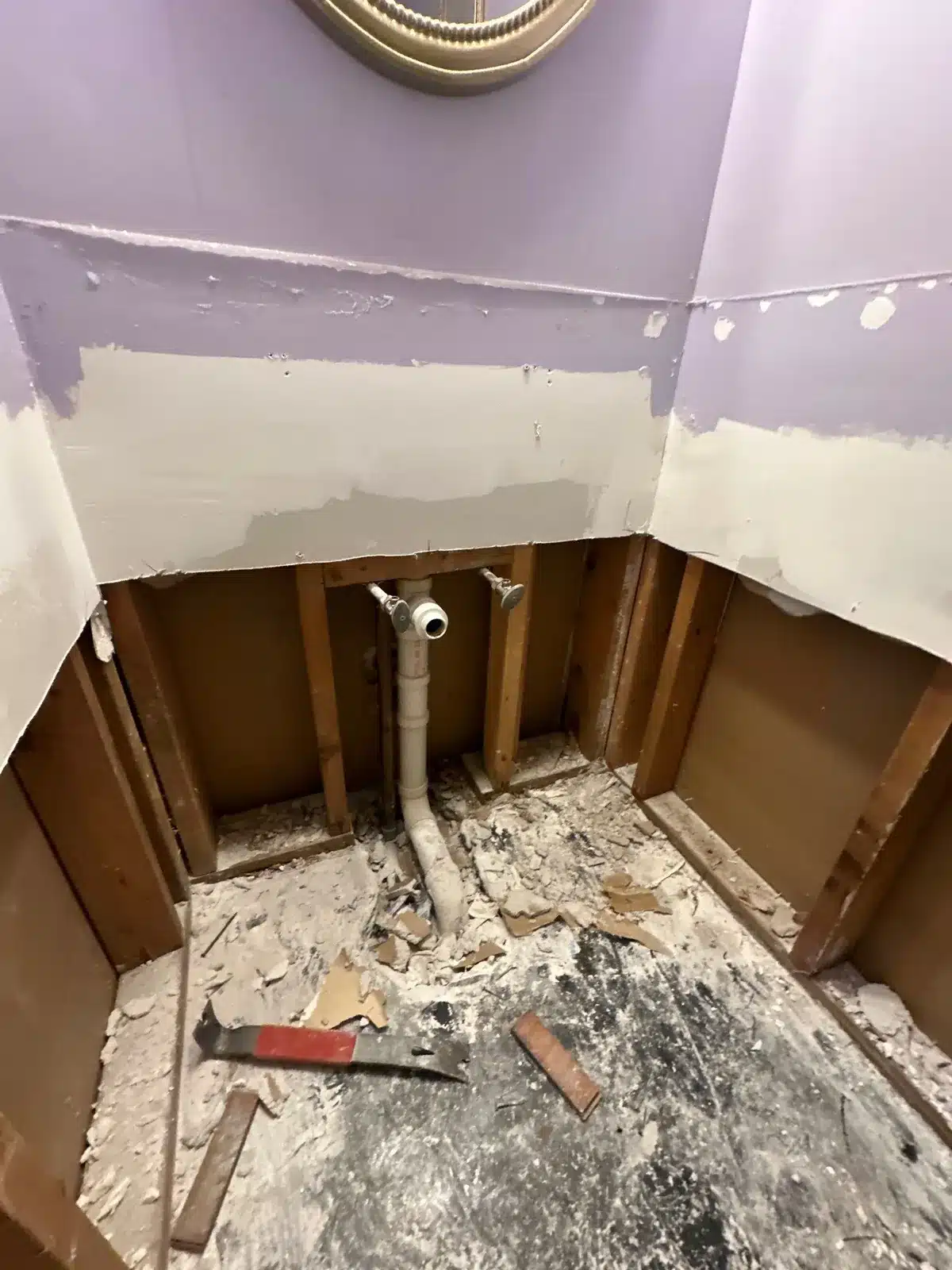
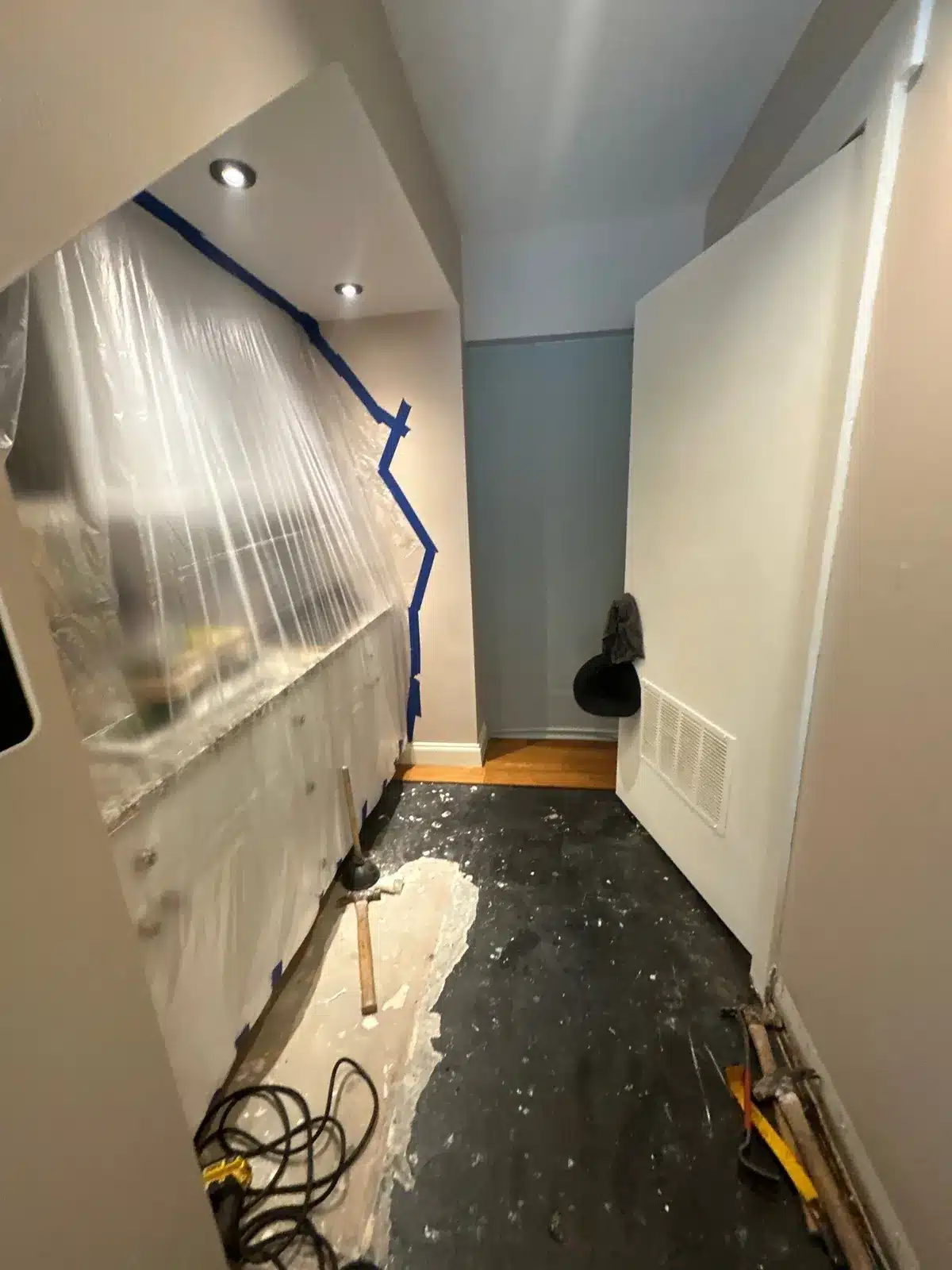
We lifted the wet planks in the bathroom, along the hallway toward the stairs and through the entry, taking the floor down to the subfloor so it could dry. The bathroom was cleared first: the toilet came out and the flooring was stripped back to bare subfloor, leaving only the old adhesive.
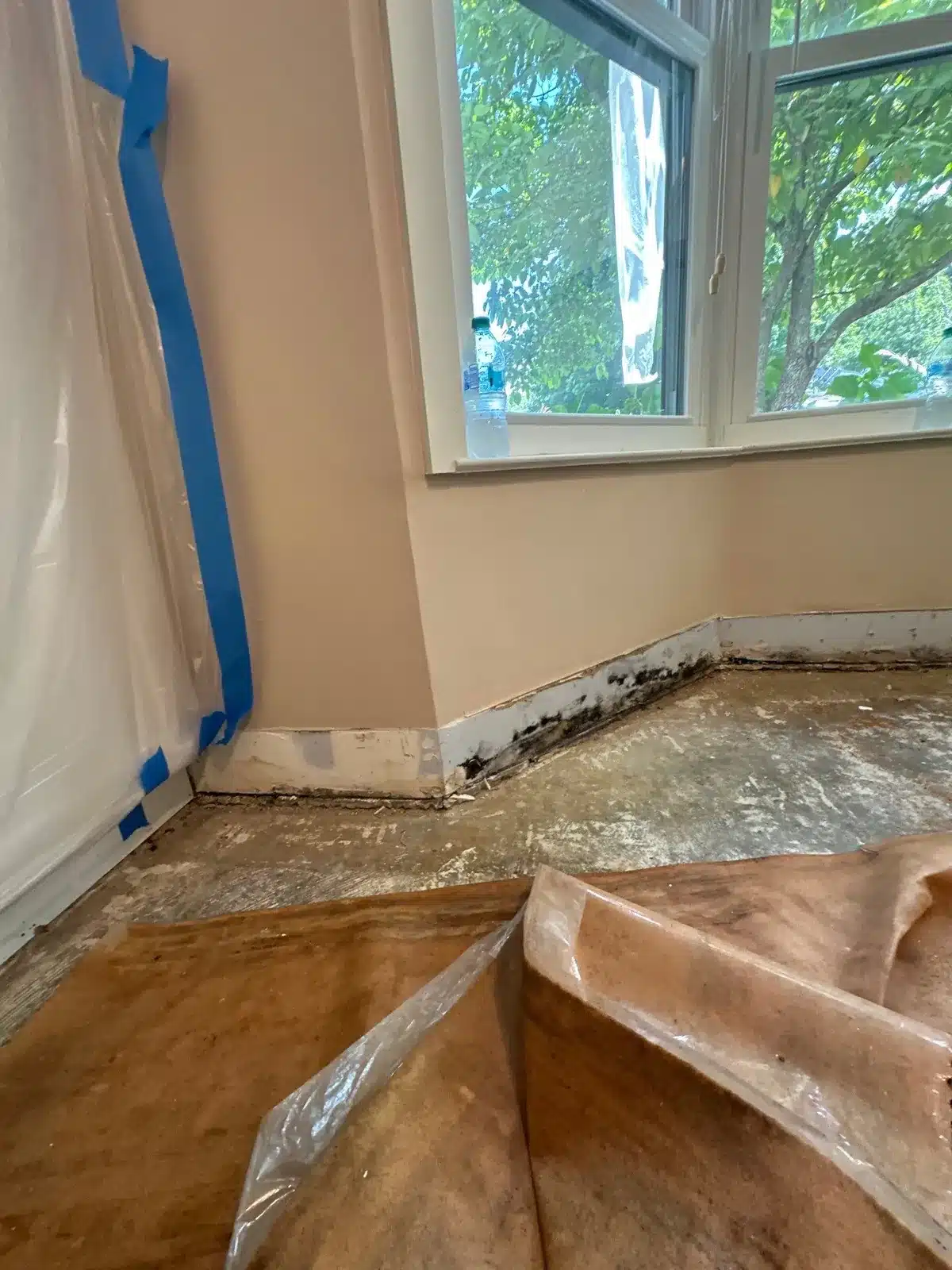
In the bathroom the water had also wicked into the wall. The vanity was removed and the lower drywall cut out to open the cavity, so the framing and the drain line behind it could dry instead of holding moisture behind the finish. Baseboards came off along the wet run for the same reason.
Sealed Off and Dried in Place
The work area was closed off from the rest of the house before drying began.
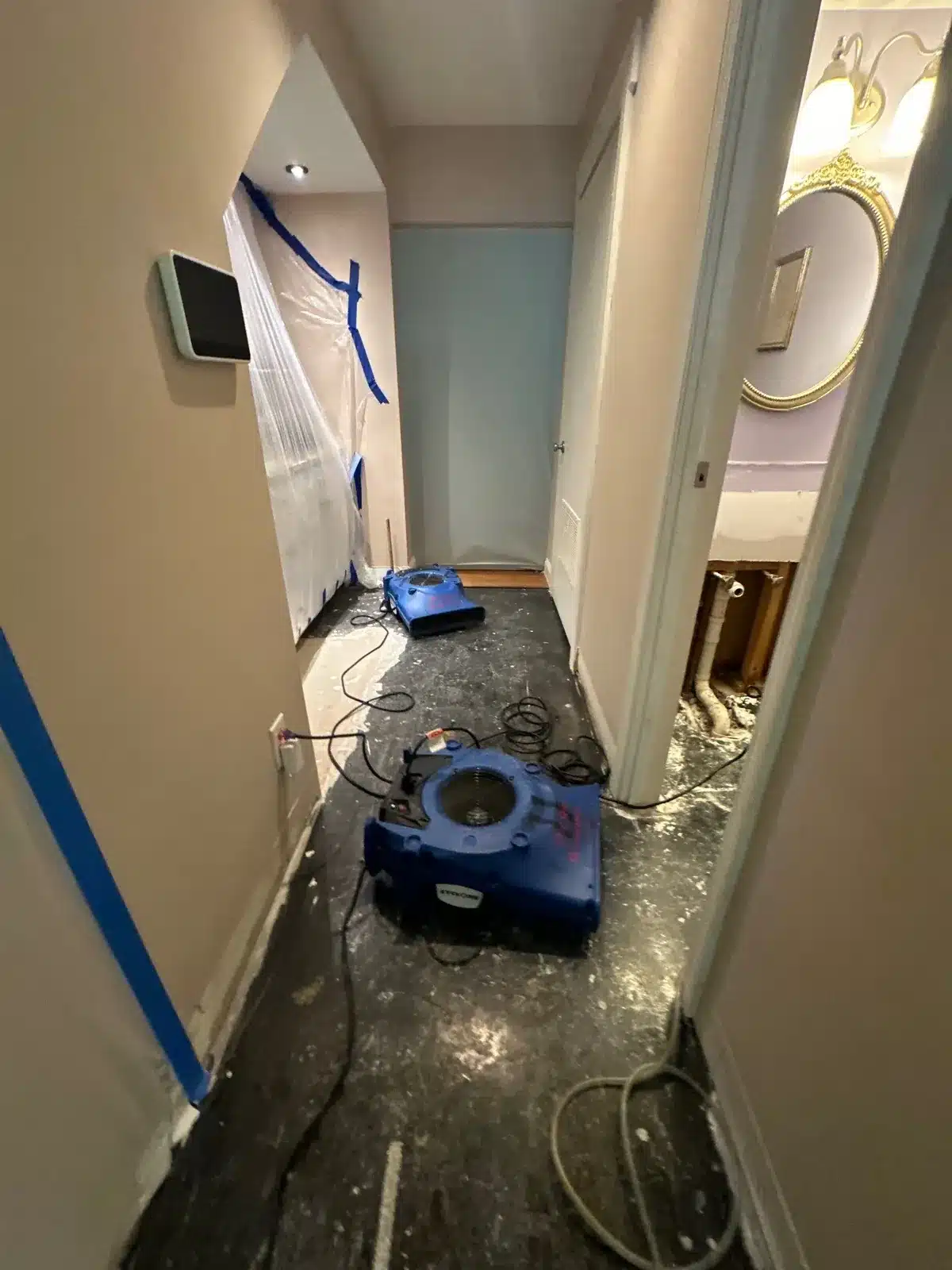
Plastic sheeting and tape sealed the hallway and the affected rooms from the rest of the house, keeping dust from the tear-out on the work side. Air movers then ran across the exposed subfloor and the opened walls, with readings retaken until the materials reached their dry standard.
Drying before any rebuild is the step people most often want to skip, and the one that decides whether the damage comes back. The reason it is a separate phase is explained in our mitigation vs restoration guide. Once the structure is dry, new flooring, drywall and trim can go back in, and our reconstruction team handles that under the same contract when the homeowner wants it.
Full Project Gallery
Twelve frames from the same job, in order: the readings and damage we found, the tear-out, then the sealed and drying work area.
Services Used on This Job
Floor Darkening or Lifting?
Call 404-777-7077 to arrange an assessment.
Staining or cupping on a wood floor usually means water is already underneath it. Tell us where you see it and we will map the floor with meters before anything is lifted.
For non-emergency questions, email info@onestop-restoration.com.
24/7 dispatch
Peachtree Corners base, on the I-285 corridor.
- 404-777-7077Answered by a live professional, 24 hours a day
- info@onestop-restoration.comFor non-emergency questions
- 6699 Peachtree Industrial BlvdPeachtree Corners, GA