Moisture Detection & Leak Tracking in Greater Atlanta
Finding hidden water requires hard data, not visual guesswork. We dispatch diagnostic crews 24/7 from our Norcross headquarters. Crews are dispatched the moment you call, and our Norcross base keeps most of Inside the Perimeter (ITP) within a short run.
Hard data, not visual guessworkEvery reading logged before a wall is opened.
Hidden Moisture Located, Mapped, and Logged Before Walls Open
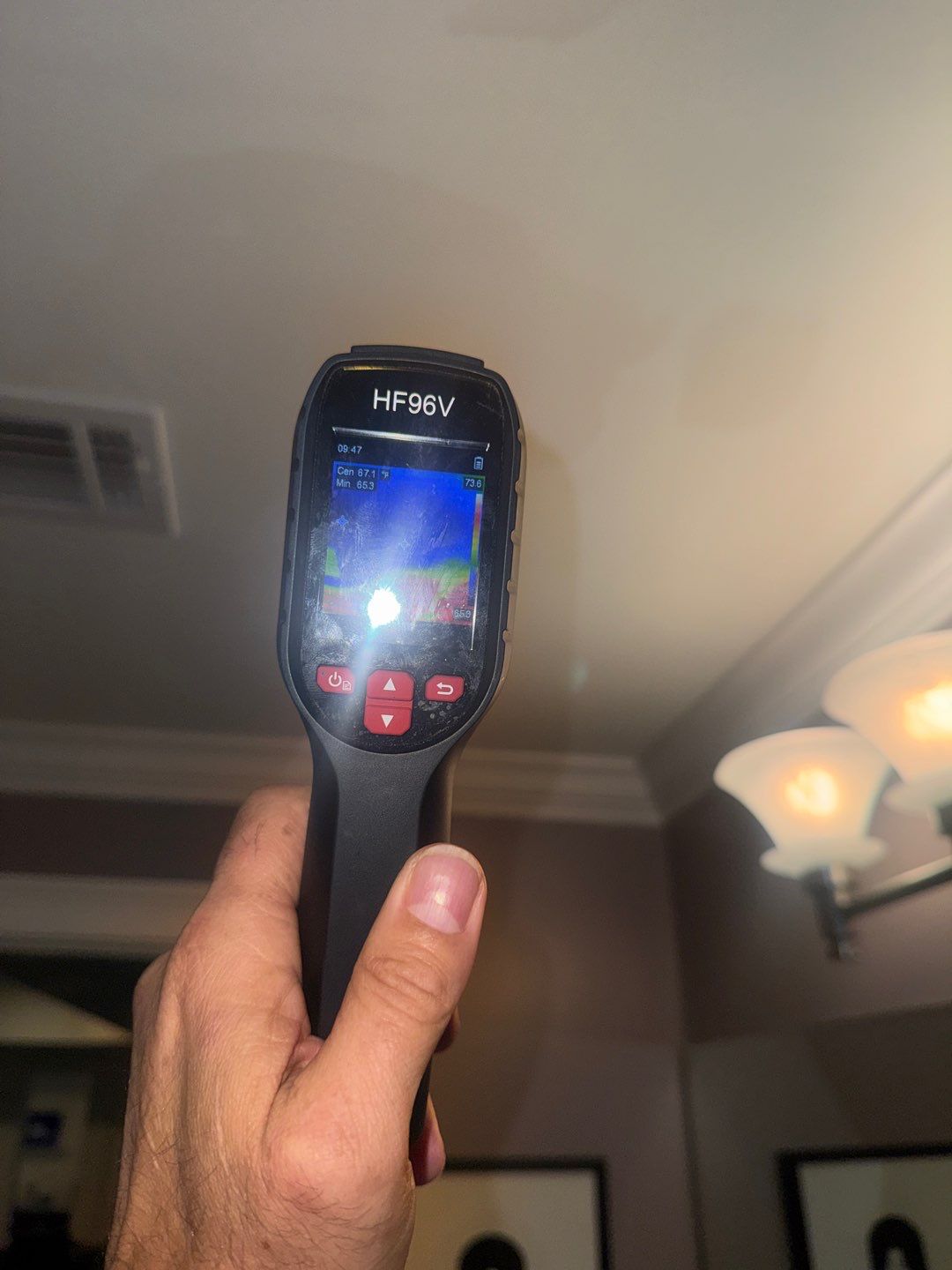
LocatedInfrared finds the anomaly a visual check cannot.
MappedPin, pinless, and infrared readings remove the guesswork.
LoggedYou get the documented map before we leave the property.
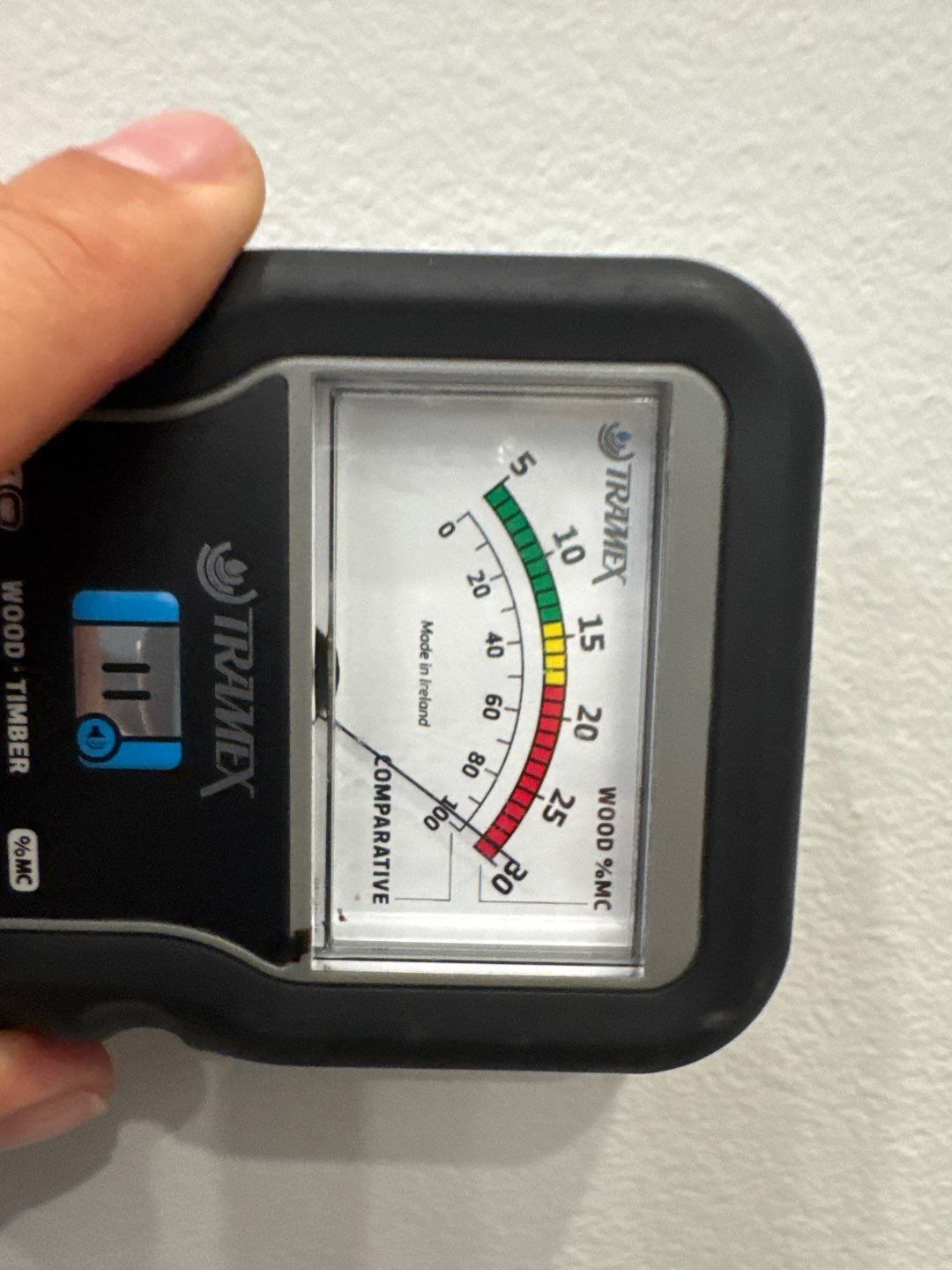
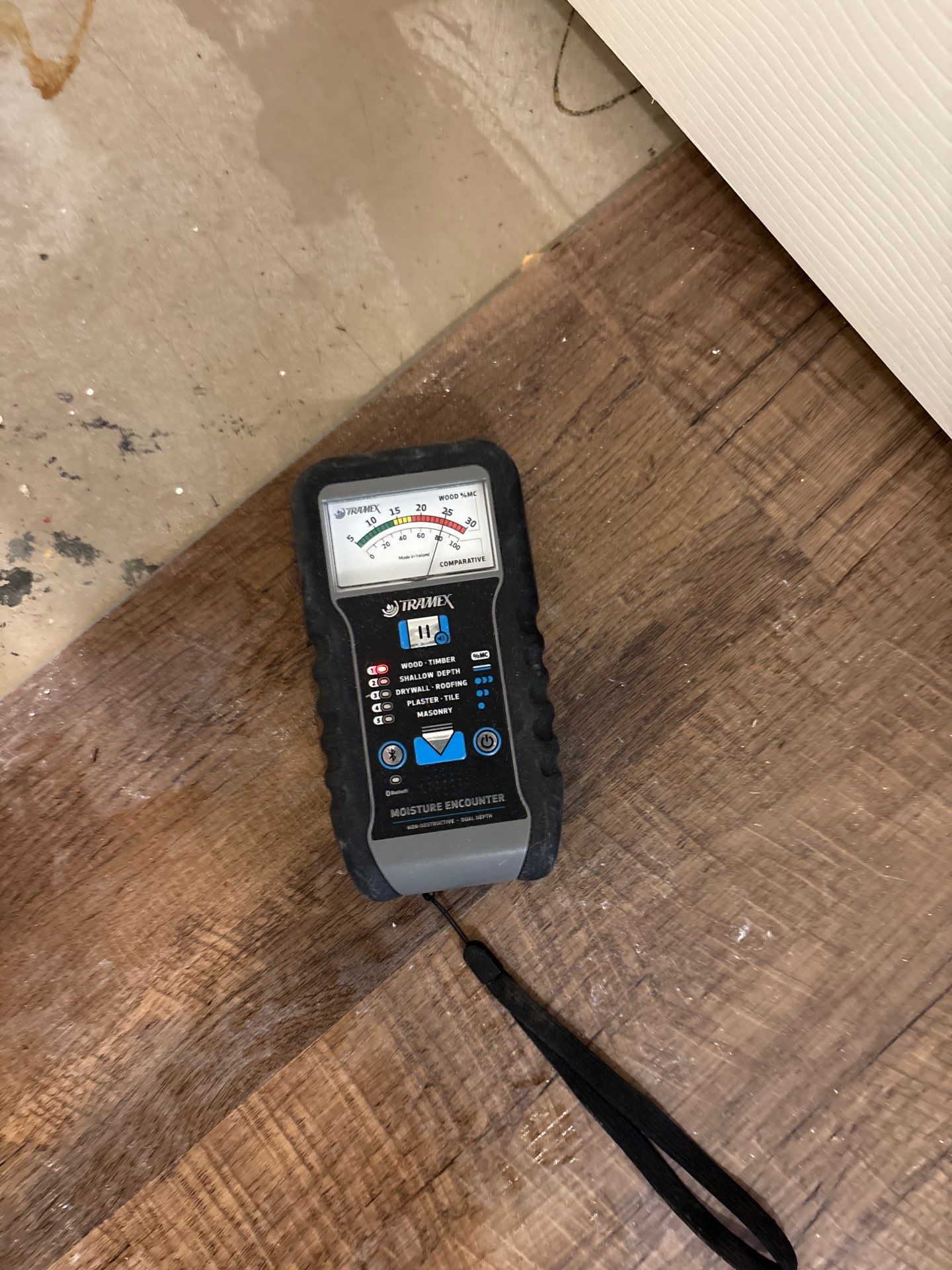
Three instruments, no cuttingPin, pinless and infrared each read something the others cannot.
What Moisture Detection Covers That Visual Inspections Miss
Professional moisture detection finds water trapped inside building materials that look completely dry.
A wall can feel perfectly dry to the touch. The paint can look absolutely flawless. The floor may show zero warping. Yet a massive pocket of trapped moisture can still sit inside the wall cavity.
We encounter this situation constantly after a cheap repair is made. Visual inspection only tells you what the surface shows. It tells you absolutely nothing about what is happening behind the drywall.
None of these three instruments require us to needlessly cut open walls.
The three instruments we scan with
Instrument
What it reads
Why it is on the truck
Pin-type meter
Actual electrical resistance at depth
Two conductive pins penetrate the surface. Wet material conducts electricity entirely differently than dry material.
Pinless meter
Moisture across large areas, via radio frequency
Screens large areas incredibly fast without causing any surface damage.
Infrared camera
Surface temperature differences
Wet materials lose heat differently. Thermal cameras show hidden moisture pathways as dark, cool zones.
Atlanta's Humidity and Secondary Moisture Pockets
In Atlanta, a moisture pocket left inside a wall rarely dries naturally.
Atlanta's outdoor humidity constantly averages 80 percent. Drying requires the surrounding air to be significantly drier than the wet material. When ambient humidity is this high, the natural drying gradient is simply too small to work.
A secondary moisture pocket is a contained area of elevated moisture. In a dry climate, it might safely evaporate. In Atlanta, it aggressively feeds toxic mold growth instead.
This is exactly why post-repair mold recurrence happens constantly. The original visible repair was addressed. The secondary moisture pocket was ignored because nobody officially measured for it.
Atlanta's red clay soil actively compounds this problem. Clay holds heavy moisture against foundations for days after a heavy storm.
80%Average outdoor humidity across the metro
18inTypical height of the highest reading up a stud
1–2 hrsA full residential moisture scan
The gradient is too small to dry naturallyIn Atlanta a trapped pocket feeds mold instead of evaporating.
Highest reading, eighteen inches upThe visible damage sits at the baseboard. The water does not.
Scanning Atlanta Homes After a Visible Repair
The most common pattern in Intown Atlanta involves the thermal stack effect.
In historic neighborhoods like Kirkwood and East Lake, warm, wet air from a leak moves straight upward inside a wall cavity. We frequently get a perfectly clean reading at floor level, then a highly saturated reading eighteen inches up the wall stud. The visible damage sits at the baseboard. The highest moisture content actually sits trapped in the middle of the wall.
In post-1960 slab-on-grade homes, the hidden pattern completely differs. Water migrates laterally under the slab surface, spreading horizontally until it finds a crack to come through.
We test the room where the slab leak was reported and often find clean readings. We test two rooms over, where the homeowner never suspected, and find saturated framing.
Every single reading we take goes directly into a strict location log. This precise map dictates our exact demolition scope. We never guess where to cut.
I have walked hundreds of Atlanta homes where a prior repair was supposedly handled. Paint was fresh. My meters told a totally different story.
Documenting Claims Under Georgia Bad Faith Laws
A precise moisture map is your ultimate evidence file for complex insurance claims.
The moisture map is a date-stamped grid of every reading taken, strictly organized by room, wall section, and exact depth. It explicitly shows the insurance adjuster where moisture is elevated and where it stops.
This critical document defines a precise, data-driven demolition scope, so we only open walls where water actually sits. It also serves as the absolute foundation of your insurance claim: your adjuster uses this hard baseline to authorize the full mitigation scope.
Policyholders in Georgia are heavily protected by state law. Under O.C.G.A. § 33-4-6, insurance carriers face massive financial penalties for acting in bad faith. If an insurer unfairly denies or delays your claim, this hard moisture data provides absolute proof of loss.
Testing Older Materials Before Demolition
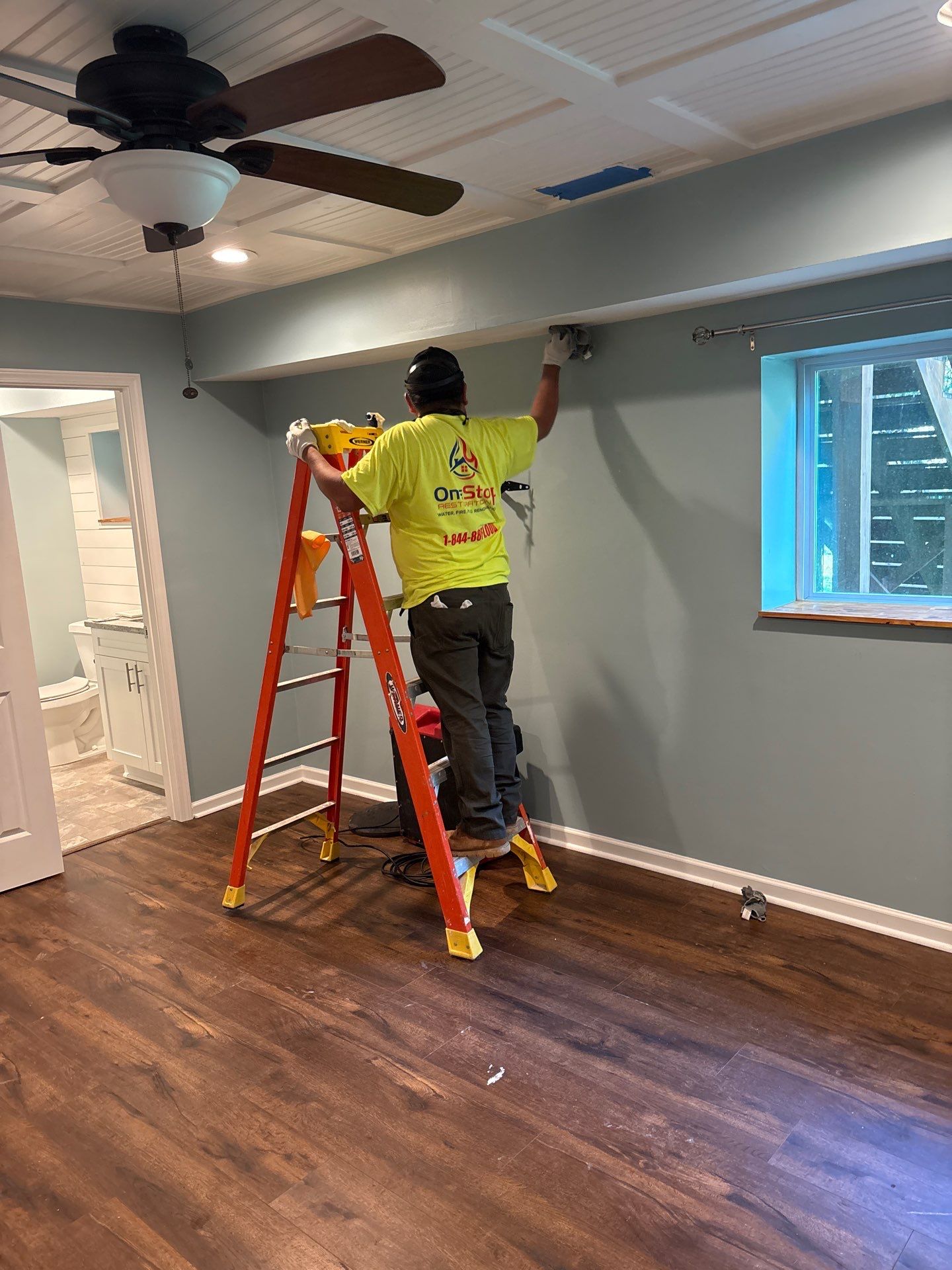
Once the moisture map is built, saturated structural materials must be safely removed.
On older properties, an independent testing firm checks building materials before any tear-out begins. We cannot simply tear open wet walls without checking first.
Where material needs specialist removal, a licensed abatement contractor handles it, and we schedule our work around theirs.
Data-driven demolition prevents us from tearing out dry, unaffected drywall. Getting that sequence right up front keeps the job compliant and on schedule.
How We Track Hidden Water Step-by-Step
Our detection process combines highly specialized tools in a strict sequence. Each instrument does something the others cannot.
No single instrument does all of this. This exact combination totally removes the expensive guesswork.
Infrared scanning
We run thermal cameras across all walls and ceilings to identify cold temperature anomalies.
Pinless RF metering
We rapidly screen large floor areas using radio frequencies to flag elevated subsurface moisture.
Pin-type metering
We penetrate the surface material at specific depths to get exact percentage readings.
Leak source identification
We strictly trace the highest readings backward to accurately pinpoint the exact point of origin.
The Moisture Detection Sequence Explained
The strict detection sequence runs from surface screening to a fully documented map.
Step one
Initial thermal walkthrough
We start with a targeted walkthrough of the affected area. Infrared scanning runs completely across the walls, ceilings, and floors.
We accurately note every thermal anomaly on a digital room diagram. We never blindly open walls at this stage.
Step two
Exact instrument testing
Pinless meters comprehensively screen all flagged floor areas. Pin meters then test every specific wall zone flagged by the thermal scan.
All readings are rigorously logged by room location, height, and instrument type.
Step three
Post-detection map delivery
We compile all hard readings into a final moisture map showing the exact moisture gradient across the tested property.
If the scan is identifying an active leak, this map strictly defines our demolition scope. You receive the map before we leave the property.
Leak Tracking Across the Greater Atlanta Metro
One Stop Restoration strictly covers the full Greater Atlanta metro. We have absolutely no minimum job size for a moisture scan.
Buckhead
Midtown
Decatur
Tucker
Alpharetta
Roswell
Johns Creek
Canton
Woodstock
We dispatch immediately from our Norcross headquarters and cover the eastern corridor through Gwinnett County.
Smell Something Musty After a Repair? Call Us Now
Hidden moisture becomes a severe toxic mold problem fast in Atlanta.
If you had a repair done and the smell returned, your house is still wet. The previous repair only addressed what was totally visible. The hidden water is actively destroying your framing.
Call One Stop Restoration at 404-777-7077 right now. We answer our dispatch line 24 hours a day, every day.
We will map every reading and give you a documented baseline. You will know exactly what is wet and what happens next. For non-emergency inquiries, email info@onestop-restoration.com.
Can a moisture meter find a plumbing leak behind my drywall?
Yes. We use advanced infrared thermal imaging cameras and pinless radio-frequency moisture meters. These tools visually detect temperature shifts and moisture pockets behind the drywall without making a single cut. We only recommend opening the wall when the hard data proves trapped water exists.
Does homeowners insurance cover professional moisture detection?
Yes. If diagnostic leak tracking is required to find the source of a covered peril, your homeowners policy usually covers it. We submit the thermal images and the date-stamped moisture map directly to your adjuster. This immediately provides the undeniable proof they need to approve the claim.
What is a thermal stack effect in a flooded wall?
Warm, damp air naturally rises. When a pipe leaks at the base of a wall cavity, the humid air rises up the wall stud. It absorbs into the higher drywall. You may only see damage near the baseboard, but our meters find the highest moisture concentration much higher up.
How long does a professional moisture detection scan take?
A full structural moisture scan typically takes between one and two hours for a standard residential property. The exact timeline depends entirely on the square footage and how far the water migrated beneath the flooring. You receive the documented results before we leave the property.
Can you track a leak hidden beneath my concrete slab?
Yes. Slab leaks are incredibly common in post-1960 Atlanta homes. Water migrates laterally beneath the concrete before surfacing. We use highly calibrated thermal imaging and moisture meters to pinpoint the exact perimeter of the trapped water beneath the floor.