
Home/Water damage restoration
24/7 Water Damage Restoration in Greater Atlanta
When a pipe bursts or floodwaters rise, every minute counts. We dispatch our emergency crews 24/7 from our Norcross facility. Crews are dispatched the moment you call. Our Norcross base keeps most of the metro within a short run.
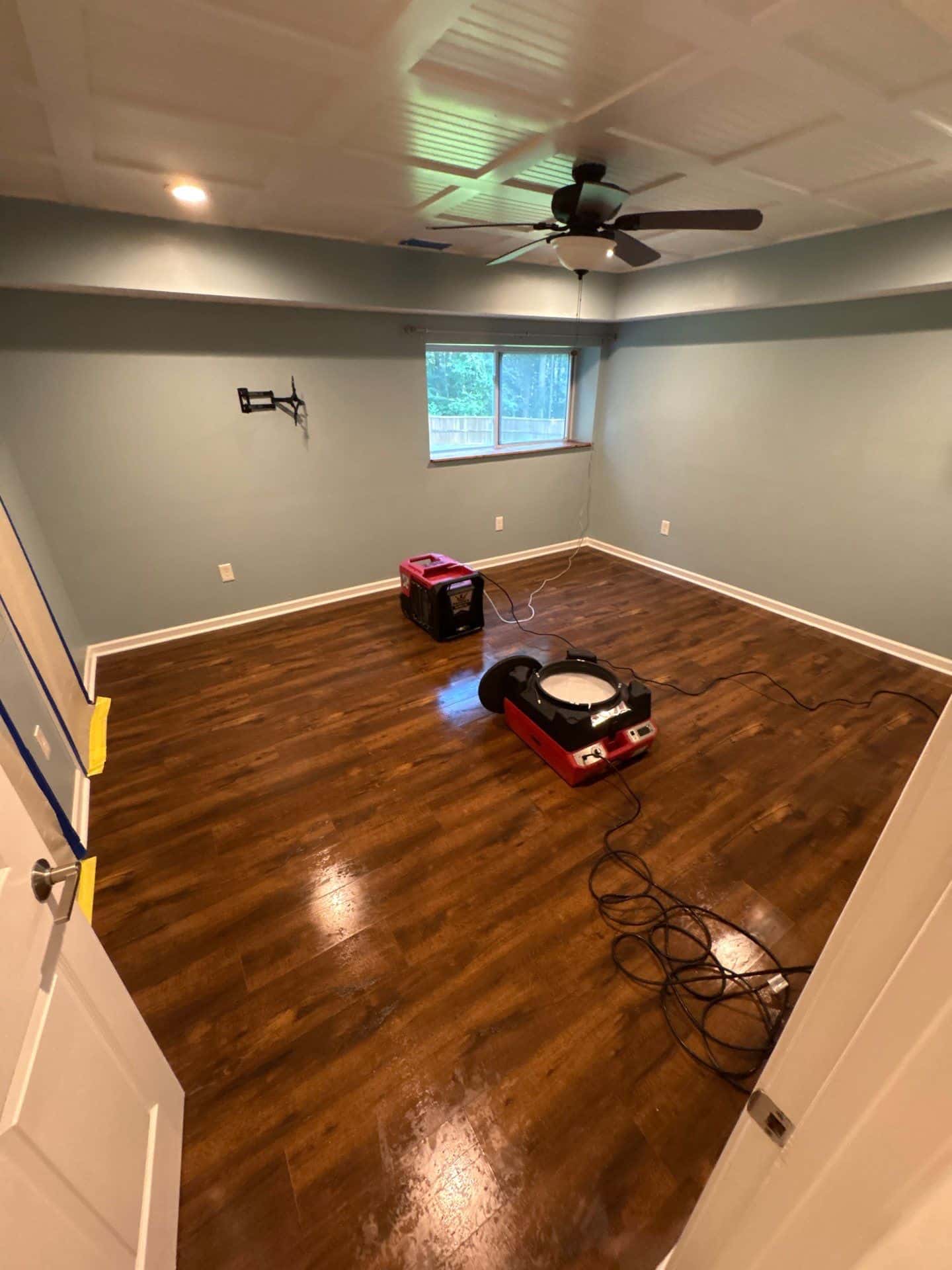
Dry Structure, Documented File, Single Atlanta Crew
What Professional Water Damage Restoration Covers
Water damage repair means removing water, drying the building, and logging every detail.
Pumping out standing water is only the first step. The real danger hides inside your walls and under your subfloors, where water moves silently into dark structural cavities.
We strictly follow the IICRC S500 Standard. This peer-reviewed protocol dictates every step we take to target visible pools and hidden moisture.
We also handle full structural reconstruction if your property requires it. One company. One direct point of contact. Every phase covered. Backed by 15 years of family-owned experience, Nate Simon leads this team to provide exactly this standard.
-
Extraction
Standing water off the property first, before it gains more hours to travel.
-
Drying the framing
High-velocity air movers and dehumidifiers placed against the structure itself.
-
Grid-based moisture logs
Thermal cameras record exact water depth across a mapped grid, not a guess.
-
Full reconstruction
If the property needs rebuilding, the same contract carries it through.
How long you actually have
Time from a material getting wet to mold colonies forming.
Atlanta's Humidity Makes the 48-Hour Window Non-Negotiable
Wet building materials left untreated in Atlanta invite fast mold growth.
Most cities give you 72 hours before mold colonies form. Atlanta does not. Our average relative humidity runs extremely high. Wet wall cavities and soaked subfloors cannot dry naturally — they stay wet long enough for dangerous mold to spread.
Georgia's thick red clay soil makes drying even harder. It drains very slowly compared to sandy soil. After a severe storm, water sits against your foundation and pushes deep into slab edges and crawlspaces. To combat this, we install heavy-duty 12-mil reinforced vapor barriers, providing total crawlspace encapsulation against rising ground moisture.
Intown neighborhoods like Grant Park and Midtown feature historic houses. Original 1920s framing wood absorbs moisture much faster than modern lumber, so your safe drying window is incredibly short.
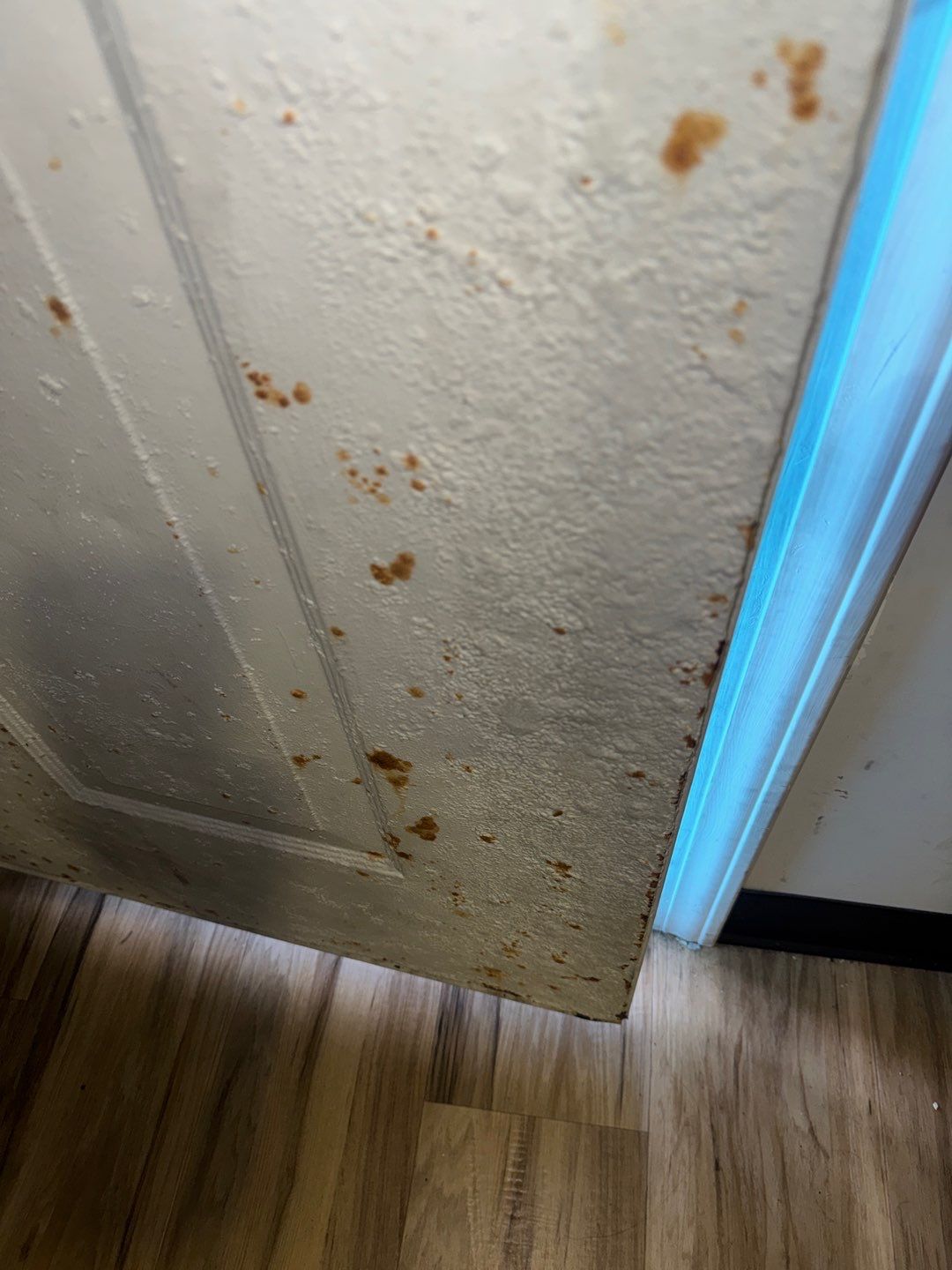
Advanced Moisture Mapping and Thermal Imaging
Every moisture map provides the hard data your adjuster needs.
I have been on thousands of water damage calls across Atlanta. We map the moisture before moving a single piece of furniture.
A homeowner usually finds water in just one room — a dishwasher line failed, flooding the kitchen floor. We arrive quickly and start moisture mapping immediately, and our mapping almost always shows that water traveled farther than expected.
On a typical Atlanta slab-on-grade house, water follows the path of least resistance. It flows under flooring and toward exterior walls before surfacing.
| Instrument | What it reads | Why it is on the truck |
|---|---|---|
| Pin meter | Exact water depth inside a material | Tells us how far moisture penetrated, not just that it is there. |
| Pinless meter | Moisture levels across large spaces | Sweeps whole floors and walls quickly without leaving holes. |
| Thermal camera | Cold temperature shifts caused by hidden moisture | Reveals migration paths through cavities before anything is cut. |
This grid of hard numbers builds the baseline for the entire job. We place our industrial drying fans based strictly on this data, and we close the file only when the numbers prove the wood is dry.
Multi-Family Condo Leaks and HO-6 Master Policies
Atlanta features a massive urban core of high-rise condominiums and townhomes.
Water leaking from an upper unit creates severe liability confusion. It requires immediate triage to stop water from cascading downward into other units.
We heavily document these complex multi-unit losses. We carefully separate the structural damage to satisfy the HOA Master Policy and the individual HO-6 coverage. Proper documentation prevents massive billing disputes between neighbors and property managers.
Documenting Your Claim Under Georgia Insurance Law
A water damage claim is only as strong as its paperwork.
Without a proven baseline, adjusters often underpay or deny claims. We build your exact insurance file from the moment we walk in.
In Georgia, policyholders have strong legal rights under O.C.G.A. § 33-4-6. If an insurance carrier unfairly delays a valid claim, they face heavy penalties.
- A precise psychrometric reading at every daily check-in
- Temperature, relative humidity and airflow logged to track progress
- Daily drying logs and 3D Matterport scans as absolute proof
- Direct insurance billing, to relieve the financial stress
This flawless paperwork leaves insurance companies with no valid excuse to deny your claim.
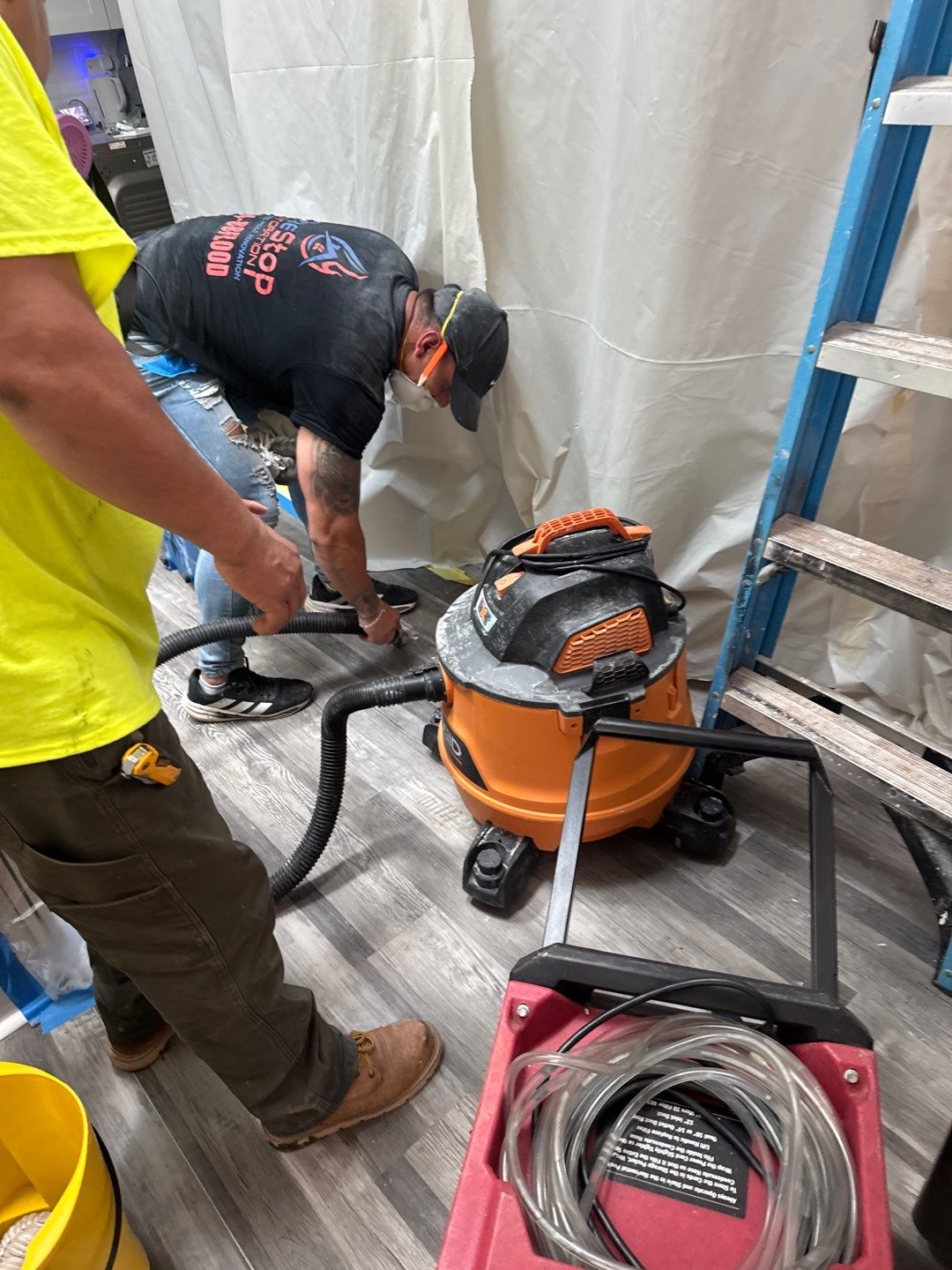
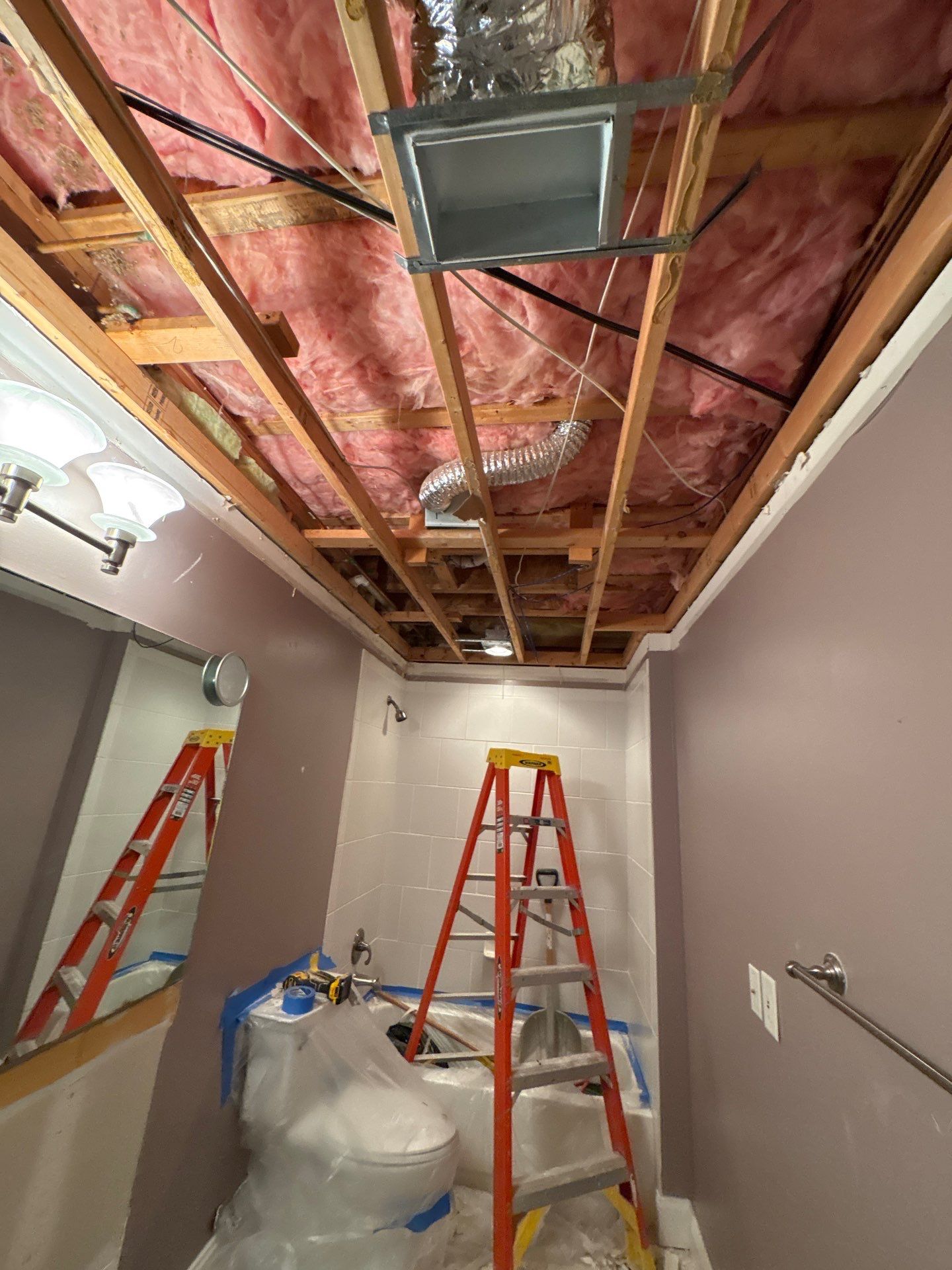
Testing Older Materials Before Demolition
Severe water damage often requires fast, physical tear-outs.
On older properties, an independent testing firm checks building materials before any tear-out begins. Where material needs specialist removal, a licensed abatement contractor handles it, and we schedule our work around theirs.
Restoring Structures to the IICRC S500 Standard
Our process follows the S500 Standard at every stage. This delivers a completely dry home and a flawless insurance file.
-
Water damage classification
We assess every job for damage class and specific water category.
-
Moisture mapping
We map the area using thermal tools before placing any fans.
-
Industrial drying
We deploy high-velocity air movers and low-grain refrigerant (LGR) dehumidifiers.
-
Daily psychrometric logs
We track specific conditions to log drying progress accurately.
-
Antimicrobial treatment
We apply EPA-registered treatments to Category 2 and Category 3 surfaces.
-
Clearance validation
Equipment stays running until exact moisture numbers prove the structure is dry.
Service Areas Across the Greater Atlanta Metro
One Stop Restoration covers the full Greater Atlanta metro area. We dispatch directly from our 6699 Peachtree Industrial Blvd headquarters in Norcross.
- Midtown
- Buckhead
- Grant Park
- East Atlanta
- Decatur
- Sandy Springs
- Marietta
- Smyrna
- Kennesaw
- Roswell
- Alpharetta
- Duluth
- Tucker
- Stone Mountain
We proudly cover Fulton, DeKalb, Gwinnett, Cobb, and Cherokee counties.
Call Now For 24/7 Emergency Dispatch
If you have an active burst pipe or flood event, call 404-777-7077 right now. A live professional answers our dispatch line 24 hours a day.
Stop reading and call us immediately. We will dispatch a fully equipped truck to your property right now. For non-emergency situations, email us at info@onestop-restoration.com.
One Stop Restoration is Greater Atlanta's trusted mitigation expert.
24/7 dispatch
Norcross base, on the I-285 corridor.
- 404-777-7077Answered by a live professional, 24 hours a day
- info@onestop-restoration.comFor non-emergency situations
- 6699 Peachtree Industrial BlvdNorcross, GA
Frequently Asked Questions
How much does professional water damage restoration cost in Atlanta?
Most Atlanta water damage cleanup jobs range from $1,500 to $8,000. This depends heavily on the damage class and the affected square footage. A localized clean-water event costs much less than a Category 3 sewage backup. We document every line item using the exact format adjusters require.
How long does the full structural drying process take?
Most residential properties reach drying clearance in three to five days. The exact timeline depends on the soaked materials and ambient humidity. Equipment stays on site until psychrometric readings prove the structure has hit its dry standard. You receive a daily update at each check-in.
What does moisture mapping actually involve?
Moisture mapping is a grid-based process using thermal cameras and moisture meters. It records exactly where water traveled and how deep it penetrated. Every single reading is date-stamped and logged. That baseline document becomes the foundation of your undeniable insurance file.
Can water travel farther than the visible damage shows?
Yes. Water almost always migrates beyond the visible wet area. On Atlanta slab-on-grade homes, water frequently moves under flooring into adjacent rooms before surfacing. Thermal cameras reveal these hidden migration paths before we place any drying equipment.
Why should I hire an IICRC-certified firm for water damage?
IICRC Certified Firms strictly follow the peer-reviewed S500 Standard. We do not assess damage visually or dry by mere guesswork. We produce a formal moisture map, daily psychrometric logs, and documented clearance readings. That strict protocol guarantees structural safety and prevents disputed claims.
Do I need to leave my home while drying equipment is running?
Most homeowners safely remain in their homes during clean-water drying phases. Industrial air movers and dehumidifiers are loud but not hazardous. If the damage involves Category 3 black water contamination, we will clearly advise if temporary relocation is necessary.