24/7 Mold Remediation Atlanta | IICRC Certified | One Stop

Home/Mold remediation

IICRC Certified Firm 24/7 dispatch Licensed & fully insured

Professional Mold Remediation in Greater Atlanta

Mold must be contained, cleared, and verified by independent testing. We dispatch IICRC-certified crews 24/7 from our Norcross headquarters. Crews are dispatched the moment you call, and our Norcross base keeps most of Inside the Perimeter (ITP) within a short run.

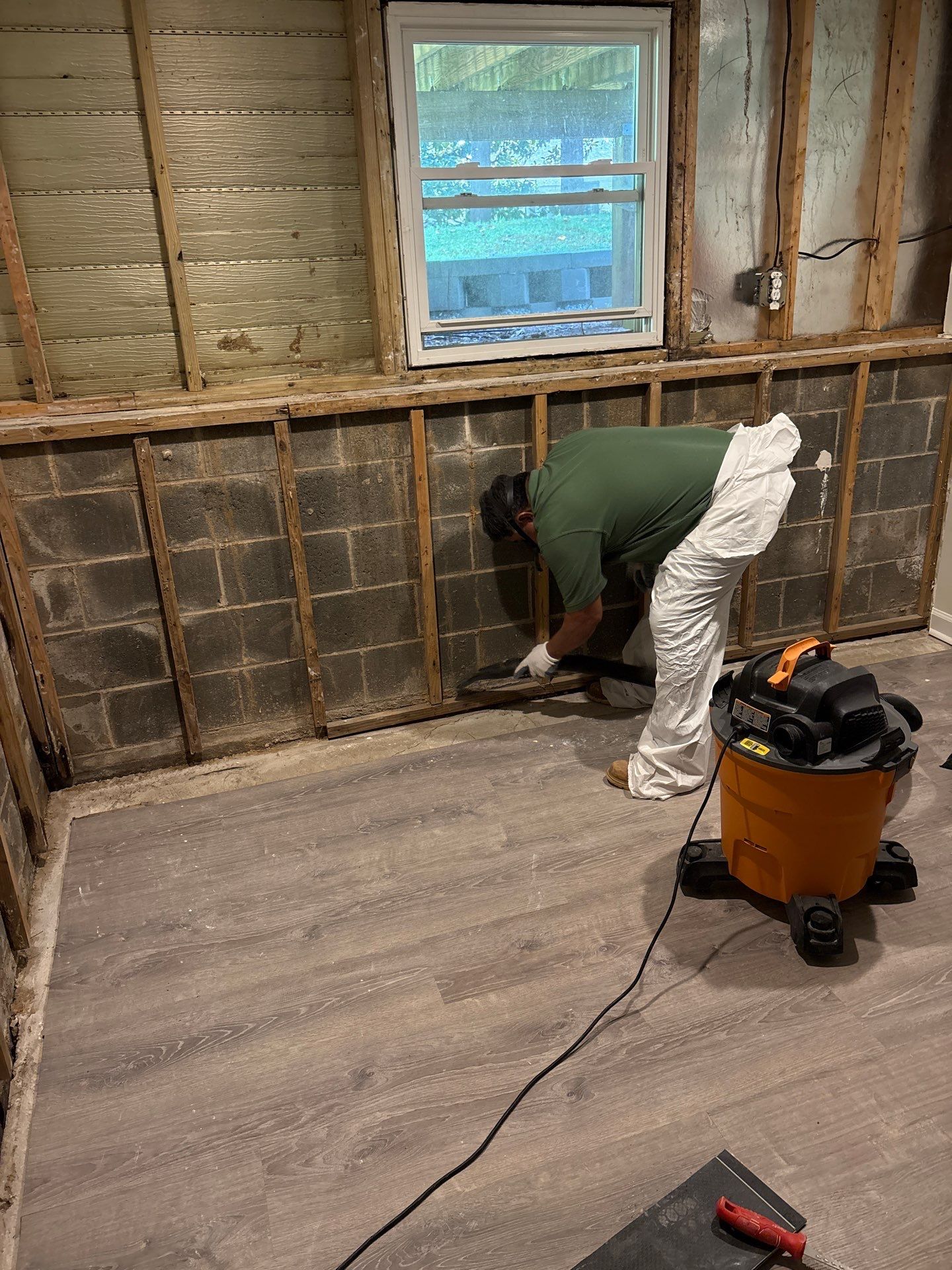
A One Stop Restoration technician in full protective equipment working inside a stripped wall cavity
Contained before anything comes outNegative air pressure holds the spores in one room.

Contained, Cleared, and Independently Verified

ContainedNegative air pressure and HEPA scrubbers seal the work zone.
ClearedCompromised porous materials come out in sealed bags.
Independently verifiedA third-party hygienist confirms spore counts before containment comes down.
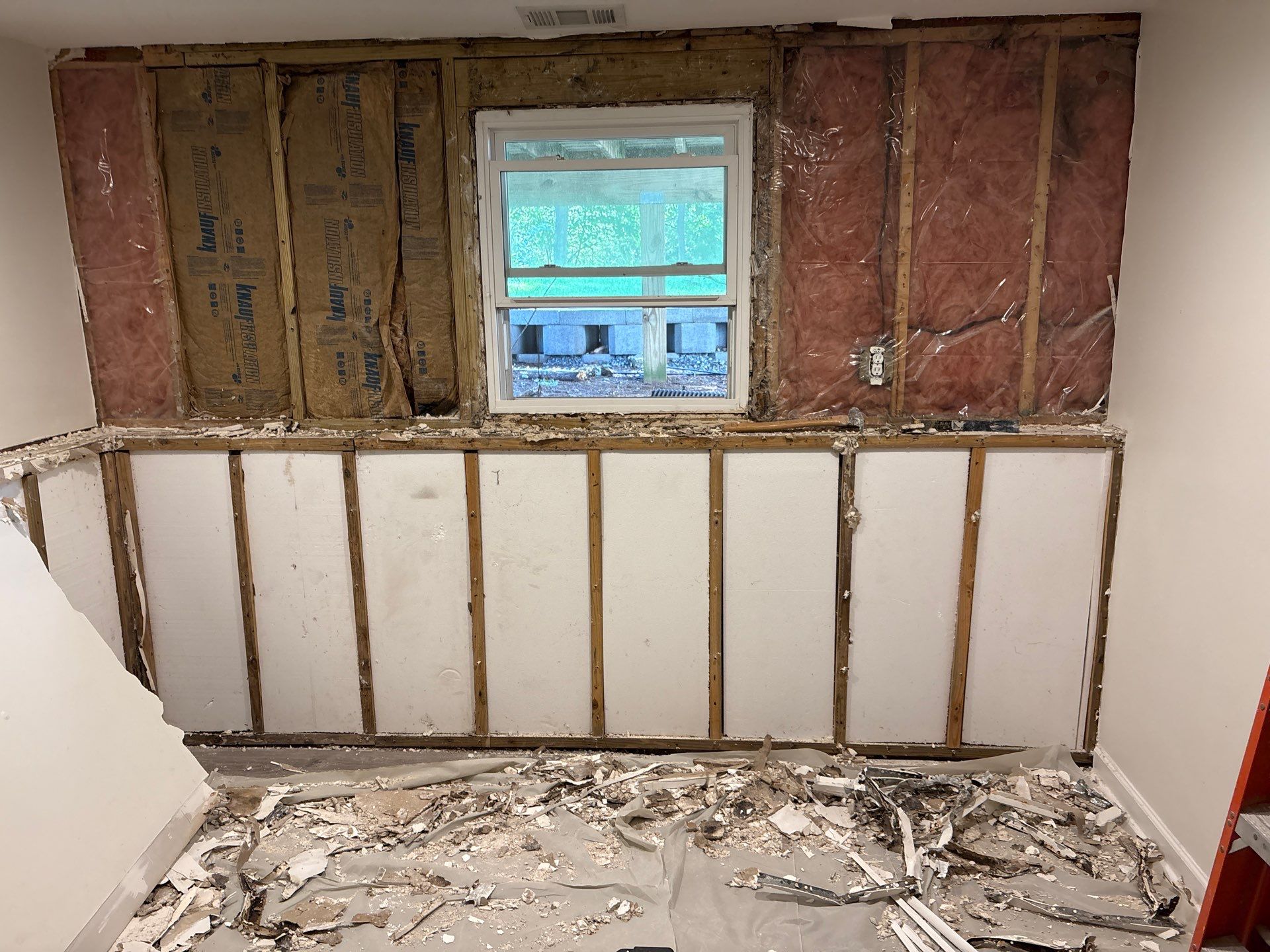
Air scrubbing equipment running inside an opened stud wall during mold remediation
Every step documented to S520HEPA-filtered scrubbers build the negative-pressure zone.

What Professional Mold Remediation Actually Involves

Professional mold removal is a highly documented structural process. It is never just scrubbing walls and spraying chemicals.

True remediation starts with negative air containment and ends with a formal clearance test after the work is complete. Every surface is treated according to the IICRC S520 standard, the published rulebook that dictates exactly how containment is built and how materials are safely removed.

One Stop Restoration is a verified IICRC Certified Firm. Every technician strictly follows the S520 protocol. We are fully insured and heavily licensed.

This strict protocol matters for your health and your property value. A job documented to S520 produces undeniable records for your insurance file and verified proof for future real estate disclosures. We handle the mitigation. An independent hygienist verifies the clearance.

How Atlanta's Humidity and Red Clay Impact Mold Growth

Atlanta's high humidity regularly exceeds the threshold where mold colonies establish.

Relative humidity sits above 60 percent indoors across the metro during summer. Without active dehumidification, mold colonies form reliably above that exact mark.

In a dry climate, you have a safe time buffer. In Atlanta, a wet wall cavity left unaddressed for 48 hours is already a severe mold problem.

Georgia's red clay soil aggressively complicates this reality. The clay retains heavy moisture beneath your house, and this constant ground humidity feeds crawlspace mold year-round. To combat this, we install heavy-duty 12-mil reinforced vapor barriers that completely encapsulate the crawlspace and permanently stop ground moisture intrusion.

Because ambient humidity is so high, negative air pressure containment is never optional. Atlanta's heavy air will carry toxic spores through your entire house if the pressure barrier fails.

60%Indoor humidity above which colonies form reliably
48 hrsBefore an untreated wet cavity becomes a mold problem
12-milReinforced vapor barrier for crawlspace encapsulation

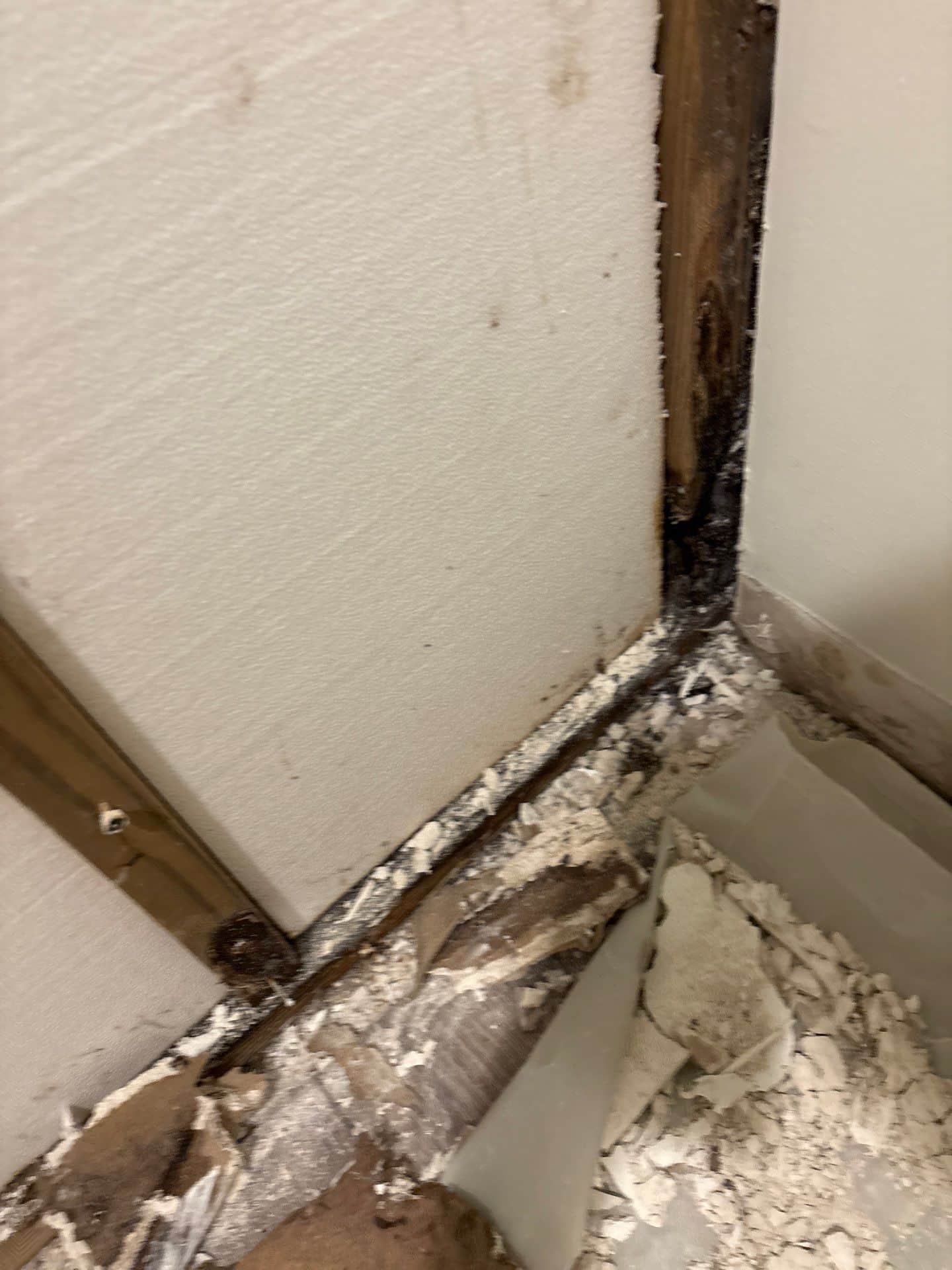
Black mold growth spreading up a wall corner and along the baseboard
Above 60 percent, colonies form reliablyAtlanta humidity removes the buffer other climates get.
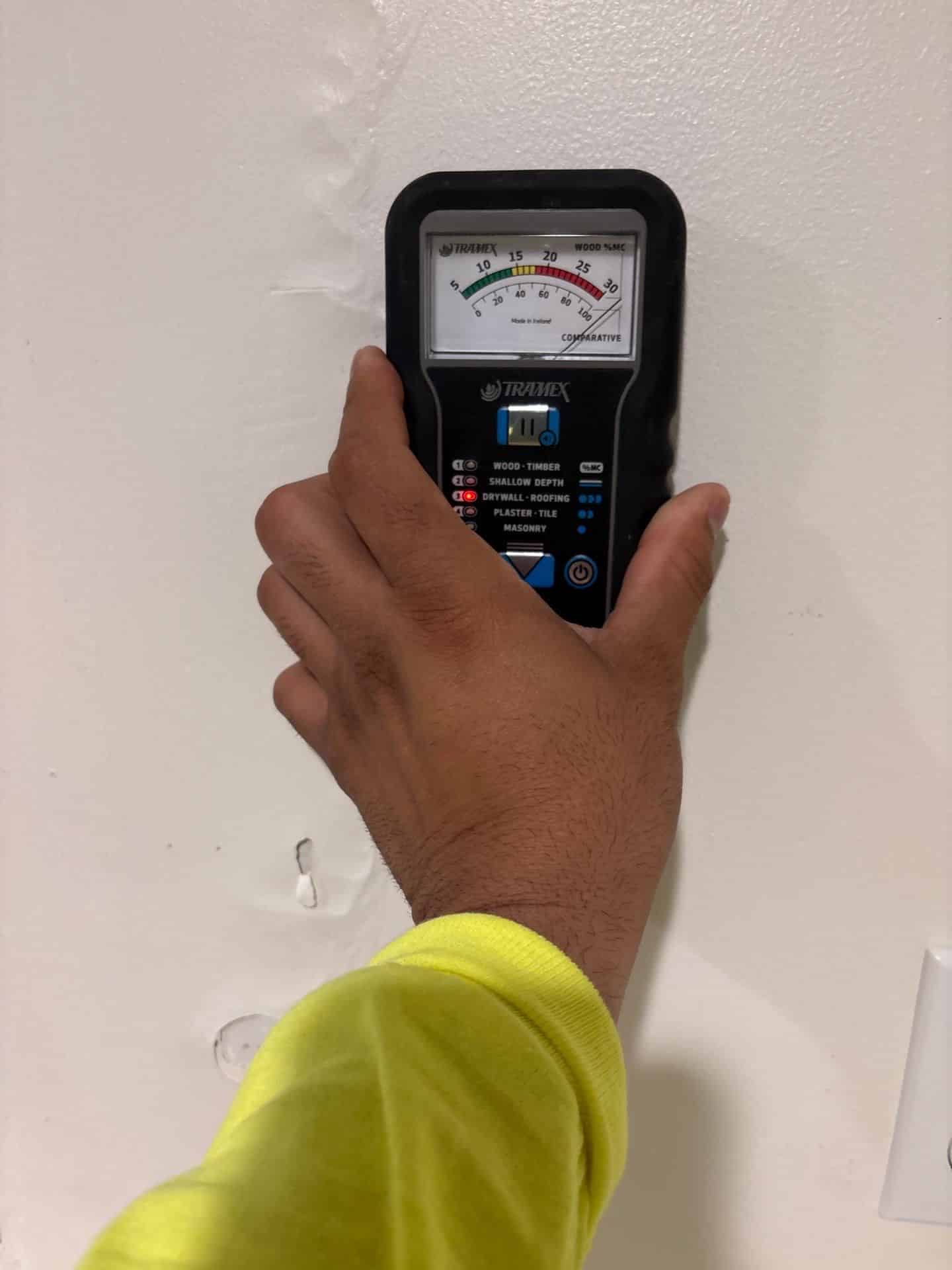
A moisture meter being held against a wall to define the true boundary of a mold problem
The visible patch is the smallest partPinless meters find the spread a visual check misses.

What We Find During an Intown Atlanta Mold Assessment

Most mold problems in Atlanta are much larger than what the homeowner can see.

We see a distinct pattern in Atlanta's older Intown neighborhoods like Virginia-Highland and Cabbagetown: original plaster walls, uninsulated pipe chases, and hidden condensation zones. These areas stay damp season after season without detection.

A renovation or a sudden home inspection usually surfaces the problem. By then, the mold colony has moved laterally through entire wall cavities.

This is exactly why strict assessment matters before we build containment. We use thermal imaging and pinless moisture meters to define the actual scope. A simple visual check frequently misses massive lateral spread.

The visible growth on a baseboard is usually the smallest part of the problem. A homeowner looking at a small dark patch actually has a massive colony behind the drywall.
Nate Simon, Founder & CEO

Navigating Georgia Asbestos Laws During Demolition

Severe mold growth often requires us to remove drywall and structural framing safely.

Removing damaged materials triggers strict state environmental laws. If your home was built before 1980, we must test for asbestos before demolition begins. We strictly manage all Georgia Environmental Protection Division (EPD) mandates.

We coordinate the required independent asbestos clearance testing. We handle the mandatory 10-day GEOS notification waiting period. We also manage Solid Waste Management Rule 391-3-4 disposal.

Managing this heavy red tape protects you from massive state fines.

Insurance Claims and Bad Faith Protections

A successful mold claim requires flawless, undeniable documentation.

Policyholders in Georgia are legally protected by state law. Under O.C.G.A. § 33-4-6, insurance carriers face heavy financial penalties for bad faith delays.

If an insurer unreasonably denies a properly documented claim, they can be sued. Our flawless S520 paperwork leaves carriers with no excuse to deny your valid coverage.

  • Precise psychrometric data provided to your adjuster
  • Containment logs for every day the barrier is up
  • The independent third-party clearance report
  • Direct insurance billing to reduce your immediate financial stress

Clearance Testing Confirms the Mold Is Gone

Clearance testing is performed by an independent expert before our containment comes down.

IICRC S520 requires formal mold clearance testing. An independent third-party industrial hygienist takes air and surface samples and verifies that spore counts have returned to normal, safe levels.

The protocol demands absolute independence for this specific step to prevent any conflict of interest. The independent report provides absolute, verifiable proof.

This strict third-party record matters for insurance claims and real estate transactions. We strictly handle the remediation to the S520 standard. The independent clearance result proves the job is done perfectly.

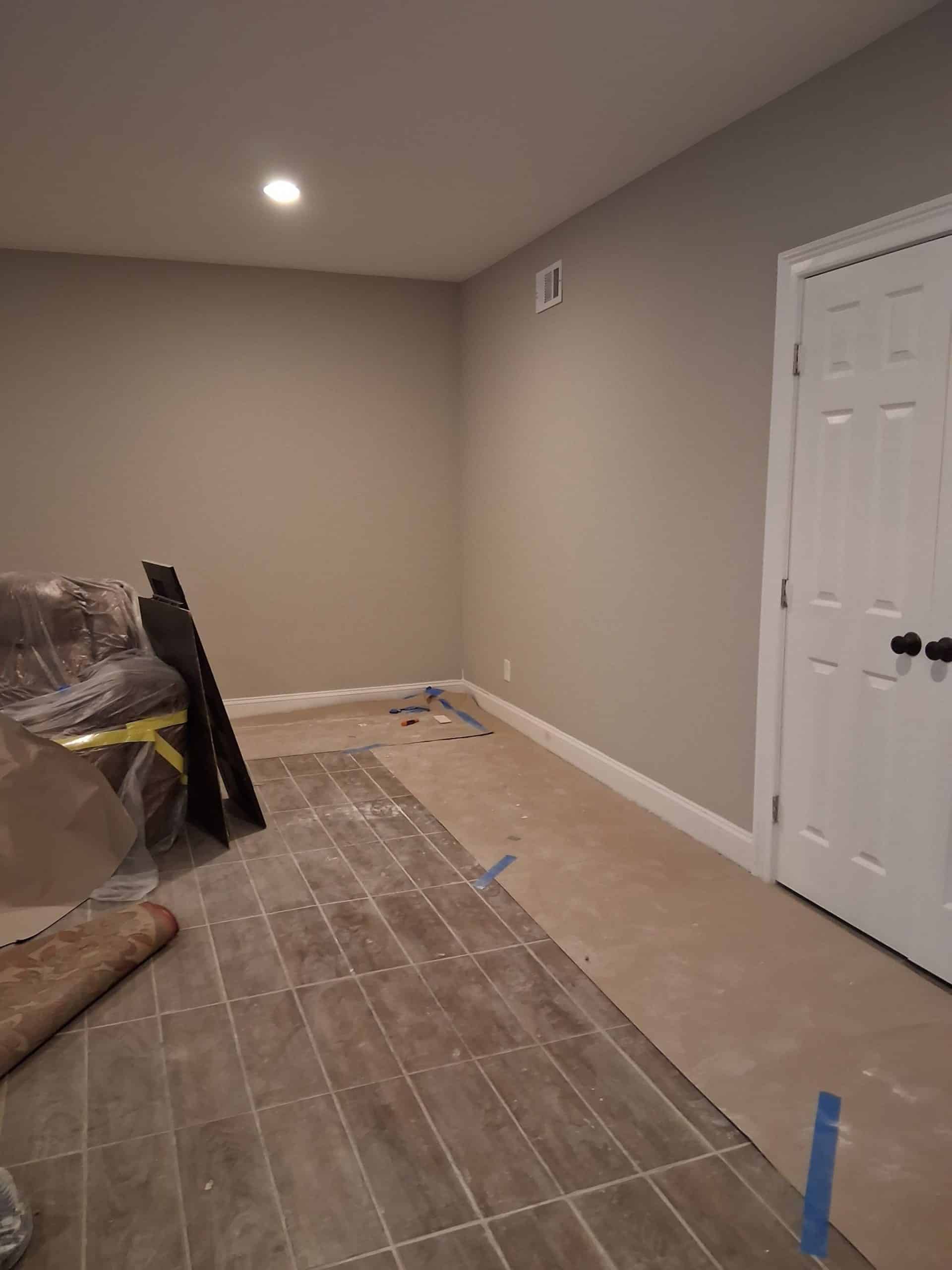
A clean, restored room after mold remediation with containment removed
Containment comes down lastOnly after an independent hygienist clears the air.

Our Remediation Protocol: S520 Containment Through Clearance

Every remediation job follows the same documented sequence. We never skip a step.

  1. Pre-remediation assessment

    Thermal scans and moisture readings define the scope before we build containment.

  2. Negative air containment

    HEPA-filtered air scrubbers create a sealed negative-pressure work zone.

  3. Physical removal

    We safely remove compromised porous materials like drywall and insulation.

  4. Asbestos compliance

    We strictly manage all Georgia EPD testing and 10-day GEOS notifications.

  5. Anti-microbial treatment

    We apply EPA-registered antimicrobial formulas to all remaining structural surfaces.

  6. Third-party clearance

    An independent hygienist performs air sampling to verify perfectly safe spore levels.

Each Remediation Step Explained

The mold remediation process moves in a fixed sequence. Each step depends heavily on the one before it.

Step one

Diagnostics first

Moisture readings are mapped across the affected area using thermal instruments. This defines where the contamination actually stops.

In older Atlanta homes, boundaries frequently extend much further than visual inspection suggests.

Step two

Containment and implementation

Negative air pressure containment goes up first, so spores released during physical removal cannot migrate into the rest of the home.

Physical demolition follows. Non-salvageable drywall and saturated insulation come out in sealed bags. Salvageable framing is HEPA-vacuumed and treated with an EPA-registered antimicrobial solution.

Step three

Post-service testing

Our containment stays sealed until air scrubbing completes sufficient volume changes. A qualified third-party industrial hygienist then collects air and surface samples.

When clearance is achieved, our containment comes down and the official clearance report is added directly to your permanent file.

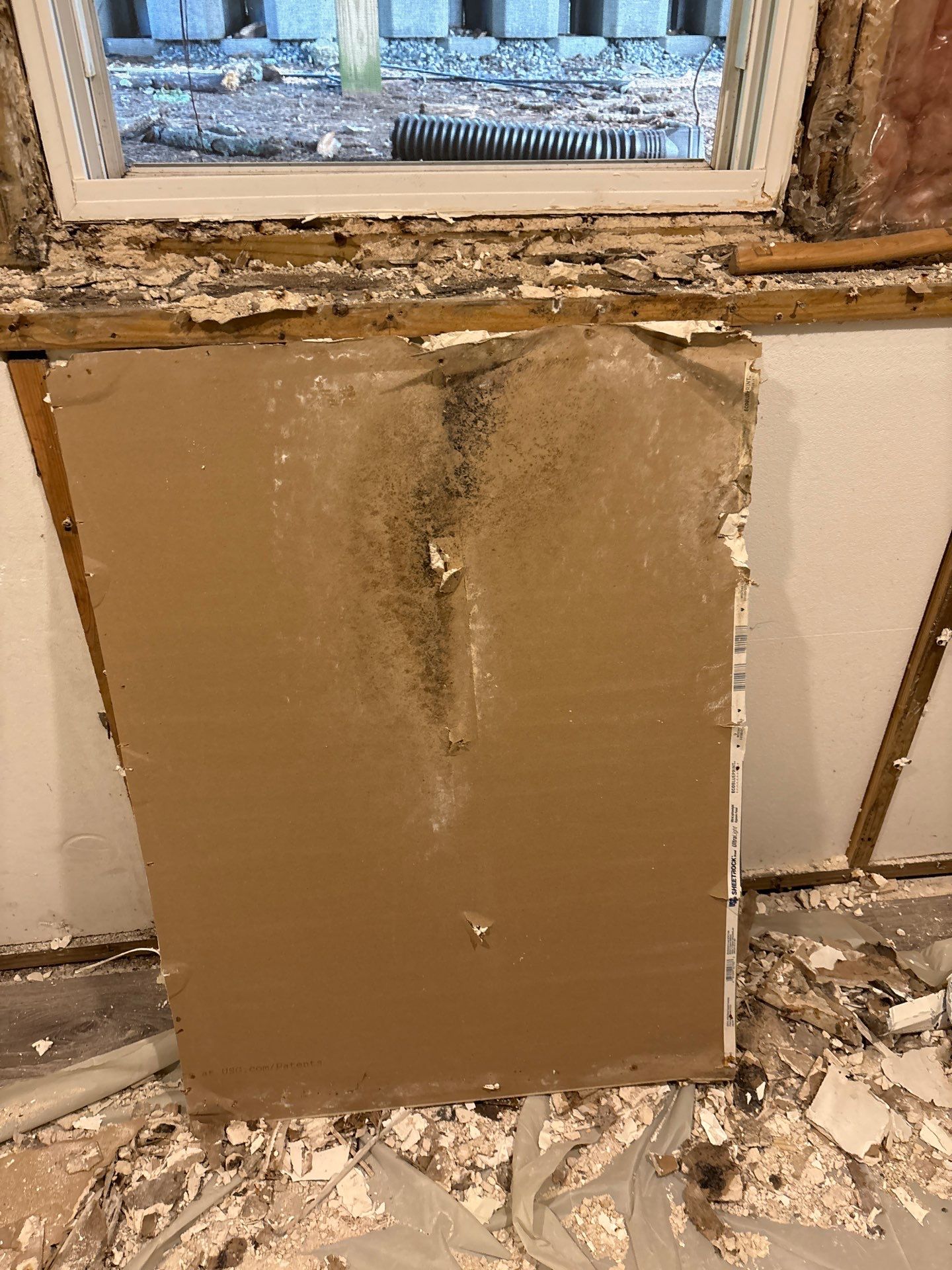
Moisture-damaged drywall peeling away from the wall on an Atlanta mold remediation job
Same S520 standard, every ZIP codeThe same finding turns up across the metro.

Mold Remediation Across Greater Atlanta

One Stop Restoration serves the full Atlanta metro from our Norcross headquarters.

  • Virginia-Highland
  • West End
  • Grant Park
  • Sandy Springs
  • Decatur
  • Tucker
  • Stone Mountain

We proudly cover residential and commercial properties across Fulton, DeKalb, Gwinnett, Cobb, and Cherokee counties.

Schedule a Mold Assessment Today

Call 404-777-7077 to schedule a structural assessment. We operate a true 24/7 dispatch facility.

Crews are dispatched the moment you call. For non-emergency questions, email info@onestop-restoration.com.

Tell us what you are seeing and how long the moisture has been present. We will explain exactly what the next step looks like.

24/7 dispatch

Norcross base, on the I-285 corridor.

Frequently Asked Questions About Mold Remediation

Does homeowners insurance cover mold remediation in Georgia?

Insurance coverage for mold depends entirely on the source of the moisture. If the mold resulted from a sudden, covered peril, remediation is usually covered. If the mold resulted from long-term neglect, claims are often denied. We document the exact source of the moisture to help support your claim.

How long does the mold remediation process take?

Most residential mold remediation jobs take between three to seven days. The timeline depends on the square footage and how deeply the mold penetrated the framing. Containment must remain up until independent third-party clearance test results confirm the air is safe.

Do I need to leave my house during mold remediation?

You generally do not need to leave your house. Our negative air pressure containment heavily seals off the affected rooms. The HEPA air scrubbers prevent hazardous spores from migrating into your clean living spaces. We will advise you immediately if the contamination level requires temporary relocation.

Why do you install vapor barriers during crawlspace mold cleanup?

Georgia red clay retains massive amounts of ground water. This constant ground moisture feeds mold growth on your floor joists. After we remove the active mold, we install a 12-mil reinforced vapor barrier. This fully encapsulates the dirt floor and permanently stops ground moisture from rising.

What happens if you find asbestos behind the moldy drywall?

We strictly follow all Georgia EPD asbestos regulations. If your home was built before 1980, we coordinate mandatory third-party asbestos testing before demolition. If asbestos is present, we handle the required 10-day GEOS notification and ensure it is removed safely and legally.