24/7 Storm Damage Restoration Atlanta | One Stop

Home/Storm & hurricane damage recovery

IICRC Certified Firm 24/7 dispatch Licensed & fully insured

Storm & Hurricane Damage Restoration in Greater Atlanta

When severe weather breaches your home, you need immediate containment. We dispatch emergency crews 24/7 from our Norcross headquarters. Crews are dispatched the moment you call, and our Norcross base keeps most of Inside the Perimeter (ITP) within a short run.

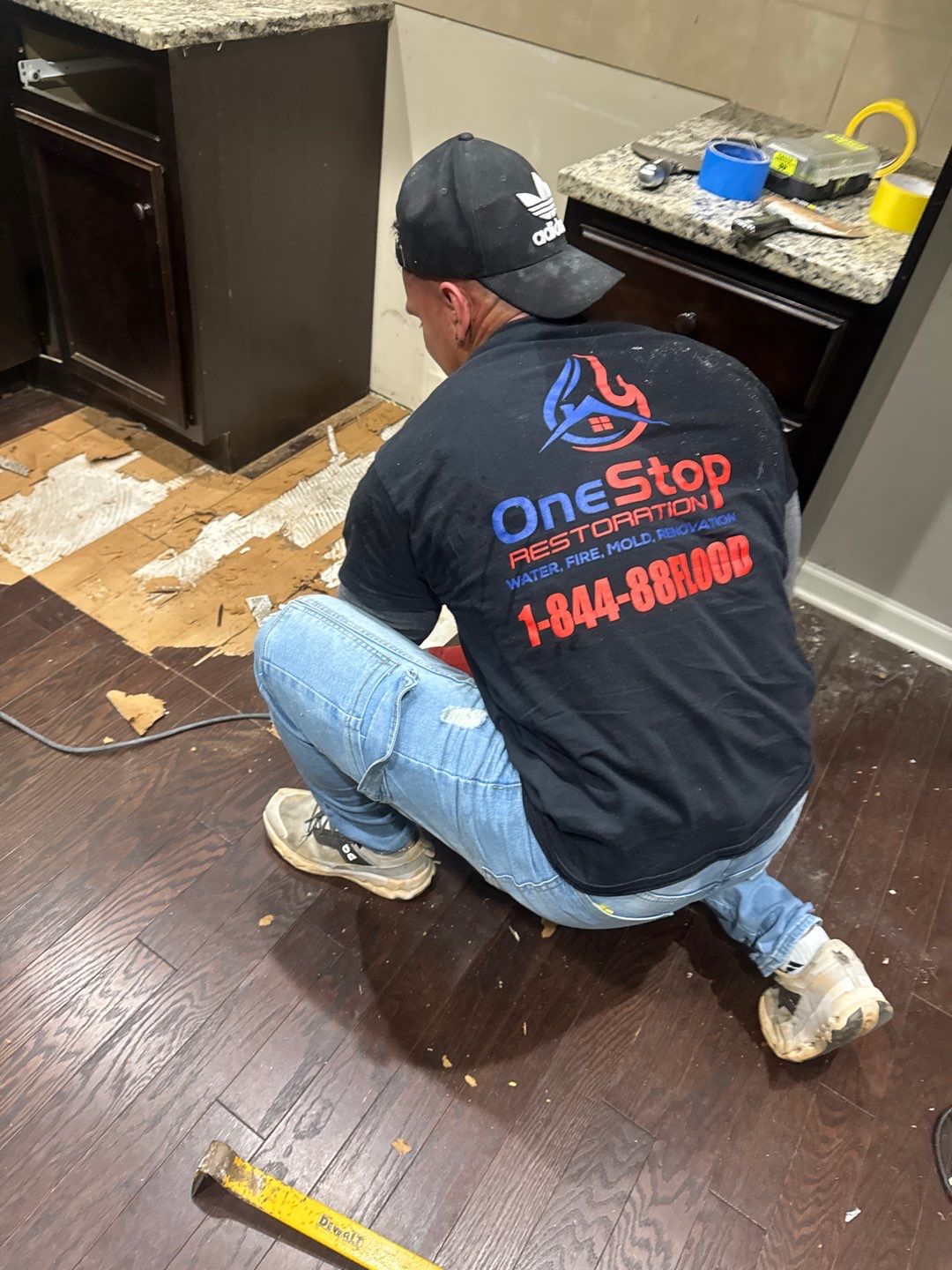
A One Stop Restoration crew responding to storm damage at a Greater Atlanta property
Dispatched the moment you callNorcross keeps most of the metro within a short run.

Roof Tarped, Water Extracted, Structure Dried and Rebuilt

Roof tarpedNothing dries while water is still coming in.
Water extractedTruck-mounted units, not portable rentals.
Structure driedConfirmed by instrument, logged daily.
RebuiltEmergency tarping through full reconstruction, under one contract.
Emergency work to close off a storm breach before any interior extraction begins
No extraction on an active breachNothing dries while water is still coming in.

What Storm Damage Restoration Covers in Atlanta

Storm damage restoration means stopping incoming water immediately. We remove what entered and rebuild what the storm destroyed.

When a storm breaches your roof or drives rain through window seals, we handle every phase. We deploy emergency roof tarping first — a heavy-duty temporary barrier that stops new water from entering while we schedule permanent repairs.

Next, we execute rapid water extraction and structural drying. Finally, we handle the complete reconstruction. One single contract covers all of it.

This matters because Atlanta's storm season runs extremely long. It starts in March and often lasts through September. Stormwater that enters your structure on a Tuesday afternoon becomes a severe mold problem by Thursday.

Navigating Atlanta's Year-Round Storm Exposure

Atlanta's storm exposure is a year-round structural threat to every home in the metro.

The metro area averages more than 50 thunderstorm days per year. We sit inside a recognized tornado corridor. We also receive tropical remnant systems from the Gulf Coast — these weakened inland hurricanes deliver massive rainfall totals far from the ocean.

Atlanta's heavy red clay soil makes the flooding aftermath worse. Clay sheds water instead of absorbing it. During a major system, stormwater backs up against foundation walls within hours. By the time the rain stops, standing water is already migrating into your lower levels.

We route directly from our Norcross headquarters on I-85. We rapidly reach Lawrenceville, Duluth, and downtown without relying on easily flooded local surface streets.

50+Thunderstorm days per year across the metro
Mar–SepStorm season, start to finish
48 hrsFrom intrusion to a severe mold problem

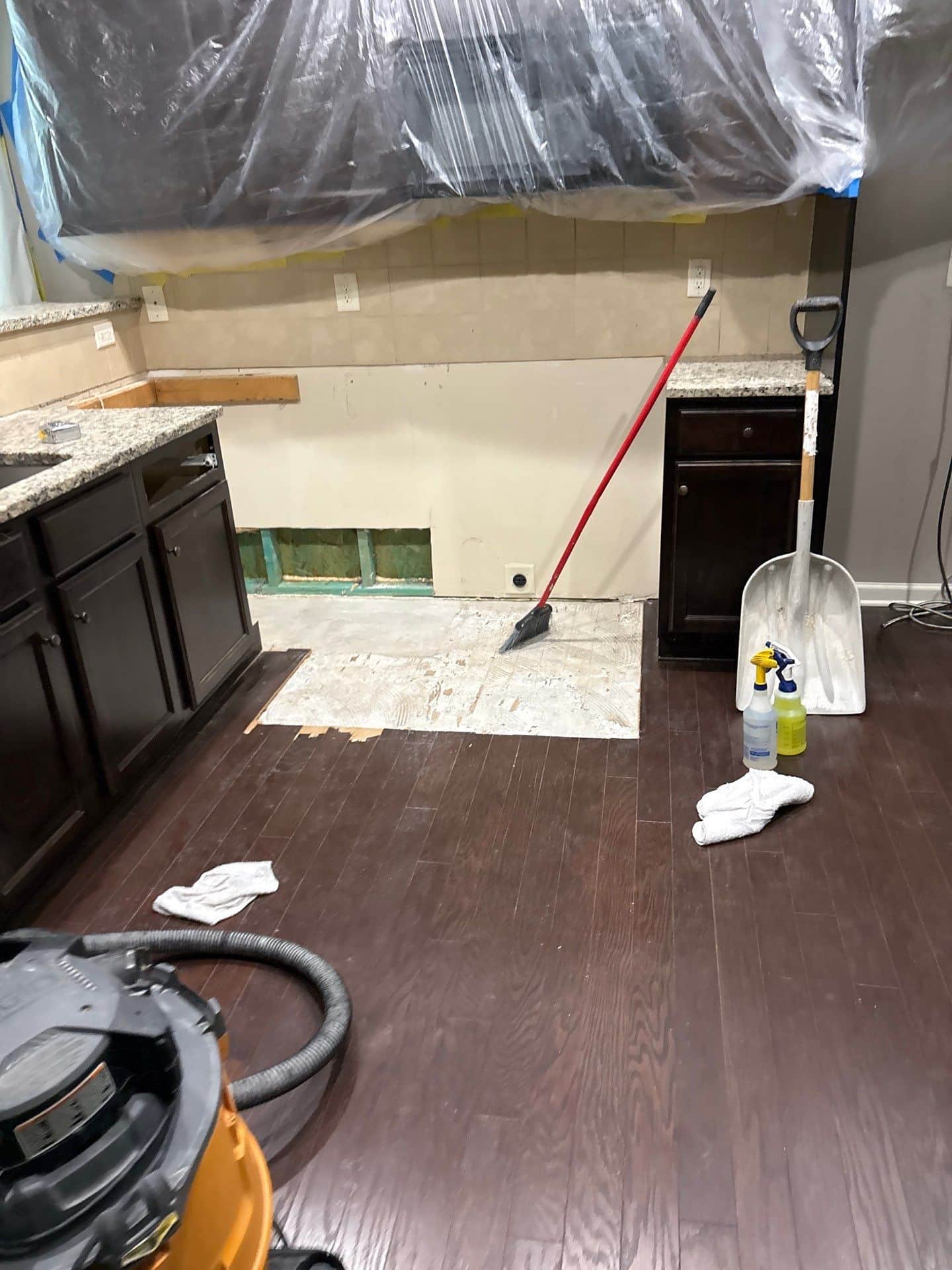
Storm water damage inside a Greater Atlanta home after heavy rainfall
Clay sheds water toward the foundationStanding water migrates to the lower levels within hours.
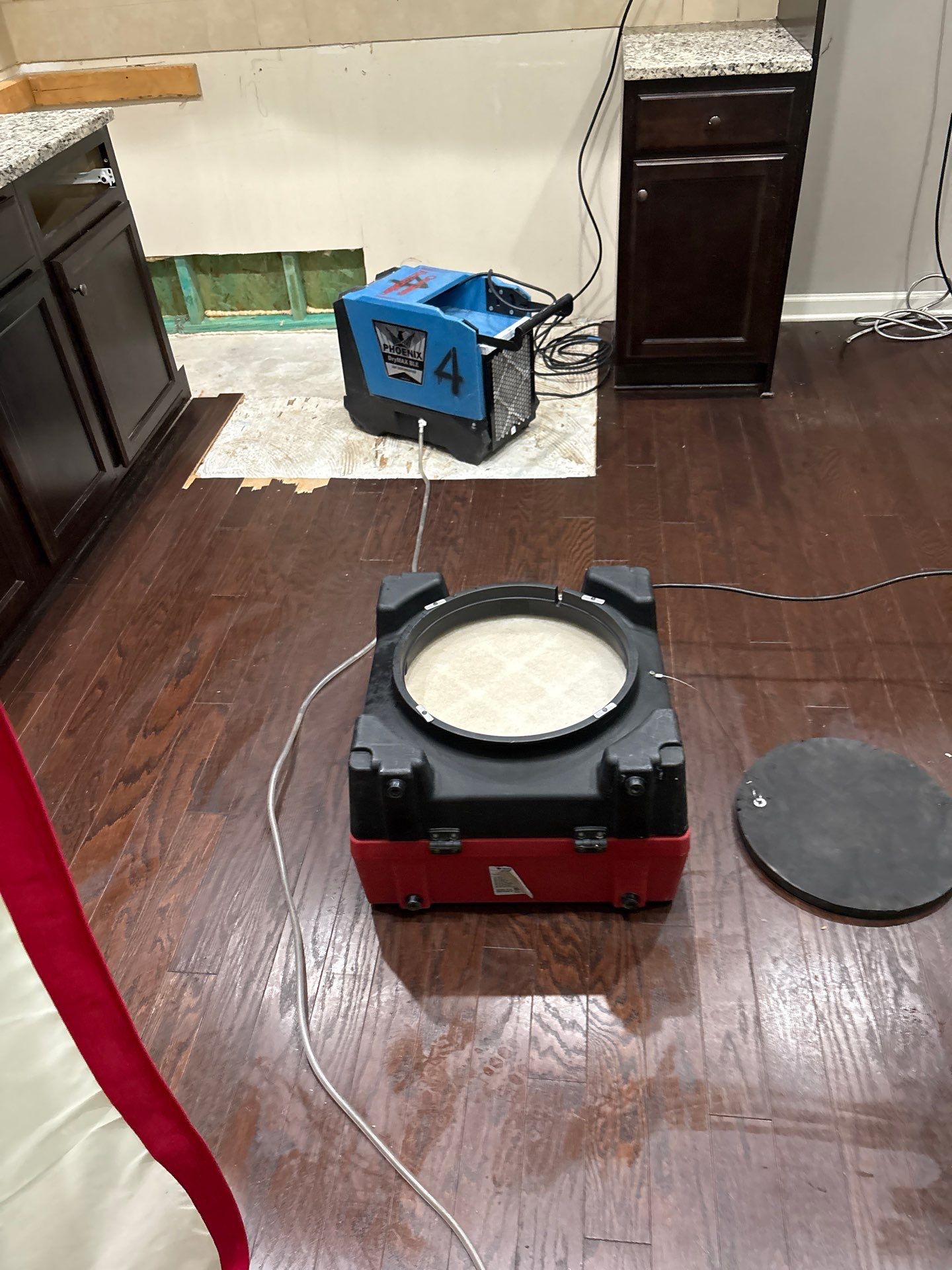
Drying equipment placed after a wind-driven rain intrusion tracked through the wall cavities
A two-room problem that was really fourThermal imaging set the real scope that night.

Inside a Typical Greater Atlanta Storm Job

Every storm job follows a strict timeline. Knowing this timeline changes how fast the right decisions get made.

A wind-driven rain intrusion event had pushed water through roof penetrations. It flowed down an interior wall into the living room below, and the ceiling drywall had already begun to sag dangerously.

We tarped the roof breach first. You absolutely cannot dry a structure that is still receiving incoming water.

Next, we scanned the walls. Thermal imaging showed water had tracked across twelve linear feet of wall cavity. The homeowner thought it was a two-room problem. It was actually a four-room problem.

This distinction matters enormously for your insurance documentation. We placed industrial air movers and LGR dehumidifiers that night. We logged psychrometric readings daily. We handled the entire mitigation and the final drywall rebuild without bringing in outside contractors.

I remember a job we handled in Lawrenceville after a fast-moving line of severe storms rolled through Gwinnett County. The homeowner called around 9 PM.
Nate Simon, Founder & CEO

Insurance Documentation and Georgia Bad Faith Laws

A storm damage claim is only as strong as its paperwork.

Our in-house team handles the tarping, the drying, and the final structural framing. The insurance file built during mitigation seamlessly carries forward into the rebuild phase.

Policyholders in Georgia are heavily protected by state law. Under O.C.G.A. § 33-4-6, insurance carriers face massive penalties for acting in bad faith. If an adjuster unfairly delays or underpays a properly documented storm claim, they can be penalized.

  • The exact damage record logged from hour one in Xactimate
  • The format Georgia insurance adjusters require to process claims
  • 3D Matterport scans and daily moisture logs as proof of loss
  • Direct insurance billing, to reduce your stress

Local Building Codes and EPD Asbestos Rules

IICRC certification means our storm response follows strict peer-reviewed standards.

One Stop Restoration is a verified IICRC Certified Firm. Storm jobs frequently involve dangerous Category 2 or Category 3 water intrusion. Roof rainwater often mixes with heavy attic contamination, and flash floods carry massive biological loads from the street.

  • Emergency tarping first

    No extraction begins on an active roof breach.

  • Deep moisture mapping

    Thermal imaging determines the exact scope before demolition begins.

  • Asbestos compliance

    For pre-1980 homes, we manage Georgia EPD asbestos testing and 10-day GEOS notifications before structural demolition.

  • Permitted reconstruction

    We manage all required City of Atlanta Accela permits for the final rebuild.

  • Historic districts

    We navigate Urban Design Commission (UDC) requirements for any exterior historic rebuilding.

The Storm Response Timeline: The First 6 Hours

The first six hours after a storm breach determine how much of your structure is recoverable.

Hour one

Breach assessment and moisture mapping

The moment we arrive, we assess the exact breach type. Wind-driven rain behaves entirely differently than rapid flash flooding, and each requires a totally different containment approach.

We map the moisture migration with thermal imaging before any extraction begins.

Hours two to four

Extraction and drying environment setup

We deploy emergency roof tarping immediately. Truck-mounted extraction equipment removes standing water fast.

Industrial air movers and low-grain refrigerant (LGR) dehumidifiers establish a deeply controlled drying environment.

Every day after

Drying validation and rebuild authorization

We return daily to log psychrometric readings and moisture meter data. Drying is confirmed by hard instrument data, not by visual inspection.

When the numbers prove the wood is dry, the reconstruction schedule begins immediately.

Rapid Storm Response Across Greater Atlanta

One Stop Restoration serves the full Greater Atlanta metro from our Norcross headquarters. Severe storm damage does not respect city limits, and neither do we.

  • Buckhead
  • Sandy Springs
  • Dunwoody
  • Lawrenceville
  • Norcross
  • Duluth
  • Marietta
  • Smyrna

We run daily routes through Gwinnett and deploy quickly to Marietta and Smyrna in Cobb County.

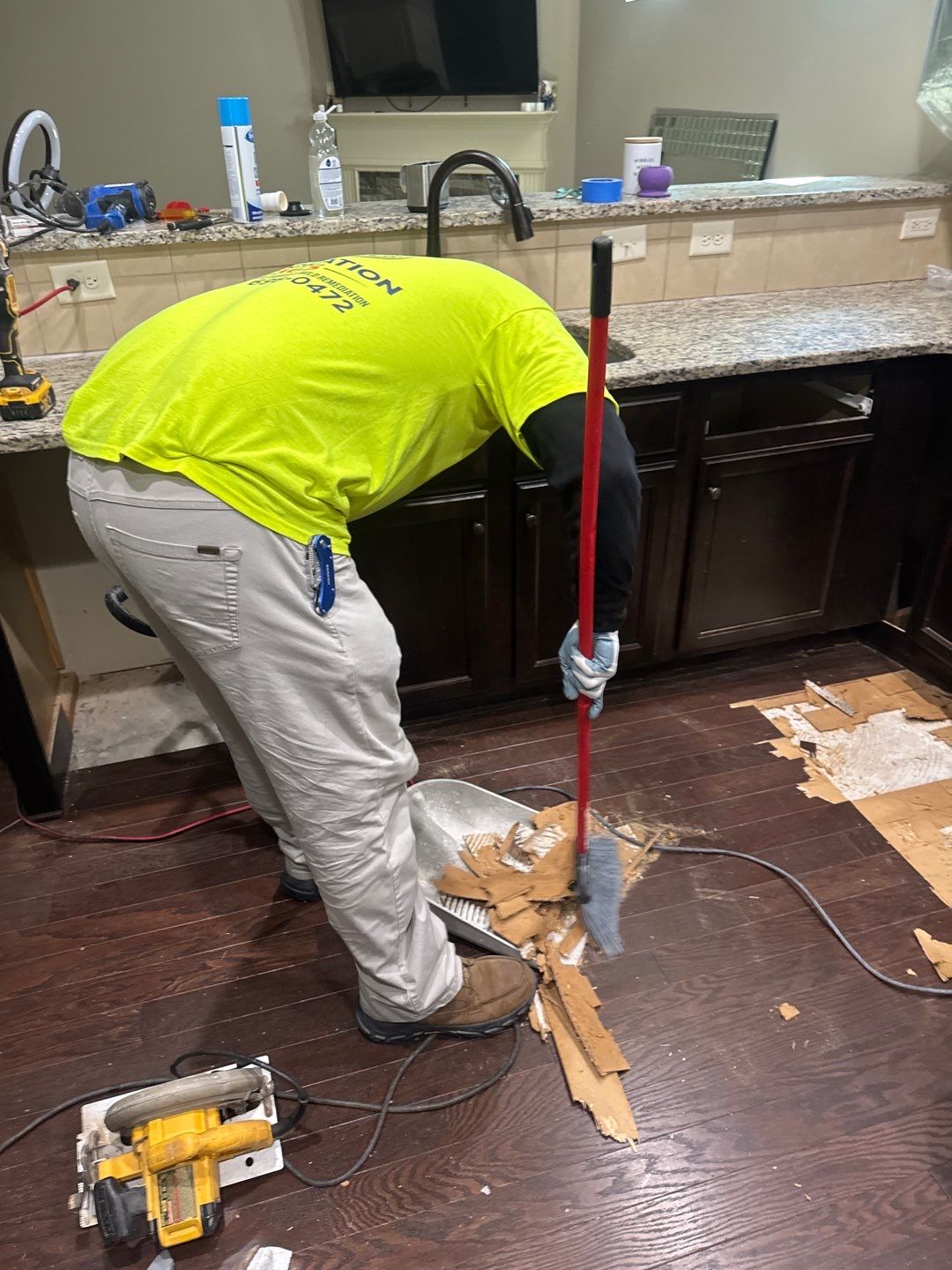
A One Stop Restoration crew working a storm damage job in the Greater Atlanta metro
Routed from Norcross on I-85Storm damage does not respect city limits.

If a Storm Just Hit Your Home, Start Here

Do not wait for morning if water is entering your home right now.

Call 404-777-7077 immediately. One Stop Restoration answers 24 hours a day, every day. We do not use answering services for emergencies.

Tell our dispatch team your exact address and describe the damage. Our mitigation crew will dispatch immediately. For non-emergency documentation requests, email info@onestop-restoration.com.

24/7 dispatch

Norcross base, on the I-285 corridor.

Frequently Asked Questions About Storm Damage

Will my insurance cover temporary roof tarping?

Yes. Standard homeowners insurance policies actually require you to mitigate further damage after a storm. Emergency roof tarping fulfills this requirement. We document the breach photographically before placing the tarp to ensure the adjuster has proof.

How fast can you get a tarp on my leaking roof?

We dispatch from Norcross 24/7. Crews are dispatched the moment you call. If weather conditions are safe, we deploy emergency tarping as soon as we arrive. This stops incoming water before interior extraction begins.

Do you handle the structural rebuilding after the home is dry?

Yes. We are a full-cycle restoration company. We handle everything from emergency extraction to final drywall installation and painting. If the rebuild requires structural framing, we navigate the City of Atlanta Accela permitting system for you.

What happens if my insurance adjuster denies the roof claim?

We document your storm loss flawlessly to prevent baseless denials. Under Georgia law (O.C.G.A. § 33-4-6), insurers cannot unreasonably delay or deny proven claims. Our daily moisture logs and Xactimate line-item estimates provide the hard evidence you need.

Is storm floodwater dangerous to touch?

Yes. Stormwater that enters your lower level from the ground is always classified as Category 3 Black Water. It carries soil contaminants, street runoff, and biological hazards. We use specialized PPE and EPA-registered antimicrobials to extract it safely.