
Home/Emergency water removal
24/7 Emergency Water Removal in Greater Atlanta
Standing water must be removed immediately to save your structure. We dispatch emergency crews 24/7 from our Norcross headquarters. Crews are dispatched the moment you call, and our Norcross base keeps most of Inside the Perimeter (ITP) within a short run.
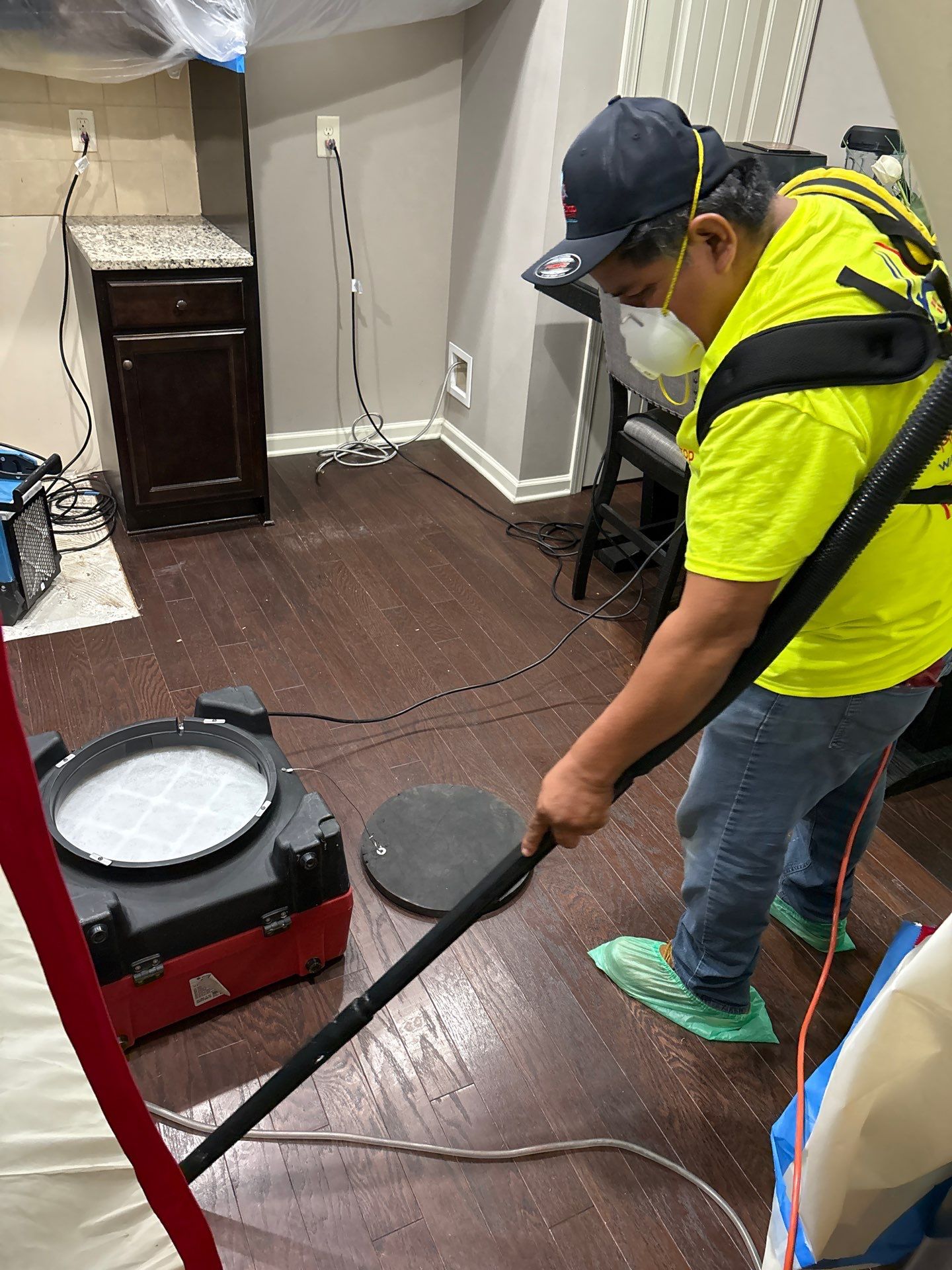
Extraction and Moisture Mapping on the Same Visit
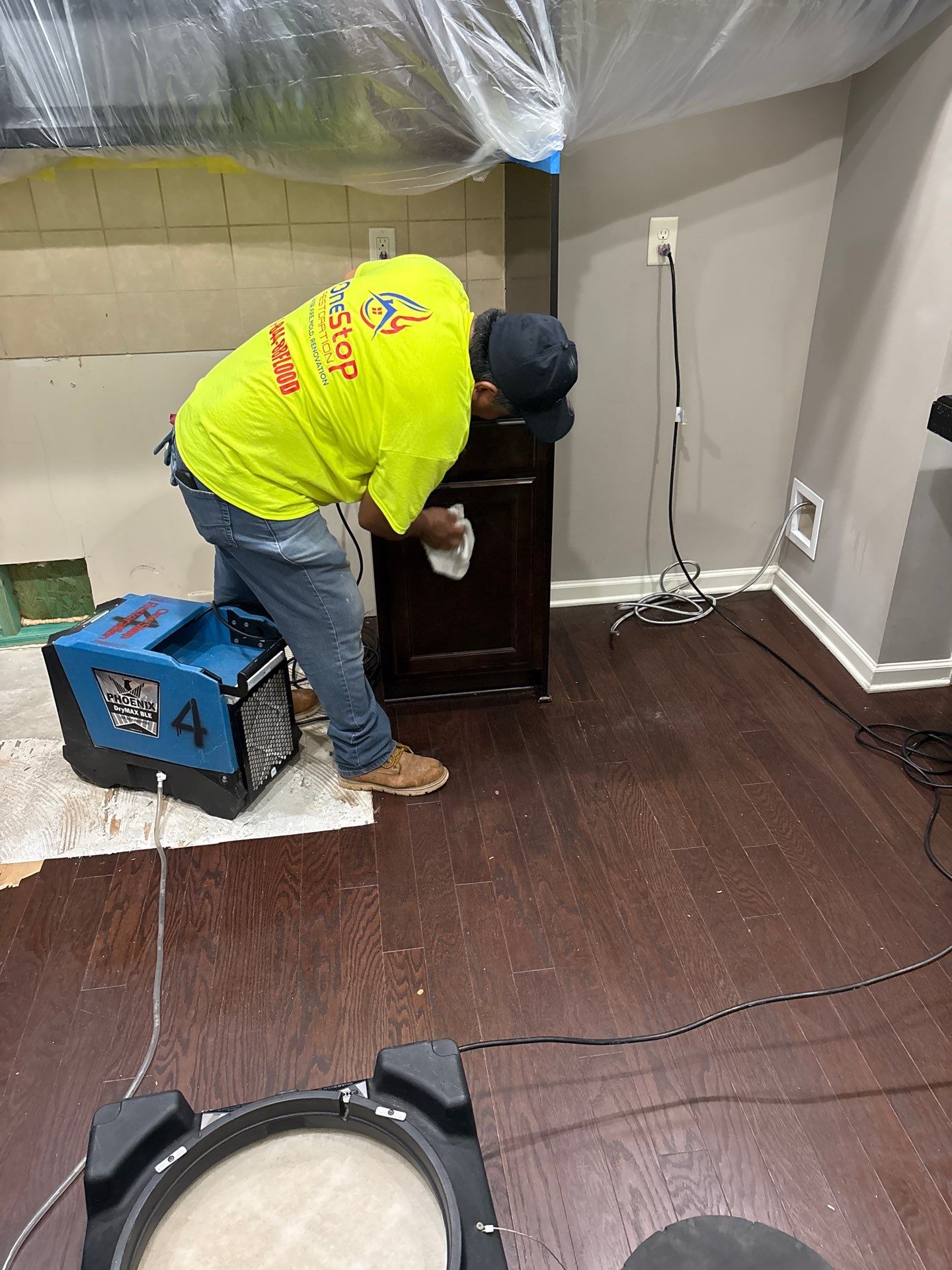
What Emergency Water Removal Actually Covers
Professional emergency water removal extracts standing water fast. It also strictly confirms what the structure already absorbed.
Standing water on your floor is just the part you see. It is rarely the part causing the most structural damage.
Within minutes of a flood, water moves laterally into carpet pads. It wicks straight up into drywall. It pushes under baseboards deep into wall cavities.
A truck-mounted extractor is a high-capacity water removal unit powered directly by the vehicle engine. It pulls liquid water from flooring at a volume no portable rental can reach.
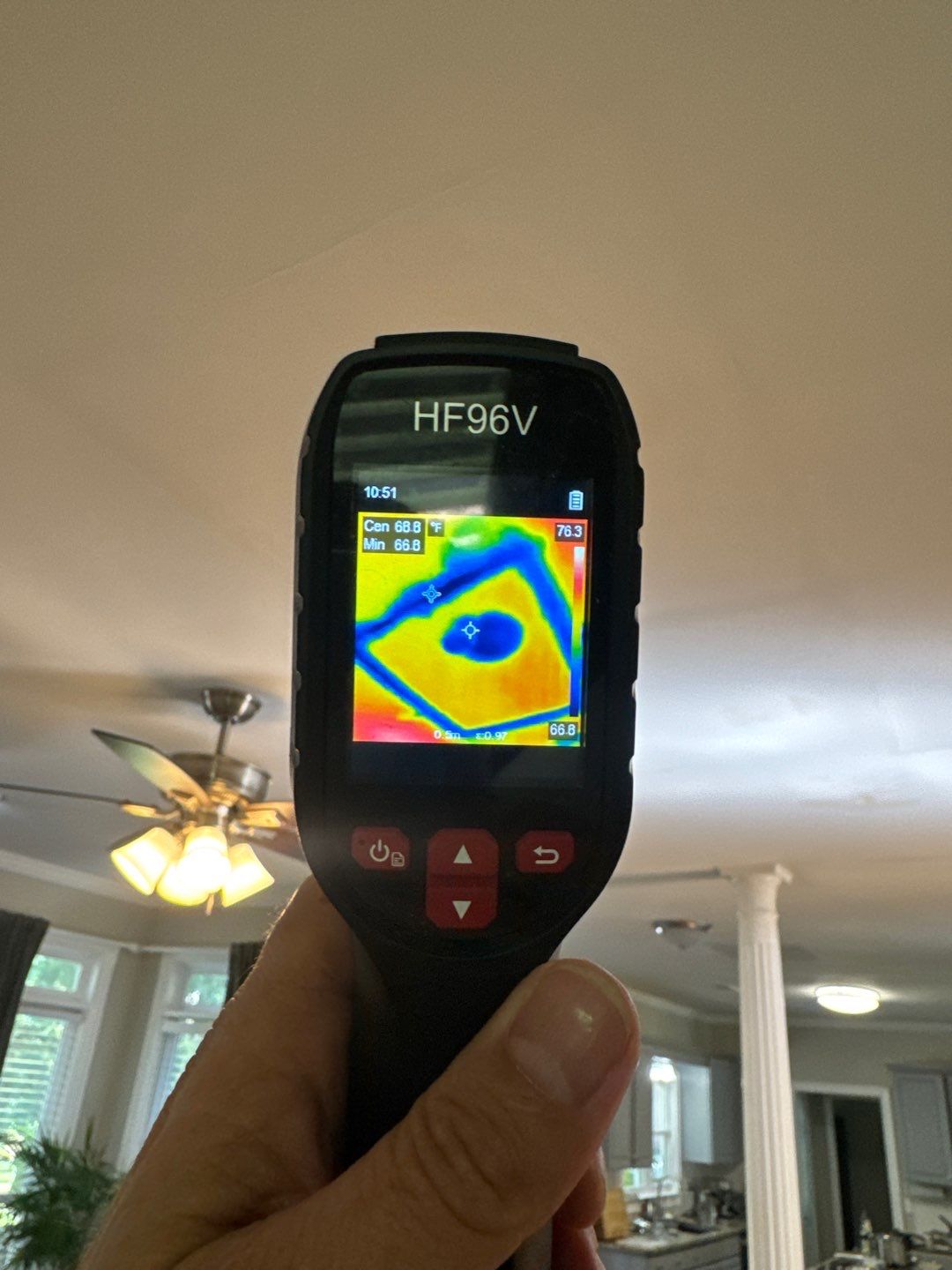
After heavy extraction, the job shifts. We use thermal imaging to locate the hidden moisture absorbed into building materials, and that second step builds our strict structural drying plan.
Atlanta Flash Storms Push Water Inside Fast
Atlanta's storm drainage system cannot handle the heavy rainfall rates the city now sees.
The National Weather Service frequently records massive rain totals from single-hour thunderstorms. When that volume hits Fulton and DeKalb counties, water enters homes quickly through window wells, thresholds, and basement seams.
Atlanta's thick red clay soil makes this much worse. It drains extremely slowly. Water entering a home during a storm keeps coming through foundation walls, and it leaks long after the rain stops because the ground remains totally saturated.
We dispatch directly from Norcross. We rapidly reach Sandy Springs, Dunwoody, and Brookhaven via Peachtree Industrial Blvd, avoiding flooded downtown traffic when every minute counts.
What We Find on an Atlanta Extraction Call
Every standing water call reveals hidden moisture the homeowner could never see.
A homeowner calls because there is an inch of water on a hardwood floor. By the time we arrive, the carpet pad in the adjacent room is saturated.
Carpet pad saturation happens incredibly fast. The dense foam layer absorbs water like a sponge and holds it. The carpet above can feel nearly dry while the pad underneath is ruined.
The second major issue is structural wicking — the upward movement of water through porous materials like drywall and framing. On a typical extraction call in Marietta, moisture meters spike two feet up the drywall, and the moisture traveled entirely across the room from the visible water source.
After extraction, we run infrared thermal cameras. These read temperature differences caused by hidden moisture inside walls. We never guess where the water went. We read hard data.
Every standing water call reveals hidden moisture. The homeowner usually has absolutely no idea it traveled that far.
Multi-Family Condo Leaks and HOA Triage
Atlanta features a massive urban core of high-rise condominiums and townhomes.
Water leaking from an upper unit creates severe liability confusion. It requires immediate triage to stop water from cascading downward.
We heavily document these complex multi-unit losses. We carefully separate the damage to satisfy the HOA Master Policy and individual HO-6 coverage. Proper documentation prevents massive billing disputes between neighbors and property managers.
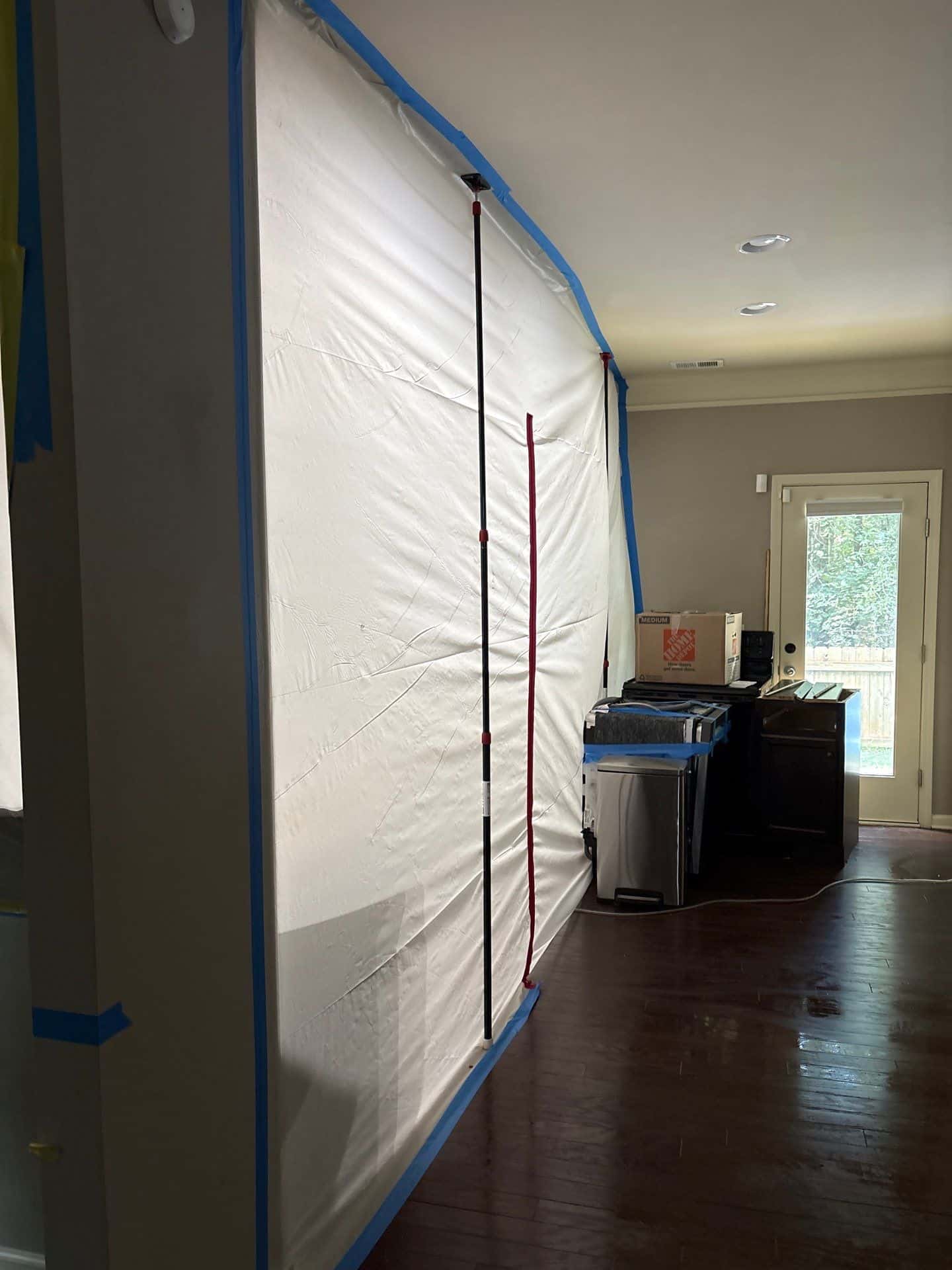
Extracted Water Does Not Mean the House Is Dry
Every single extraction visit includes a strict thermal scan and a drying plan.
A common question after extraction is whether the job is done. The floor looks clear. The water is gone. The job is absolutely not done.
Extraction and drying are two entirely distinct phases. Extraction removes bulk liquid water. Drying removes moisture vapor from structural materials like framing and insulation.
In Atlanta's extreme humidity, wet structural materials grow mold within 48 hours. We never just remove the truck and leave. We set industrial drying equipment and return daily to log psychrometric readings.
Your insurance carrier receives a flawless drying log with dates, readings, and equipment placement.
Insurance Claims and Georgia Bad Faith Laws
A water extraction claim requires undeniable proof to get paid fast.
Policyholders in Georgia are heavily protected by state law. Under O.C.G.A. § 33-4-6, insurance carriers face massive penalties for acting in bad faith.
If an insurer unfairly delays a properly documented extraction claim, they can be sued. Our flawless thermal imaging logs leave carriers with no excuse to deny coverage.
- The water category documented from the first hour
- Extraction volume logged, not estimated
- Remaining moisture mapped with thermal imaging
- Direct insurance billing to eliminate your financial stress
Managing EPD Solid Waste Disposal Rules
Emergency extraction often requires destructive tear-outs of ruined flooring.
When a carpet pad is saturated with contaminated floodwater, it cannot be dried. It must be removed, and disposing of contaminated building materials triggers state environmental rules.
We strictly follow all Georgia Environmental Protection Division (EPD) mandates. We package and dispose of all contaminated flooring according to Solid Waste Management Rule 391-3-4. Managing this red tape in-house completely protects you from state liability.
How Emergency Water Extraction Works Step-by-Step
Our extraction protocol strictly follows IICRC standards. Every single step is perfectly logged.
One Stop Restoration is an IICRC Certified Firm. This requires our technicians to apply documented extraction protocols on every job.
Truck-mounted extraction
We deploy heavy truck-mounted units first. These extract water across carpet, hardwood, tile, and concrete.
Moisture readings
We use pin meters to measure moisture content deep inside wood and drywall.
Thermal imaging
Every surface in the affected area gets scanned to reveal hidden water paths.
Category assessment
We classify the water source. Clean water can escalate to dangerous Category 2 quickly.
Drying equipment setup
Air movers and dehumidifiers are placed based exactly on the thermal scan data.
Emergency Water Removal Across Greater Atlanta
One Stop Restoration serves the full Greater Atlanta metro from our Norcross dispatch facility.
- Sandy Springs
- Dunwoody
- Brookhaven
- Buckhead
- Midtown
- Decatur
- Smyrna
- Marietta
- Kennesaw
- Roswell
- Alpharetta
- Johns Creek
We proudly serve properties across Fulton, DeKalb, Gwinnett, Cobb, and Cherokee counties.
Standing Water on Your Floor Right Now? Call Us
Do not wait. Standing water ruins your home faster by the minute.
Call 404-777-7077 right now. Give our dispatcher your exact address and the water source.
One Stop Restoration answers emergency calls 24 hours a day. We never use answering services. We dispatch heavy equipment to your property as fast as Atlanta traffic allows.
24/7 dispatch
Norcross base, on the I-285 corridor.
- 404-777-7077Answered by a live professional, 24 hours a day
- info@onestop-restoration.comFor non-emergency questions
- 6699 Peachtree Industrial BlvdNorcross, GA
Frequently Asked Questions About Water Extraction
Can you extract water from my wet carpet and save it?
If the standing water is clean and we arrive fast, we can often dry the carpet in place. However, the dense foam pad underneath usually requires removal. If the water is Category 3 sewage, the carpet must be safely disposed of.
Will my insurance cover the cost of emergency extraction?
Yes. Standard homeowners insurance policies actually require you to mitigate further damage. Emergency extraction stops water from destroying your walls and subfloors. We document the standing water photographically before extraction begins. We provide this undeniable proof directly to your adjuster.
How does a truck-mounted extractor compare to a wet vac?
There is no comparison. A wet vac lacks the suction power to pull water from beneath the surface. Our truck-mounted extractors are powered directly by the vehicle's engine. They pull massive volumes of water out of the carpet pad and subfloor simultaneously.
Do I have to pay out of pocket for emergency water removal?
In most covered insurance claims, you do not pay out of pocket for the extraction phase. We utilize direct insurance billing. We submit the invoice and the extraction logs directly to your carrier. You do not have to front the money during an emergency.
What happens if my insurance company denies the extraction claim?
We document your loss flawlessly from hour one to prevent baseless denials. Under Georgia law (O.C.G.A. § 33-4-6), insurers cannot unreasonably delay or deny proven mitigation claims. Our daily moisture logs provide the hard evidence you need to force a fair settlement.