
Home/Projects/Cumming ceiling mold
Project · Cumming, GACeiling Mold Remediation Across a Bathroom, Hallway and Living Room
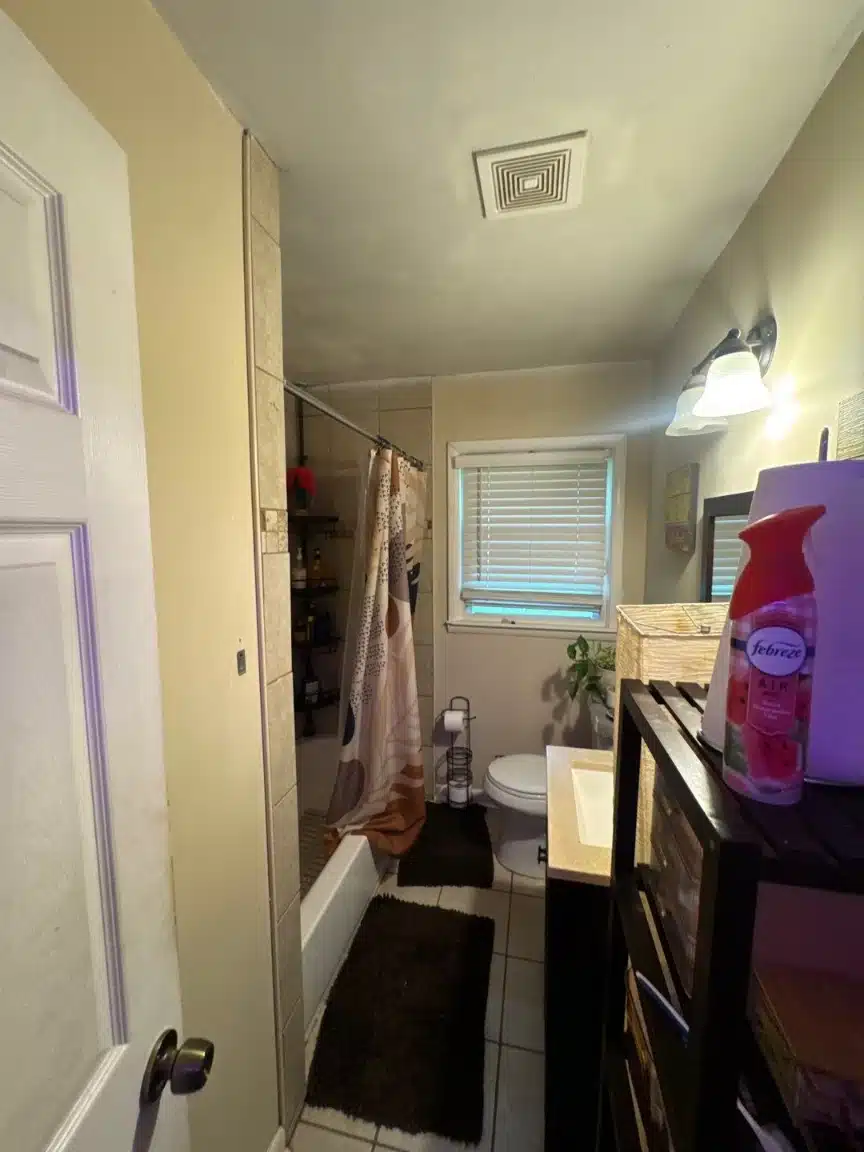
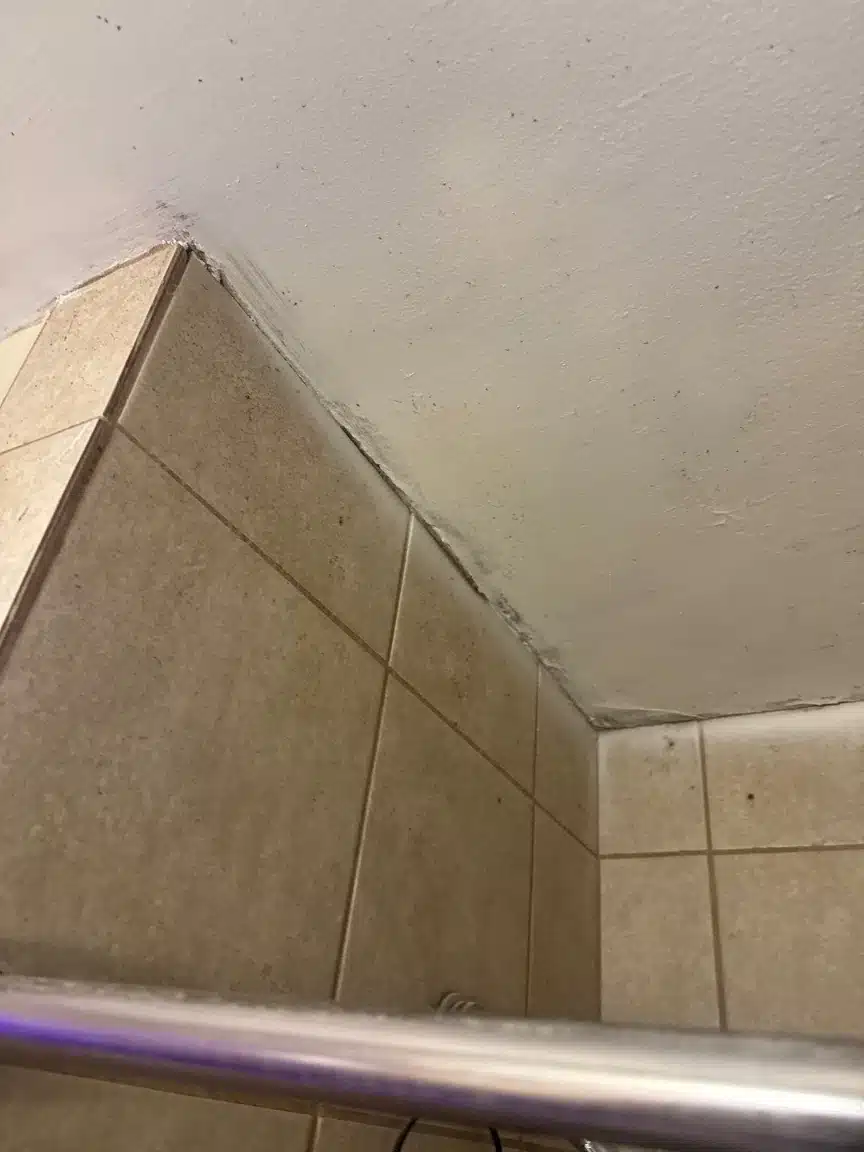
Growth had established in the ceilings of three connected spaces in a Cumming home — the bathroom, the hallway running off it, and the living room beyond. Ceilings share a cavity, so what starts above one room rarely stays there.
One Stop Restoration scoped the affected area, built containment before touching anything, removed and treated what the readings marked, dried the structure, then rebuilt and refinished all three ceilings.
Why It Was in Three Ceilings, Not One
A bathroom is the most common starting point for ceiling growth in a Georgia home.
Warm, wet air rises off a shower and finds the ceiling first. If the exhaust fan is underpowered, vents into the attic instead of outside, or simply gets switched off too early, that moisture sits against the drywall and the framing above it. In Atlanta's humidity there is no drying gradient to carry it away, which is why growth here starts in days rather than weeks.
From there it travels. The ceiling cavity above a bathroom is usually continuous with the hallway and the rooms it connects to, so the affected area follows the joist bays rather than the floor plan. We scoped the full run with thermal imaging and moisture meters before assuming any boundary — the same moisture detection process behind every job we scope.
Containment Before a Single Ceiling Was Opened
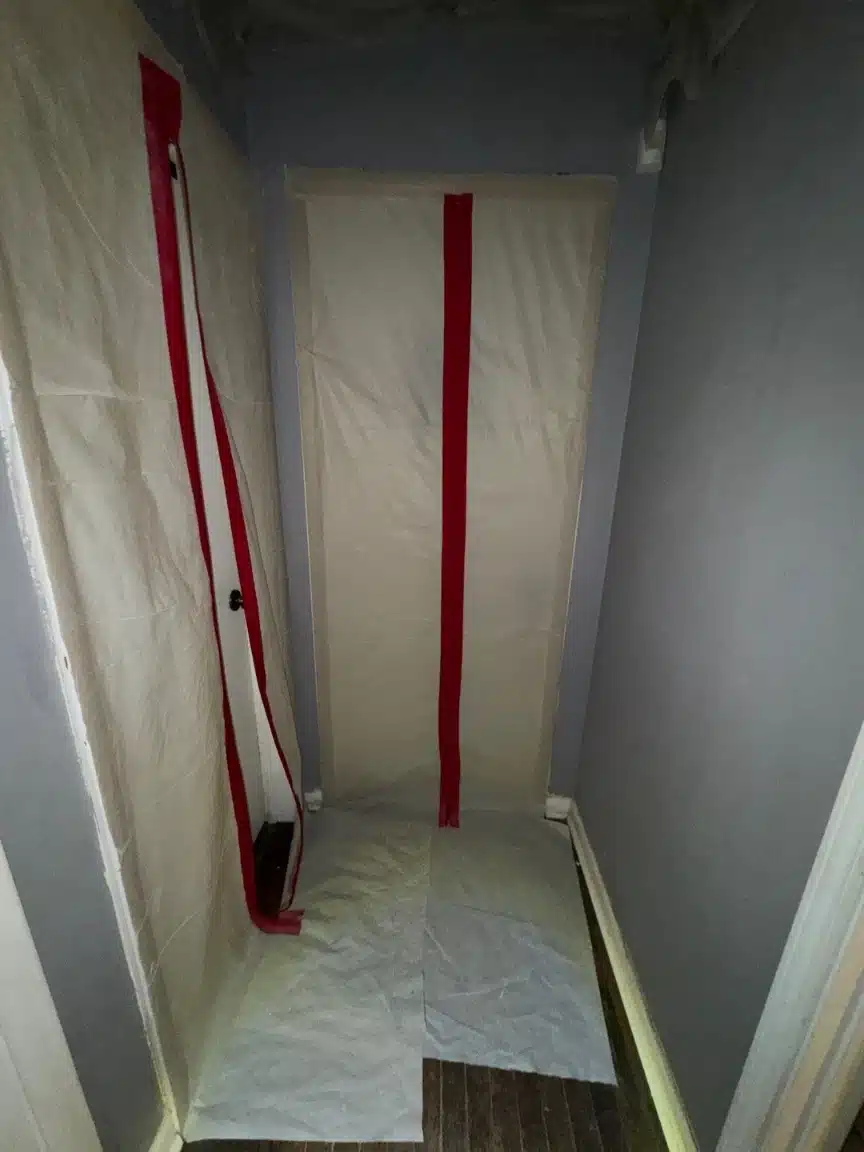
Cutting into an affected ceiling without containment sends spores into every room the hallway serves.
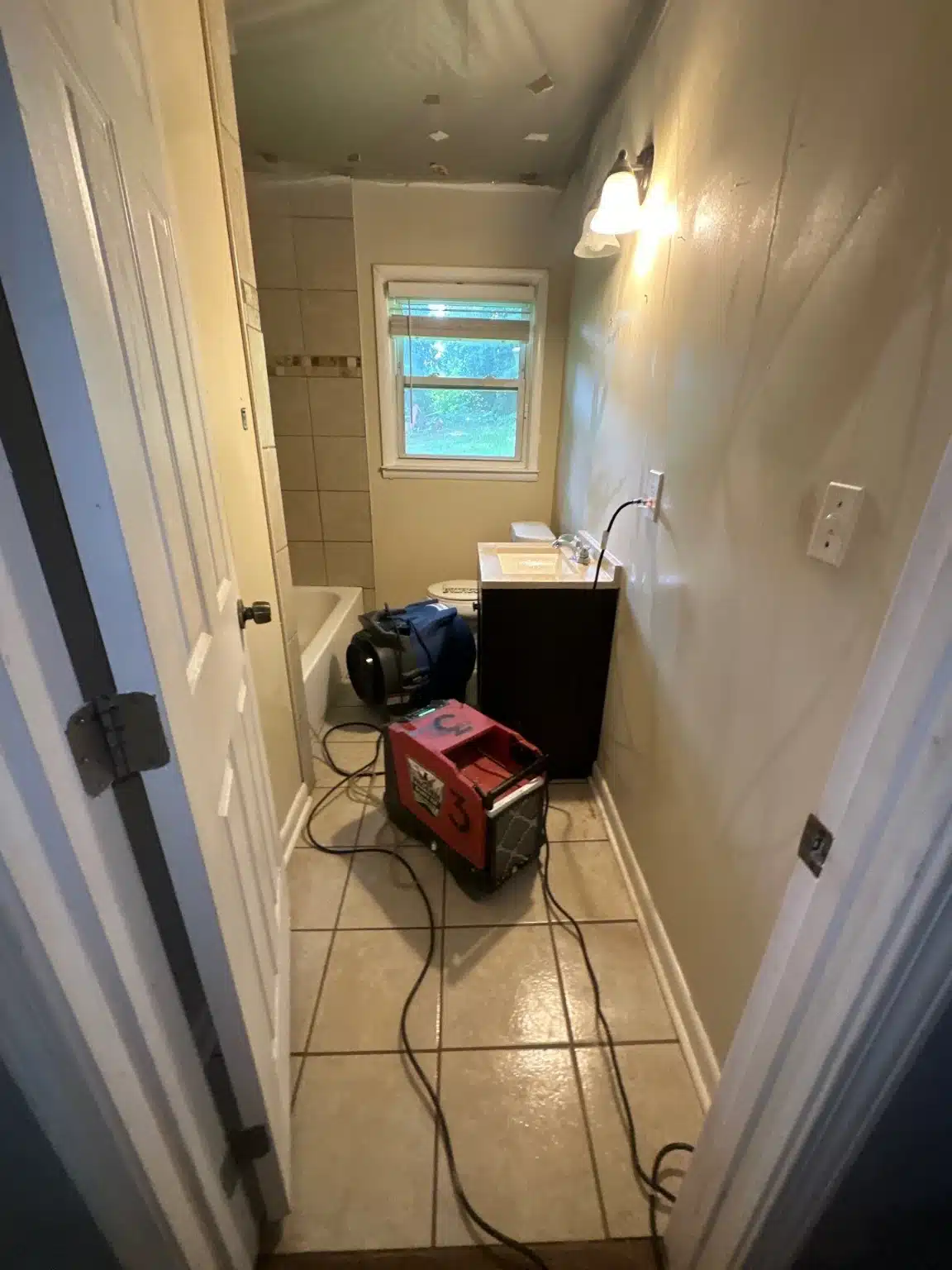
Sealed polyethylene barriers isolated the work zone from the rest of the home and floors were protected end to end. HEPA-filtered air scrubbers held the area under negative pressure, so air moved into the containment and never out of it.
That sequencing is not optional under IICRC S520. It is also what makes it possible to work in the middle of an occupied house without contaminating the clean side.
Removal, Treatment and Drying
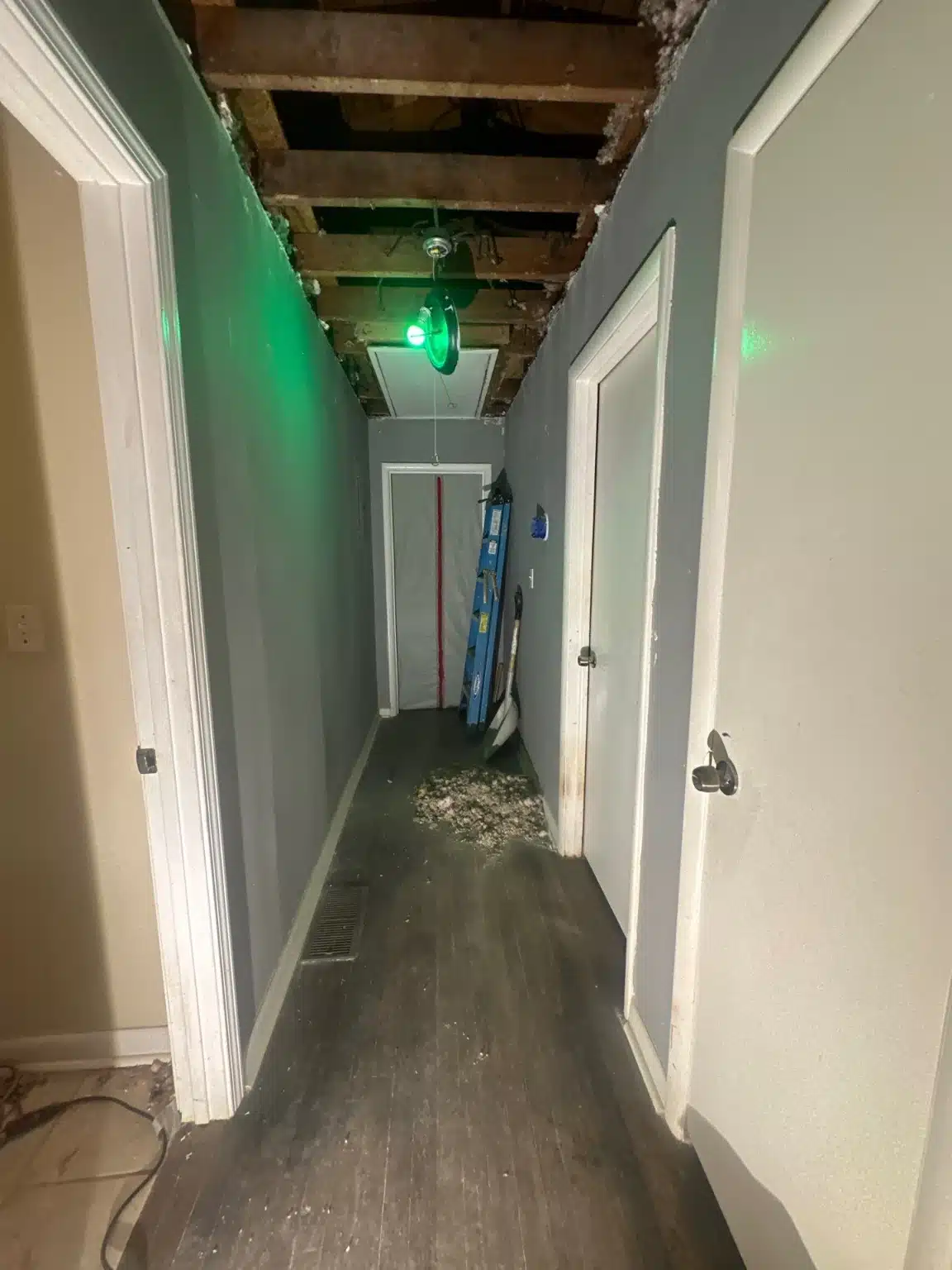
Non-salvageable drywall came out inside the containment and was bagged before it left.
With the ceilings open to the joists, the framing was HEPA-vacuumed and treated with an EPA-registered antimicrobial. Drying equipment was then set against the exposed assembly rather than aimed at the middle of the rooms, and readings were logged at each visit until the framing reached its dry standard.
Rebuilding over damp framing traps moisture behind new material and guarantees the problem returns, which is the whole reason mitigation and reconstruction are separate phases. On older properties, an independent testing firm checks building materials before any tear-out begins. Where material needs specialist removal, a licensed abatement contractor handles it, and we schedule our work around theirs.
Rebuilt, Refinished and Verified
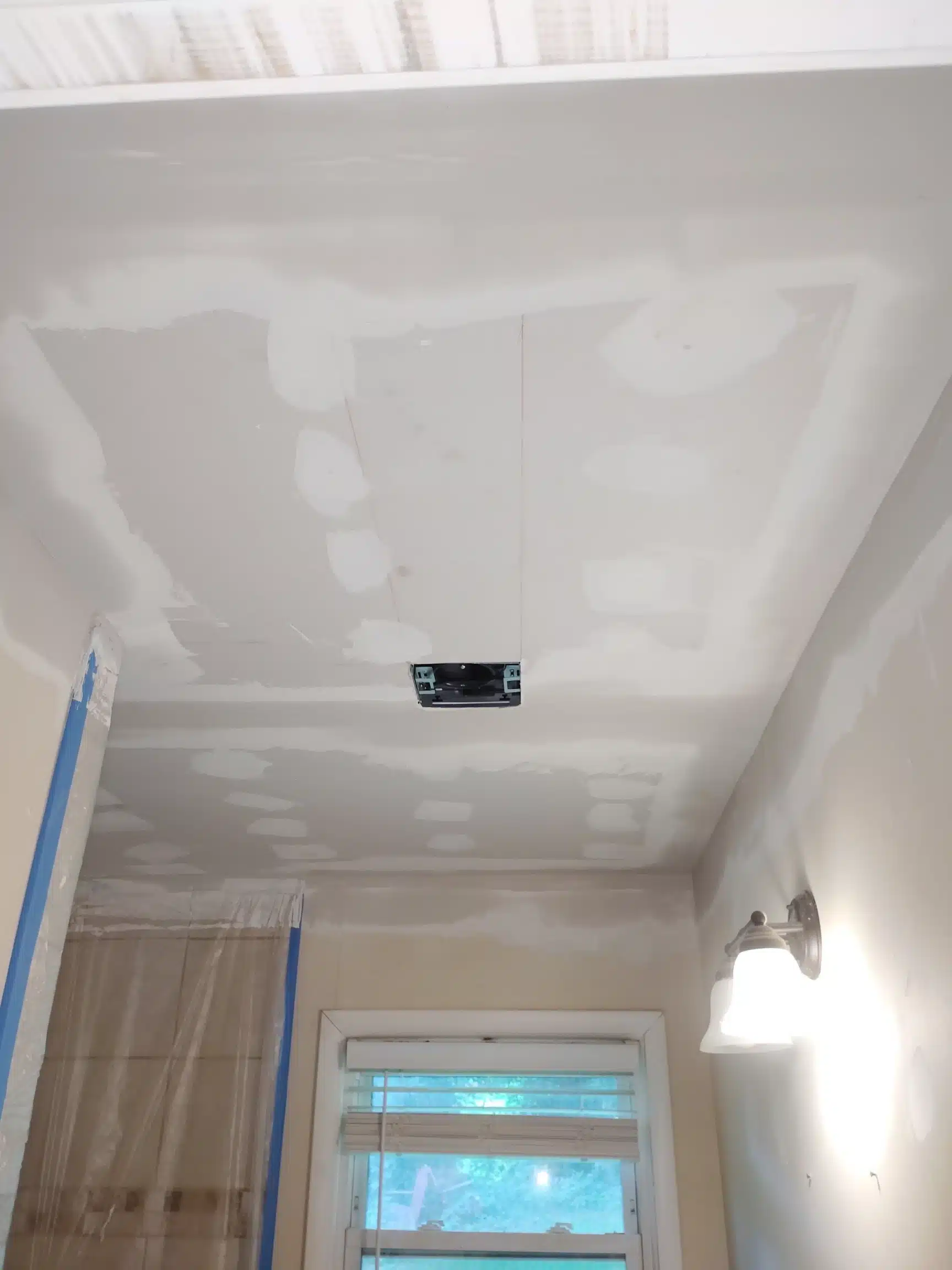
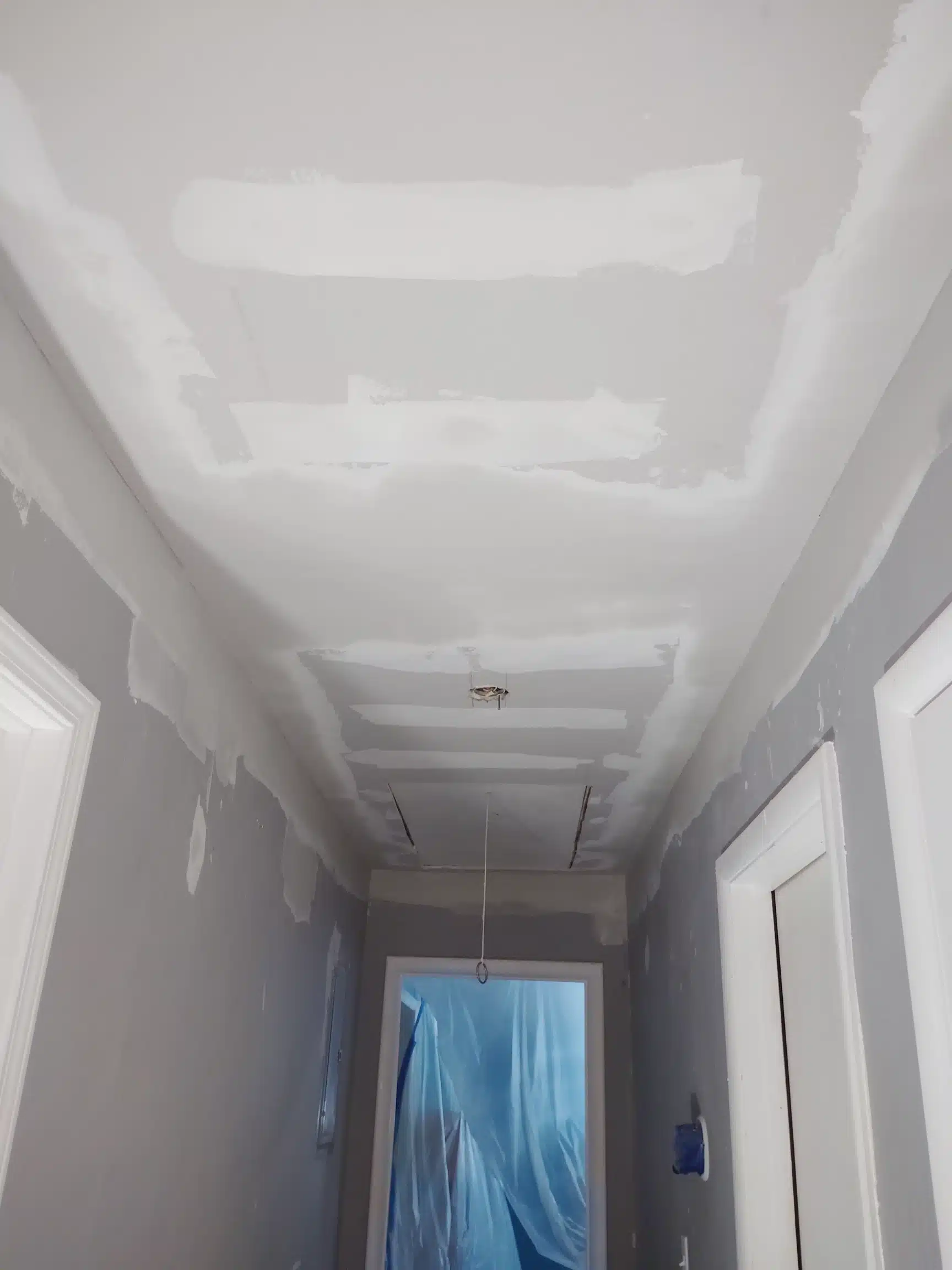
New drywall, taped, finished and painted across all three ceilings.
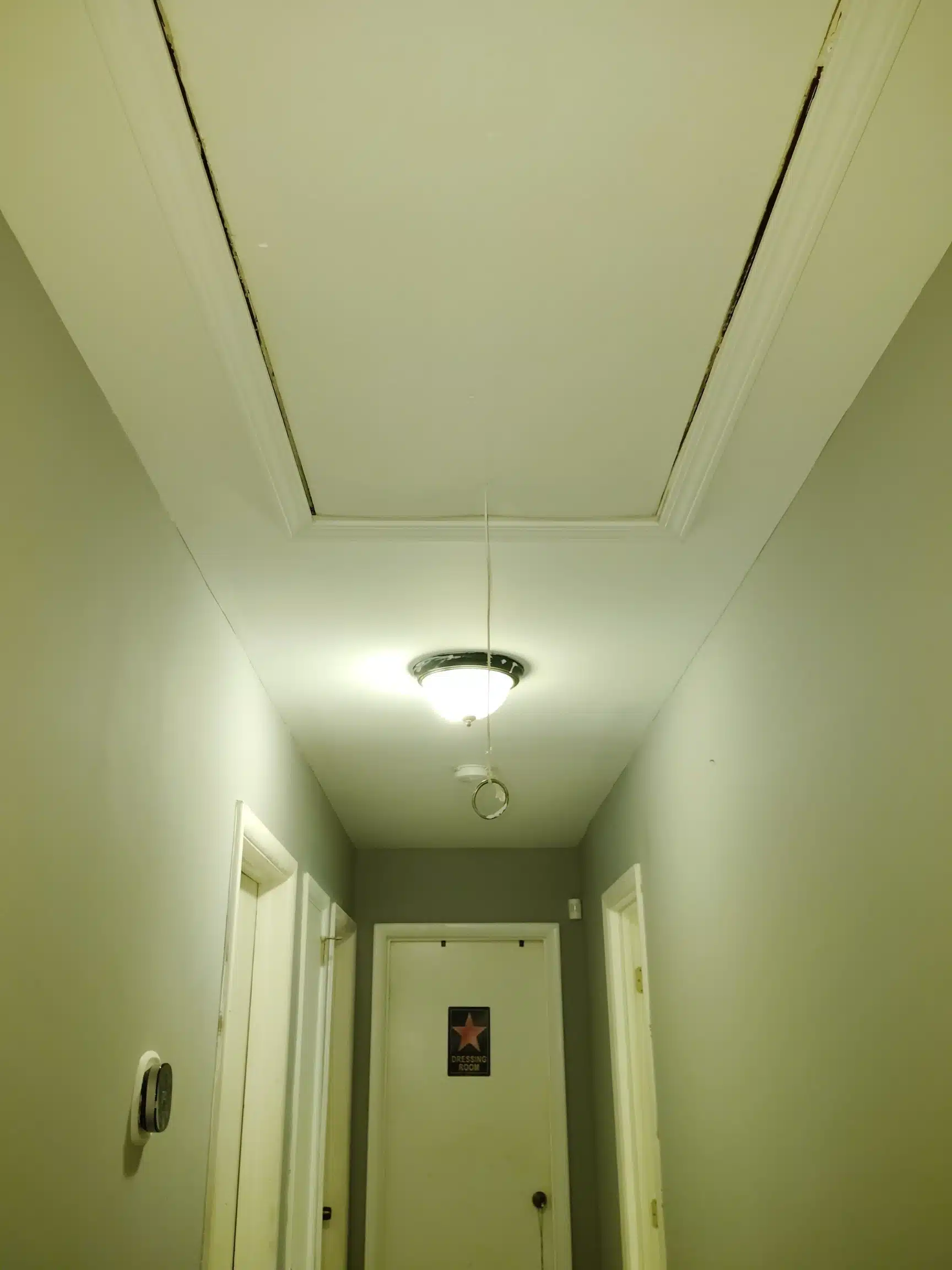
The hallway was rebuilt around the existing light fixture and attic access hatch, and the homeowner's LED cove lighting went back exactly as it was. The finished ceilings show no patch line and no seam.
Under IICRC S520 the job is not closed on our own assessment. An independent industrial hygienist performs clearance sampling and containment comes down only once those results confirm safe spore levels. The report is added to the permanent file, which matters for the insurance claim and for any future real estate disclosure. Our full protocol is set out on the mold remediation page, and if the growth is dark and you want the species confirmed, see black mold removal and Stachybotrys testing.
Because the reconstruction ran under the same contract as the remediation, there was no contractor handoff between drying and rebuild, and no gap in the file the adjuster received.
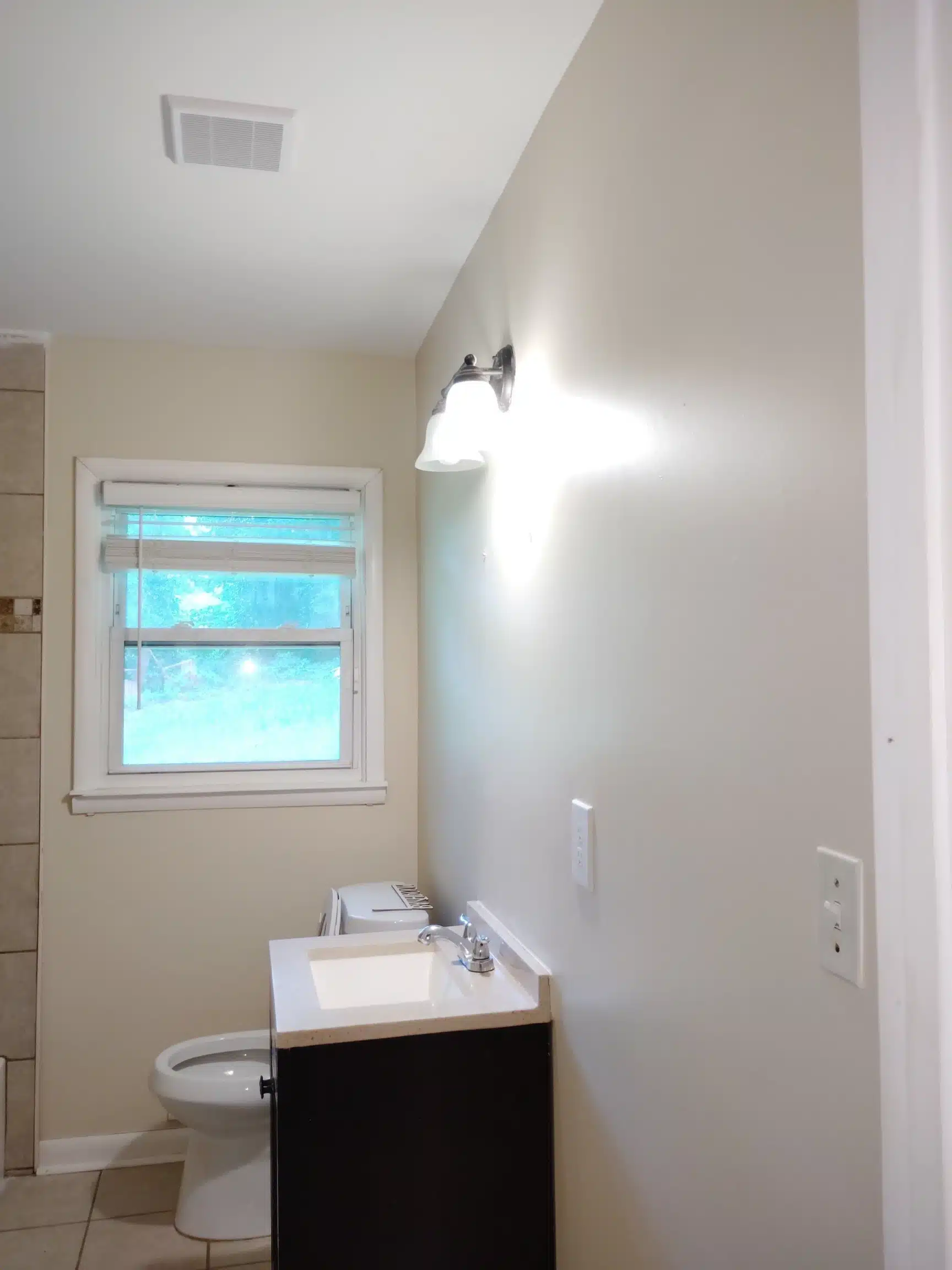
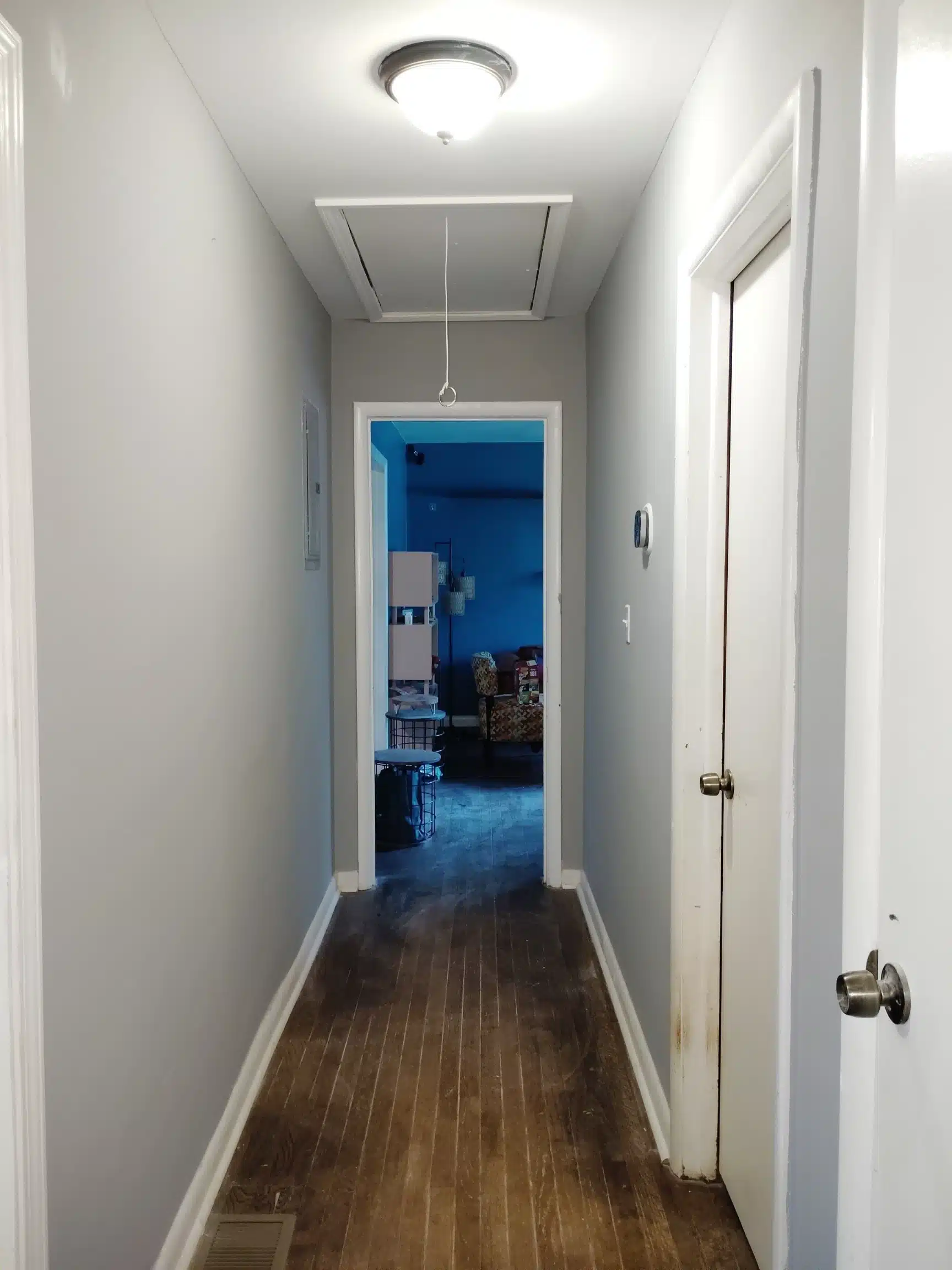
Full Project Gallery
Twelve frames from the same job, in order: what we found, containment, removal, drying, rebuild, then the finished rooms.
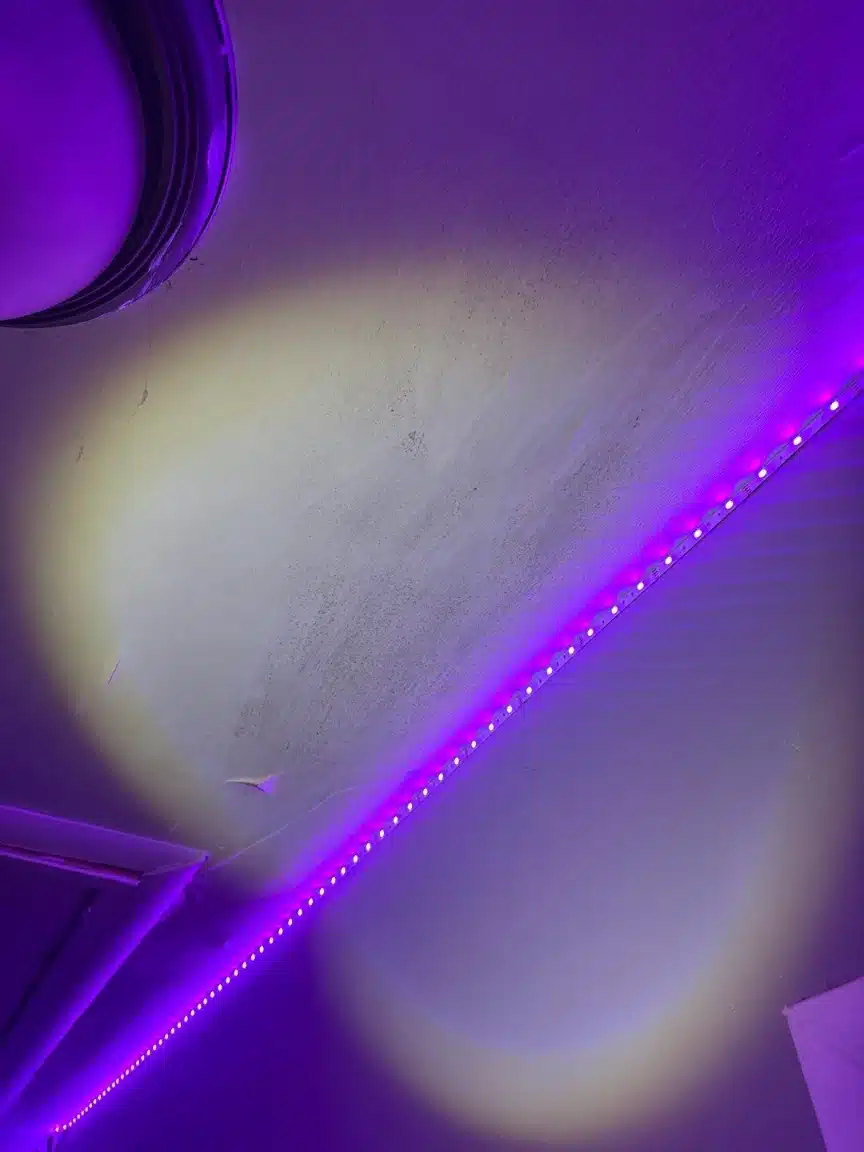
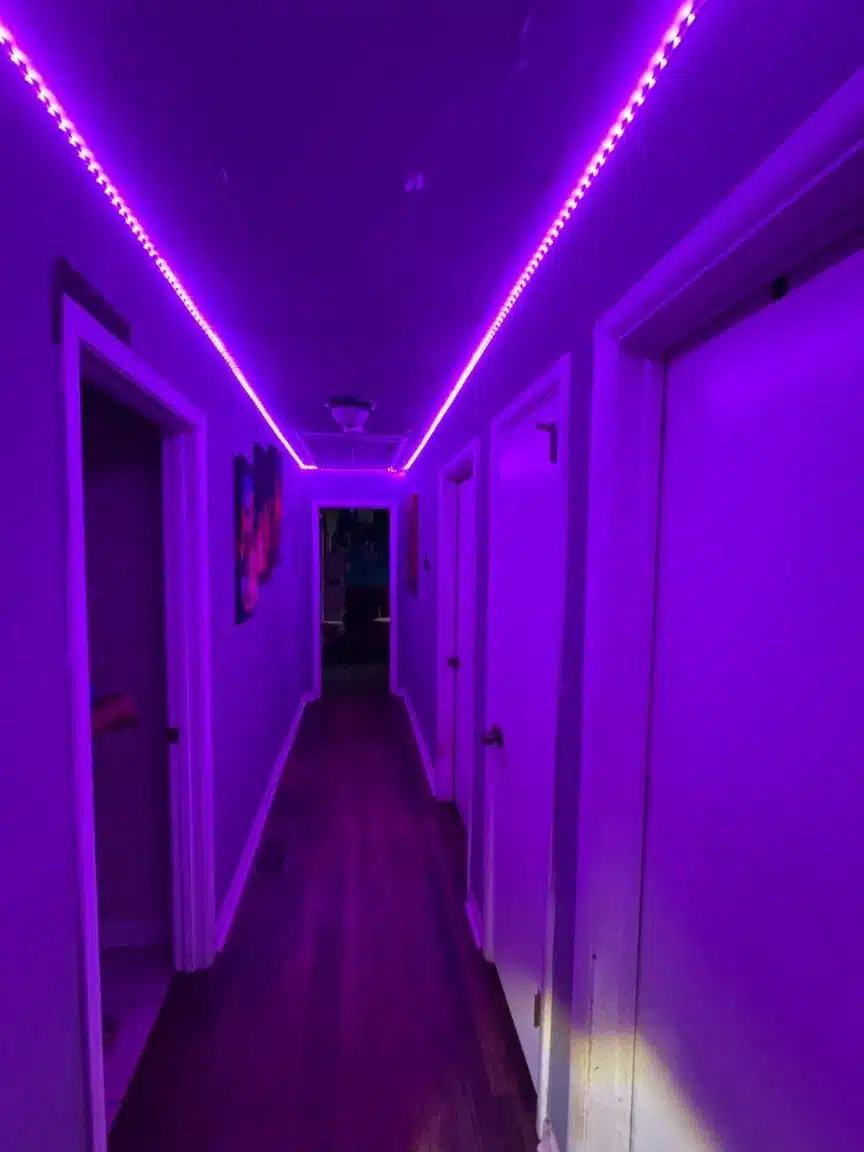
Services Used on This Job
Dark Marks Spreading Across a Ceiling?
Call 404-777-7077 to schedule an assessment.
Tell us which rooms are affected and how long the marks have been there. We will scope the full run with meters before anything is cut, and explain exactly what the readings show.
For non-emergency questions, email info@onestop-restoration.com.
24/7 dispatch
Norcross base, on the I-285 corridor.
- 404-777-7077Answered by a live professional, 24 hours a day
- info@onestop-restoration.comFor non-emergency questions
- 6699 Peachtree Industrial BlvdNorcross, GA