
Home/Projects/Woodstock laundry room
Project · Woodstock, GAWater Damage in a Laundry Room and the Hallway Beyond It
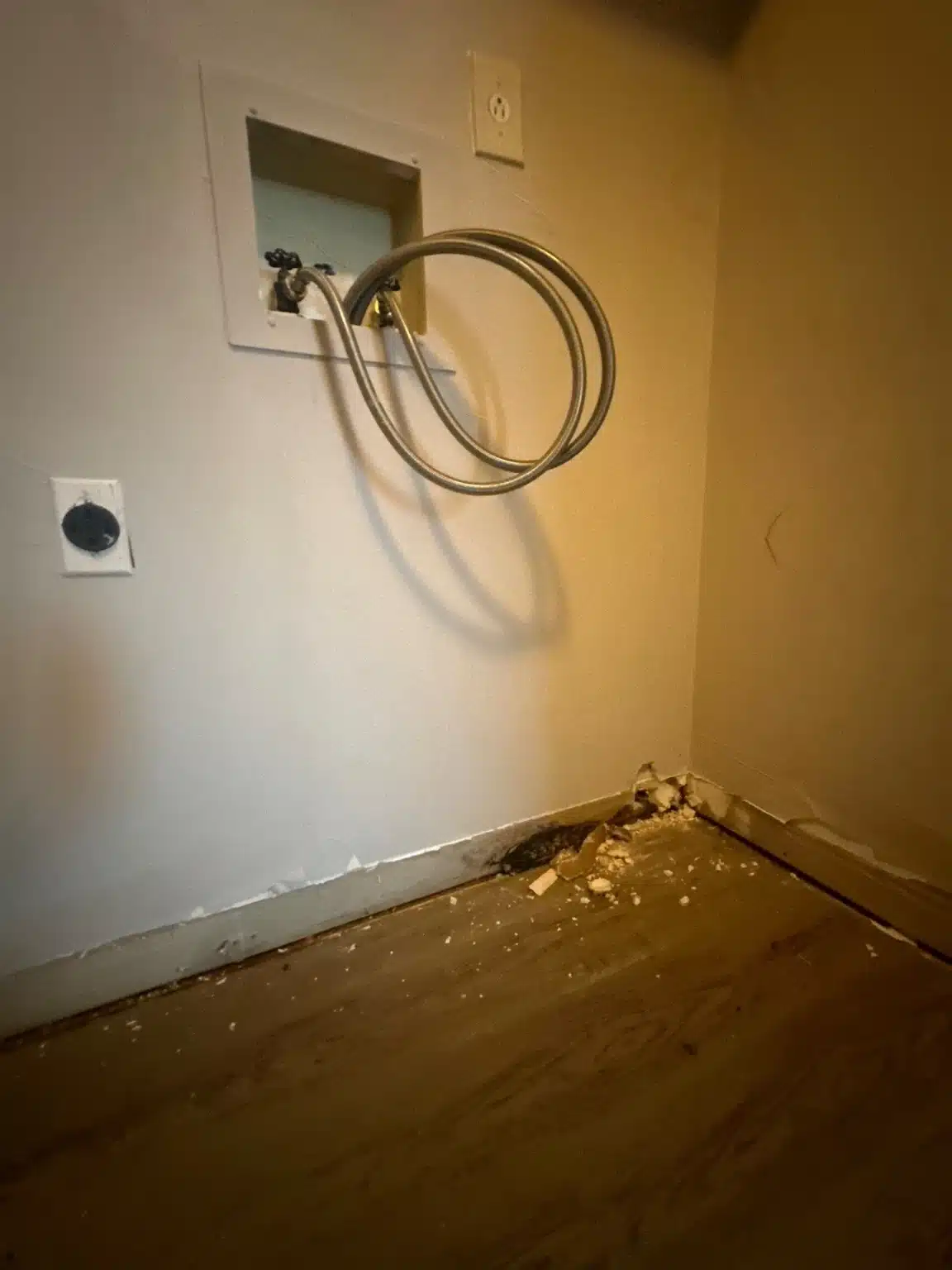
A water release in a Woodstock laundry closet did not stay in the closet. It ran out under the door, along the hallway, and into the flooring of the rooms either side before anyone saw standing water.
One Stop Restoration mapped how far the water had actually travelled, removed the affected flooring and trim, and dried the structure back to a documented standard. This was a mitigation-only scope: the finishes were left for the owner to put back on their own schedule.
Why a Laundry Closet Causes Damage Out of Proportion to Its Size
Laundry rooms concentrate more water risk per square foot than anywhere else in a house.
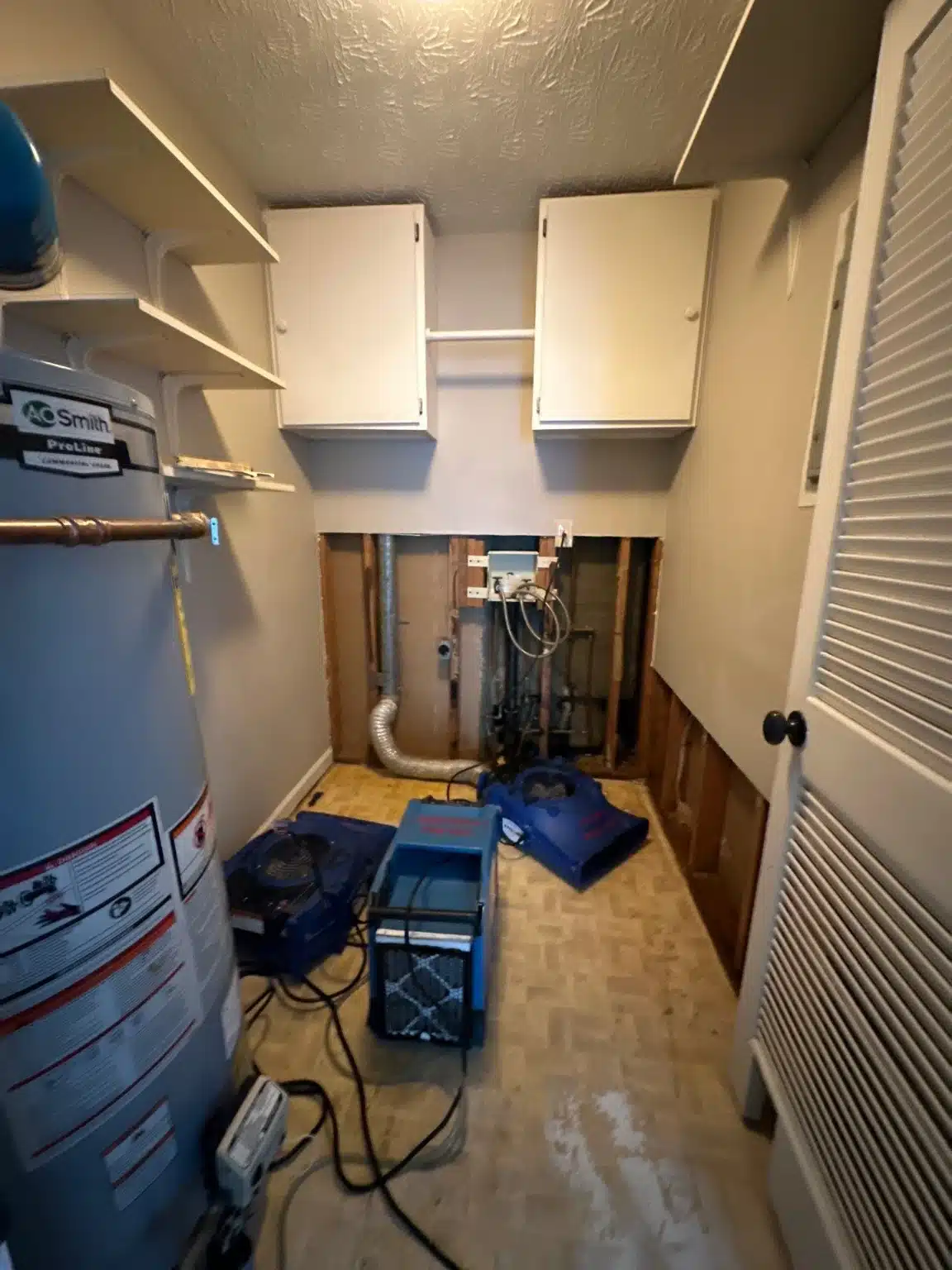
Two rubber supply hoses sit under mains pressure permanently. A drain line takes the full discharge of a machine emptying at speed. In many Georgia homes the water heater shares the same closet, which puts a third connection and a tank in the same small footprint. Every one of those is a live failure point, and the closet is behind a louvered door that nobody opens between loads.
Then there is the geometry. A laundry closet has almost no floor area, so it holds almost no water. Everything above a few millimetres runs out under the door and into the hallway, where it spreads flat across the flooring and wicks into the wall base as it goes. By the time it is visible on the hallway floor, it has already been under the boards of both adjoining rooms.
Mapping How Far It Actually Went
The wet area on the surface is the smallest part of the problem.
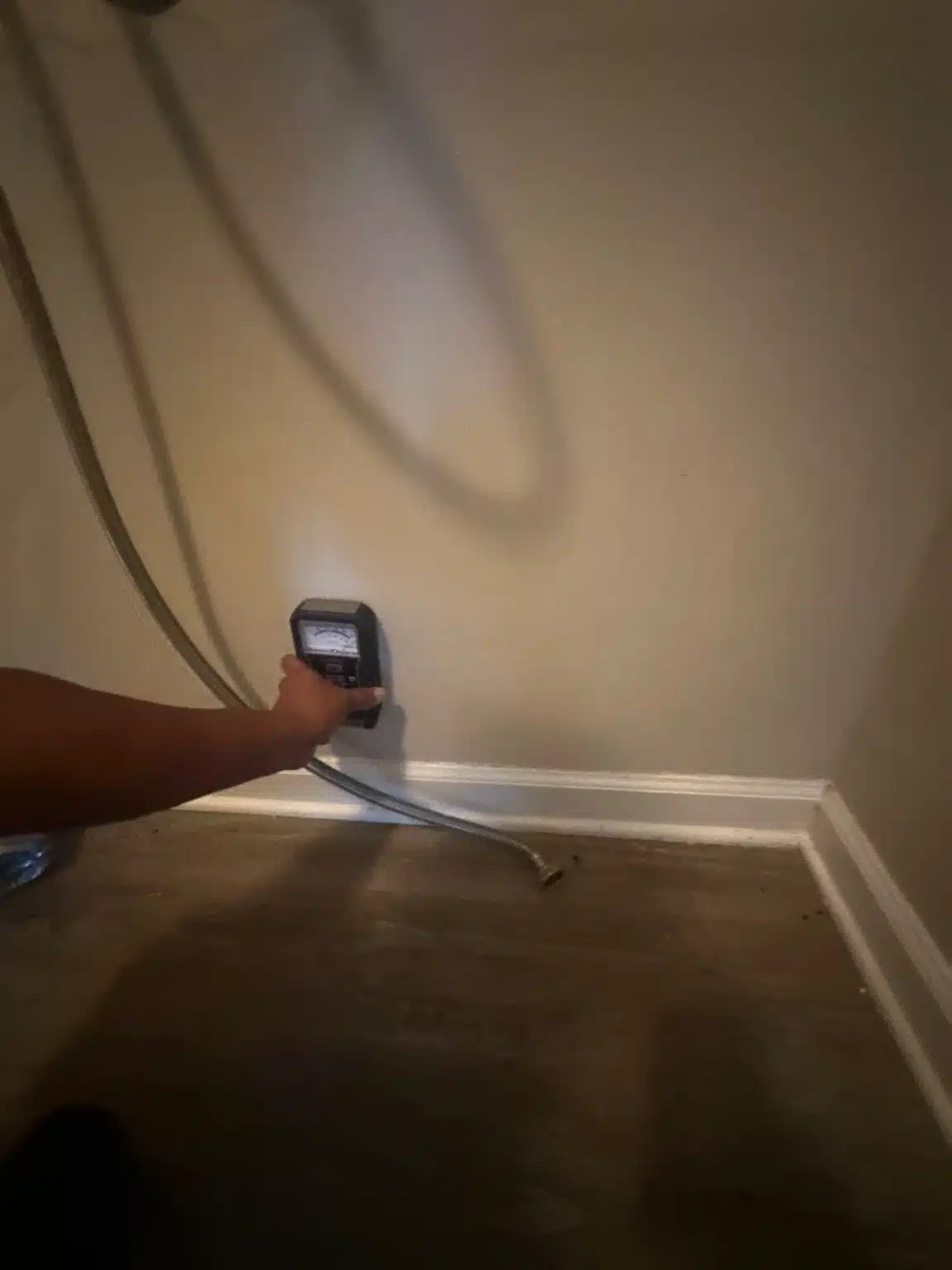
We read the wall base and the flooring at intervals along the whole run rather than assuming the water stopped where the discolouration did. A pinless meter screens a large floor area quickly; readings above the baseboard show how far moisture wicked up the wall assembly. Everything was logged by location before a single board came up.
That map is what defines the removal boundary. Material inside it comes out, material outside it stays down, and both the owner and the adjuster can see the reasoning. Same moisture detection process we run on every call — and on a hallway running between rooms, it routinely finds moisture two rooms from where anyone thought the problem was.
Removal and Structural Drying
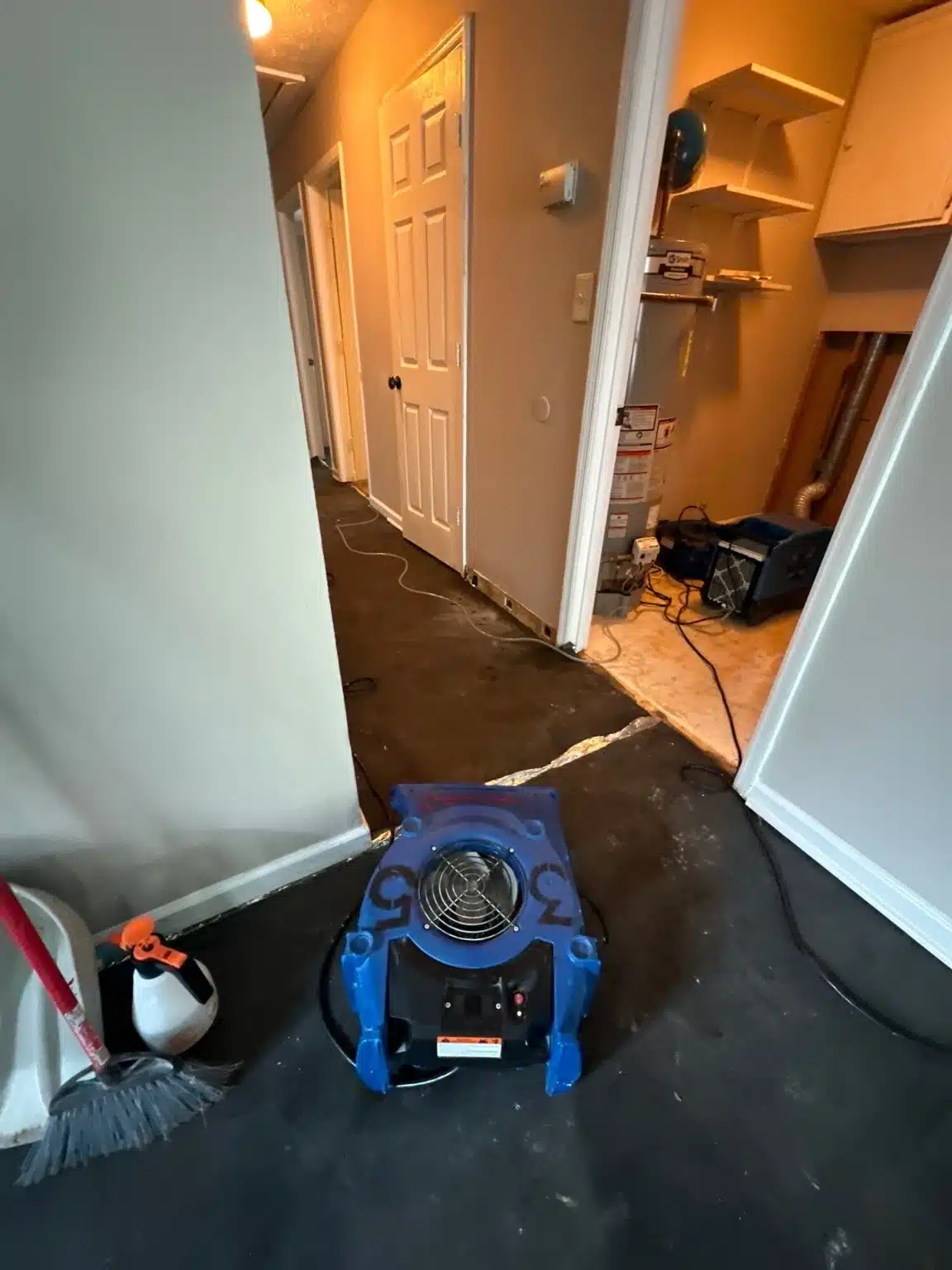
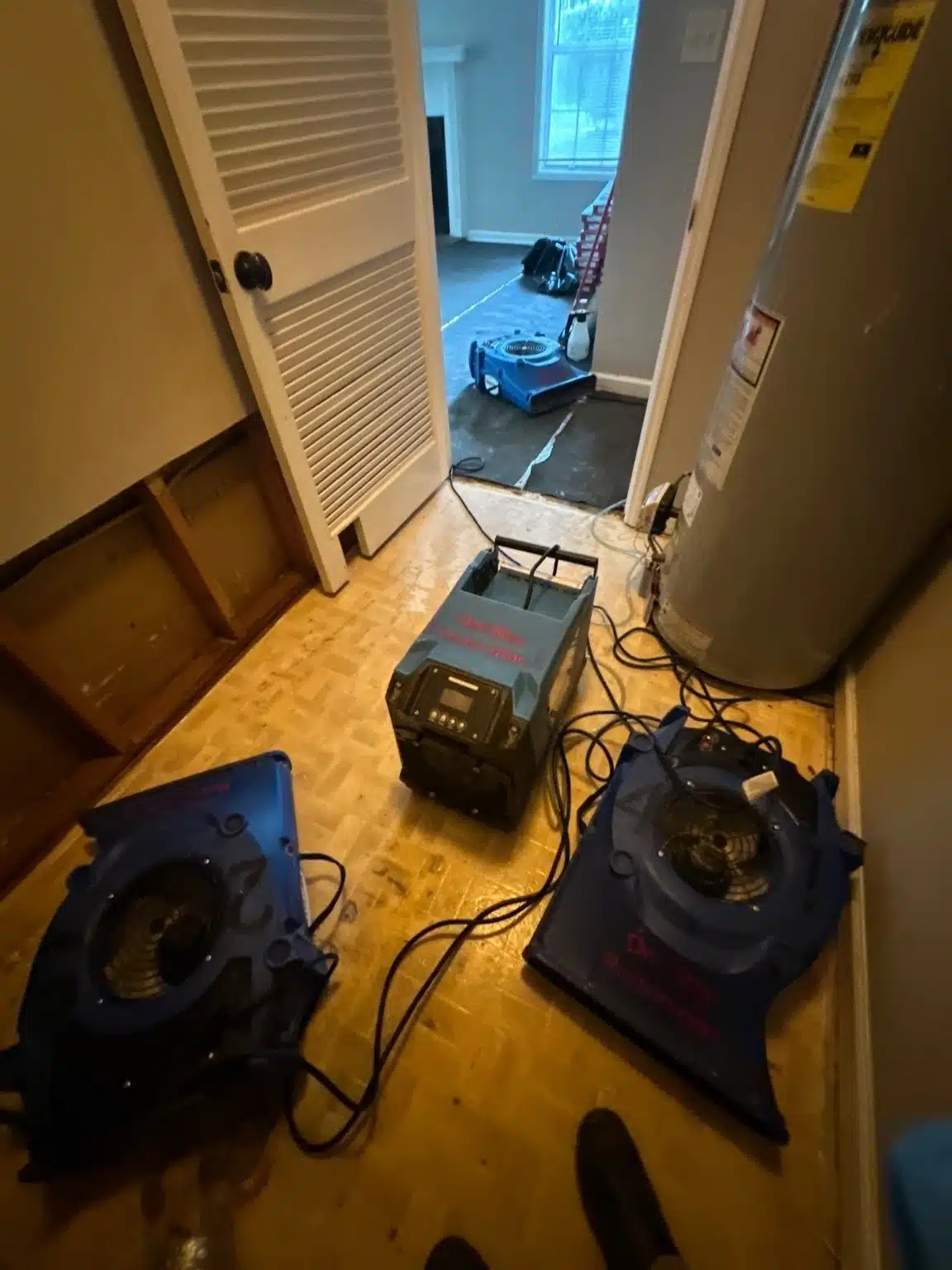
Flooring and trim came out where the readings marked them, and the structure was dried from there.
Baseboards were removed to open the wall base, and the affected flooring was lifted back to the subfloor so the assembly could dry rather than trapping moisture under a finished surface. Air movers were positioned against the opened structure, not aimed at the middle of the room, with dehumidification pulling the released moisture out of the air.
Readings were logged at every visit and equipment stayed until the subfloor and wall base hit their dry standard. That distinction — drying to a number rather than to how a floor feels underfoot — is what separates mitigation from restoration, and it is why household fans cannot do this job in Georgia humidity.
Dried, Documented and Handed Back
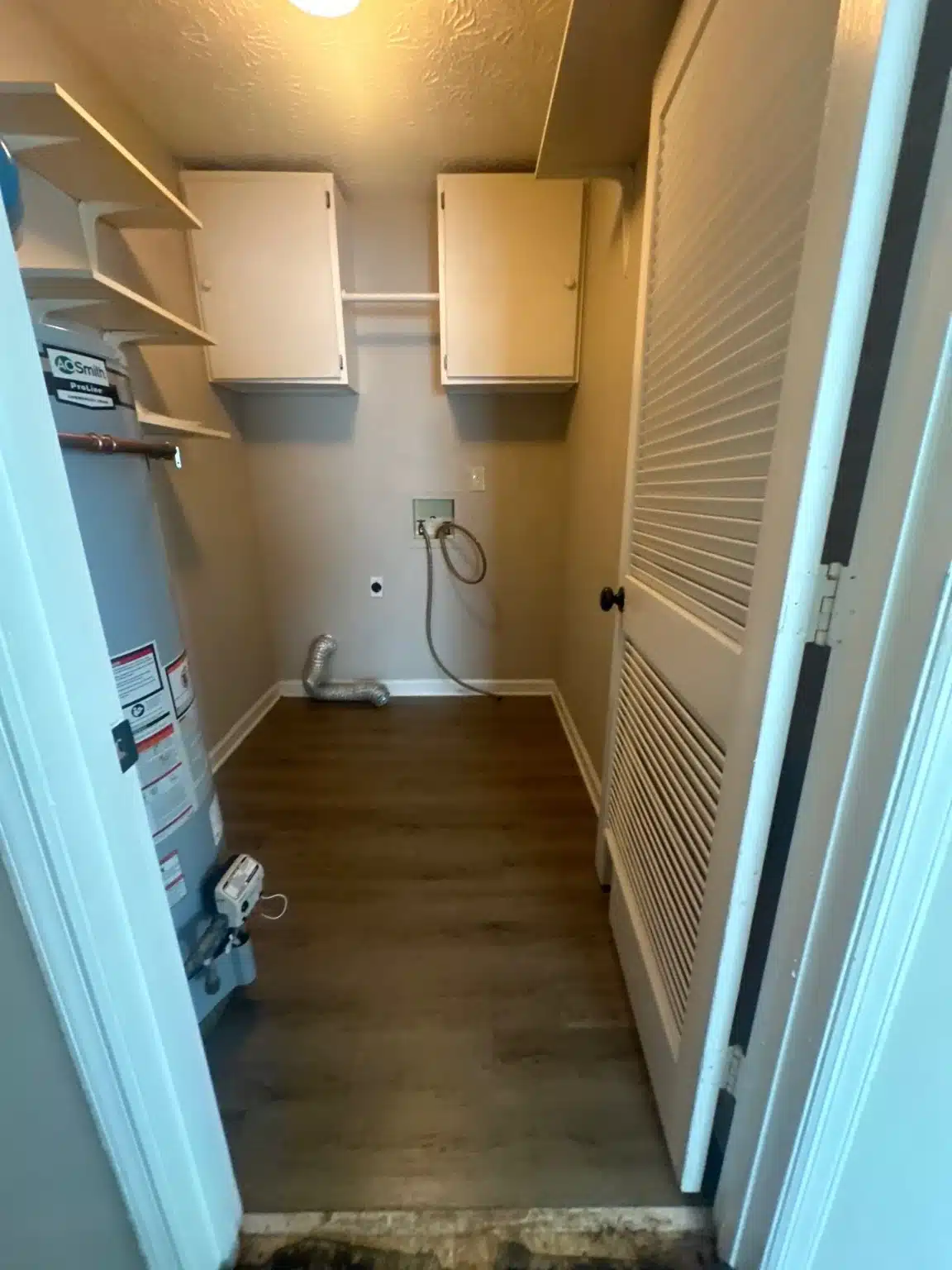
The scope ended once the structure was verified dry. Reconstruction was not part of this contract.
The owner received the drying log with dated readings by location, which is the document an adjuster needs to authorise the claim. Because this was an appliance or supply connection failure rather than a slow seep, it falls on the sudden and accidental side of a standard Georgia HO-3 policy — but only if the onset can be evidenced, which is exactly what the day-one readings do.
The space was handed back dry and open, ready for flooring and trim whenever the owner chose to schedule it. Where an owner wants the finishes carried under the same contract, we handle that too — see reconstruction and rebuild.
Worth saying plainly: if the failure was a supply hose, replace both. Braided stainless lines cost very little next to a hallway of flooring, and a hose that has been under pressure as long as its twin is not far behind it.
Full Project Gallery
Six frames from the same job: the source, how the boundary was set, the removal, and the cleared space left dry for build-back.
Services Used on This Job
Water Coming Out of a Laundry Closet?
Call 404-777-7077. We answer the phone 24 hours a day.
Shut the supply valves behind the machine if you can reach them safely, then call. We will map how far it ran before anything comes up, and dry to a documented standard.
For non-emergency questions, email info@onestop-restoration.com.
24/7 dispatch
Norcross base, on the I-285 corridor.
- 404-777-7077Answered by a live professional, 24 hours a day
- info@onestop-restoration.comFor non-emergency questions
- 6699 Peachtree Industrial BlvdNorcross, GA