
Home/Projects/Norcross AC leak mold
Project · Norcross, GAMold Remediation After an Air Conditioning Leak in a Basement
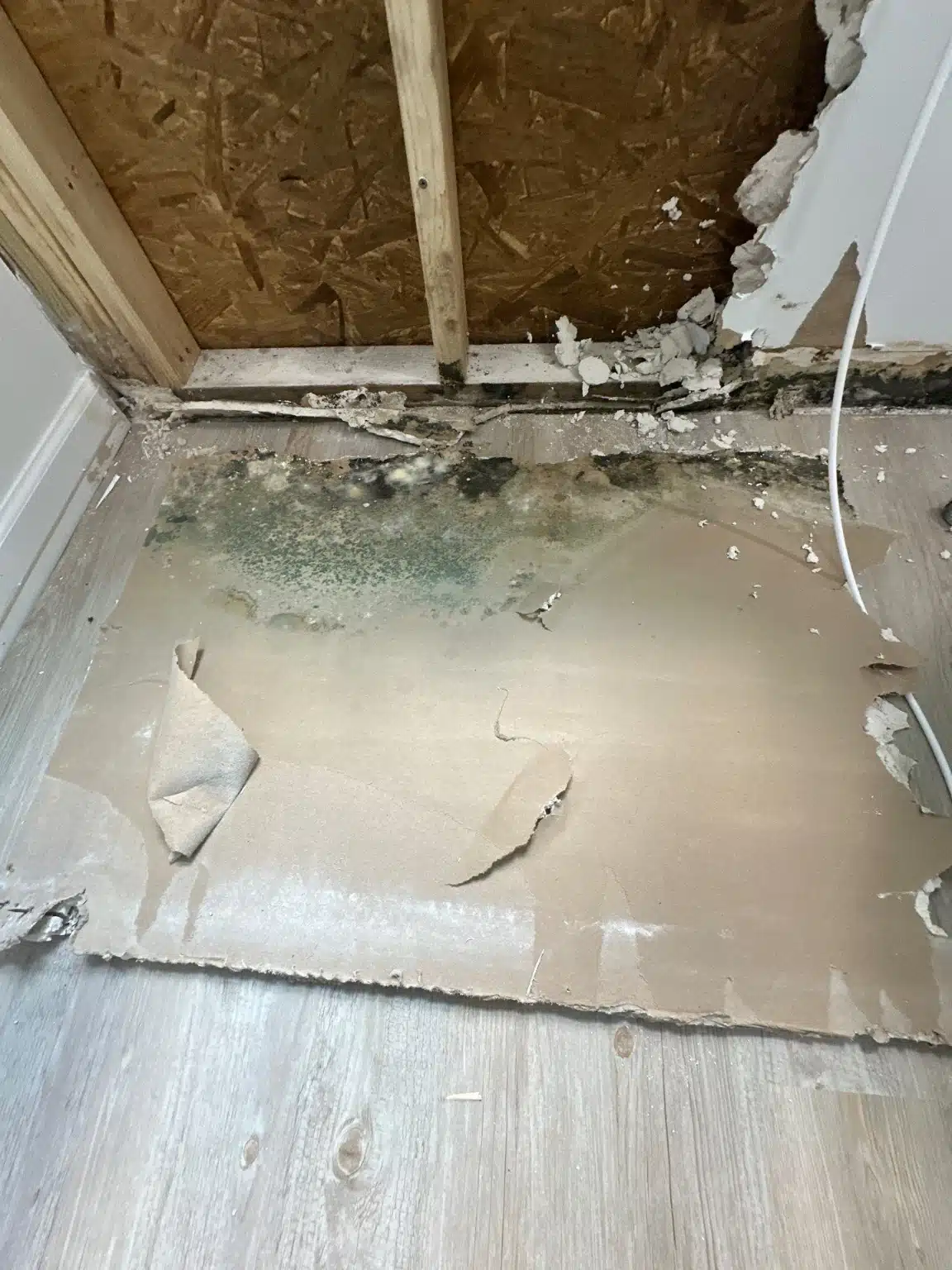
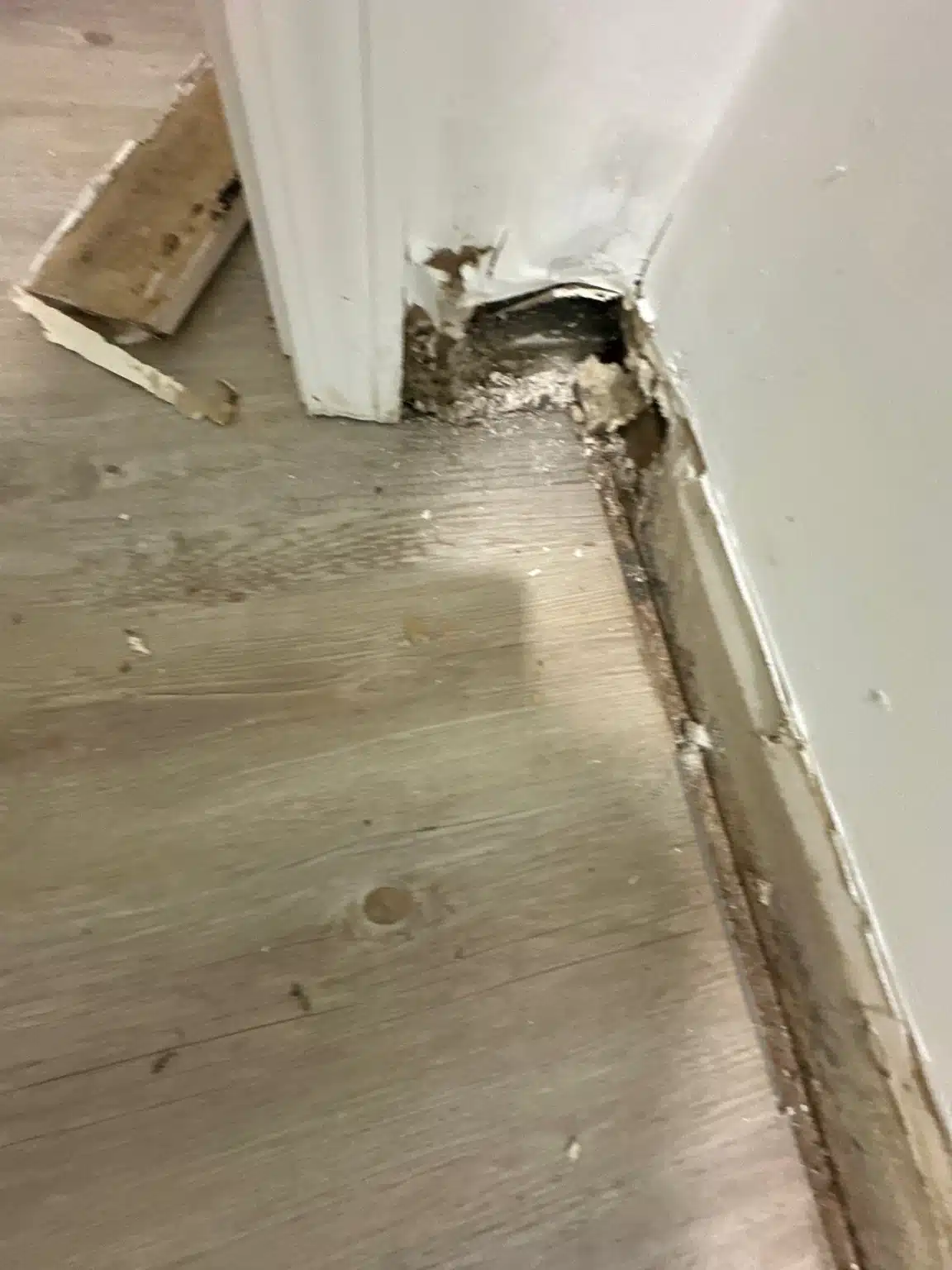
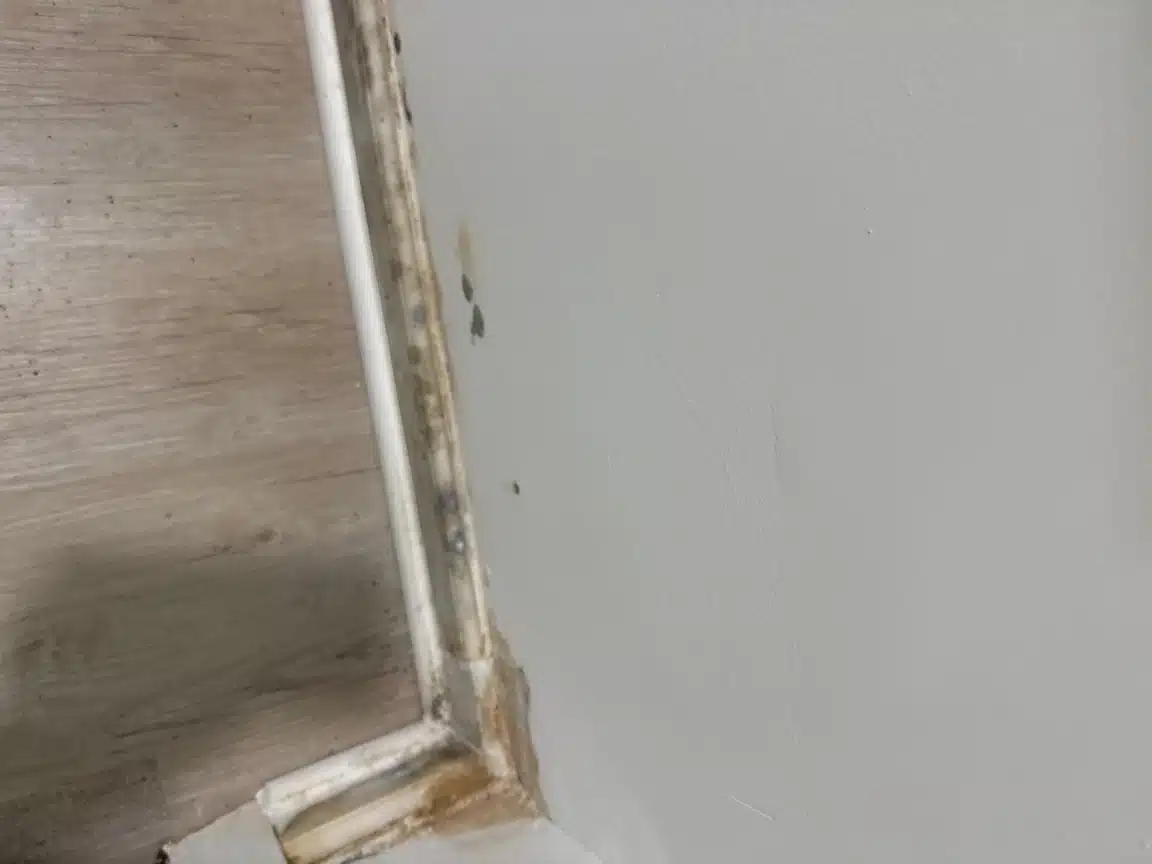
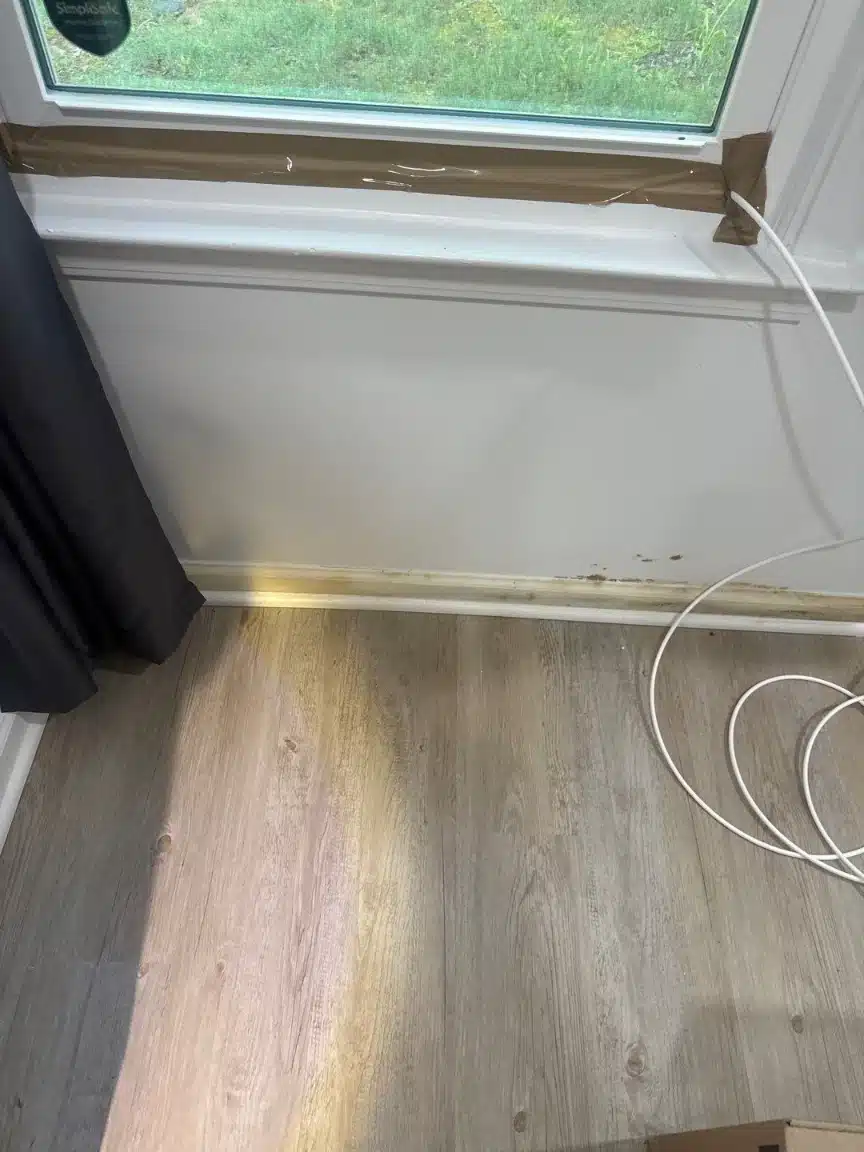
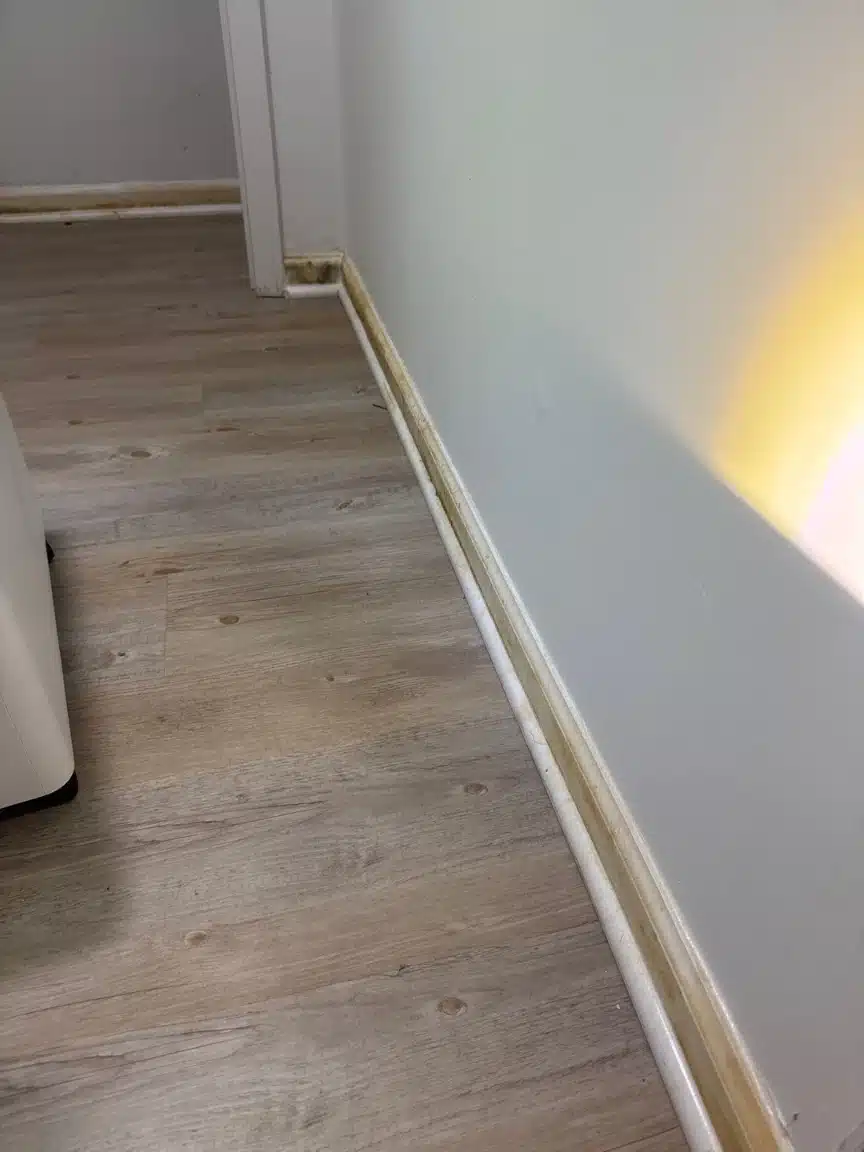
An air conditioning leak had been releasing water into a finished basement slowly enough that nothing looked wrong. By the time it surfaced, moisture had tracked along the wall and floor junction and growth had established on the bottom plate, the lower drywall and the subfloor beneath the flooring.
One Stop Restoration mapped the affected run with meters, removed and treated what the readings marked, dried the assemblies, and cleared the space. This job was around the corner from our own Norcross facility.
Why an AC Leak Is Worse Than a Burst Pipe
A burst pipe announces itself. An air conditioning leak does the opposite.
A blocked condensate line, a rusted drain pan or a poorly pitched trap releases a small volume continuously rather than all at once. There is no flood to find and no sudden noise. The water runs down the wall, reaches the floor and spreads sideways under the flooring, and the finished surfaces above it look normal the entire time.
The timing makes it worse. The system runs hardest through an Atlanta summer, which is exactly when metro humidity sits at its highest and there is no drying gradient to carry moisture away. So the leak is feeding a wall cavity for weeks, in the conditions where colonies establish fastest, in a below-grade space that was already the coolest and dampest part of the house.
By the time anyone notices a smell or a soft baseboard, the question is no longer whether there is growth. It is how far along the wall it runs.
Finding the Edge Before Cutting Anything
On a slow leak the visible damage is never the boundary.
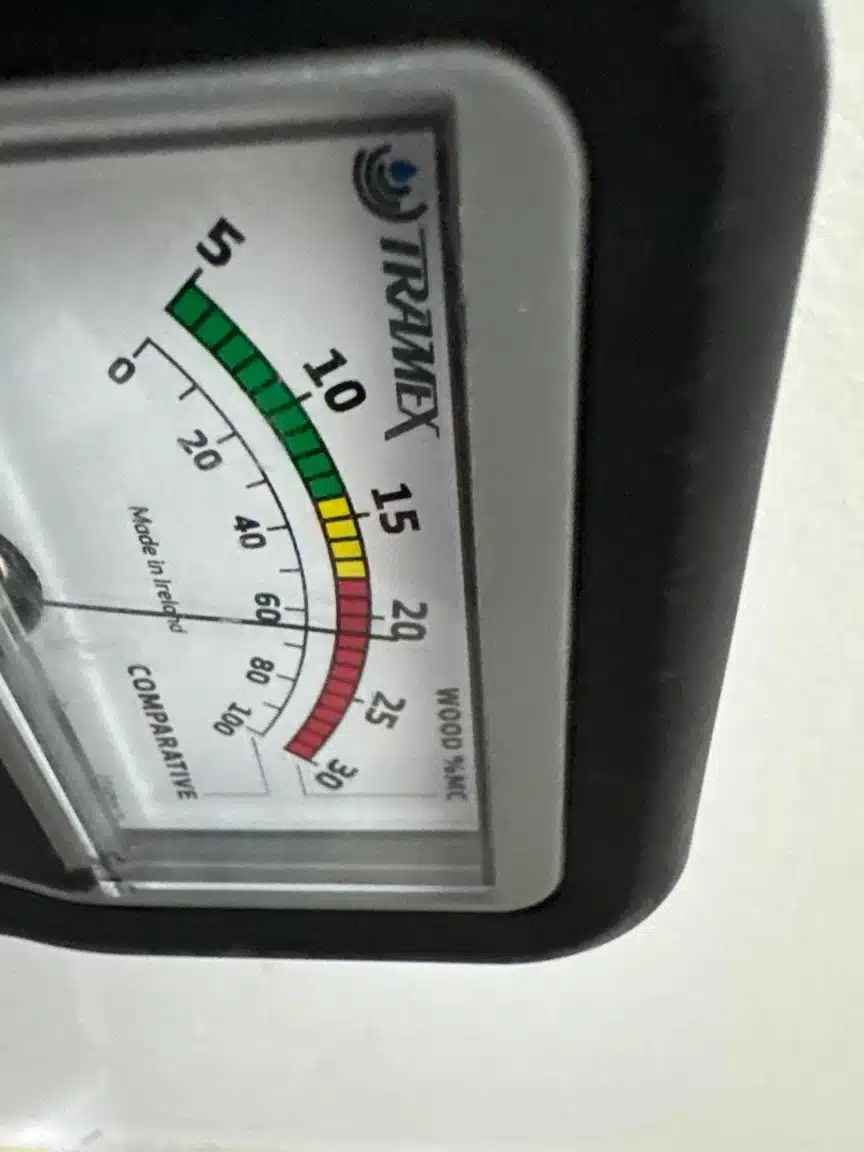
We worked the full run with a moisture meter, reading the bottom plate, the lower drywall and the subfloor at intervals rather than assuming the wet area stopped where the staining did. Thermal imaging flagged where to check; the meter confirmed it. Every reading was logged by location.
That map is what sets the removal boundary. Material inside it comes out, material outside it stays, and the homeowner and the adjuster both get to see why. This is the same moisture detection process we run on every job, and it is the difference between a scoped removal and tearing out a basement on a guess.
Flood Cuts, Removal and Treatment
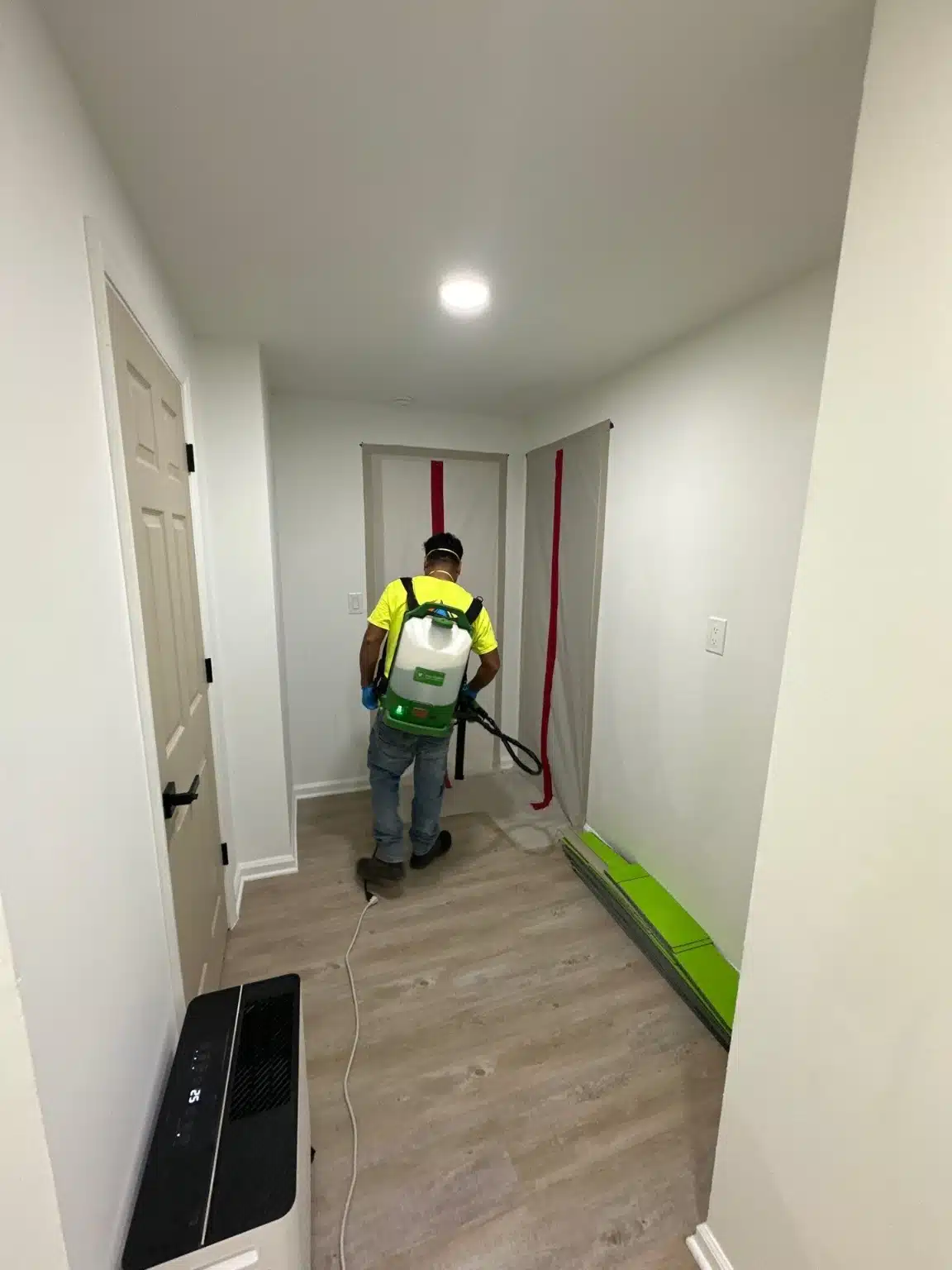
Affected drywall was cut back above the wet line and removed inside containment.
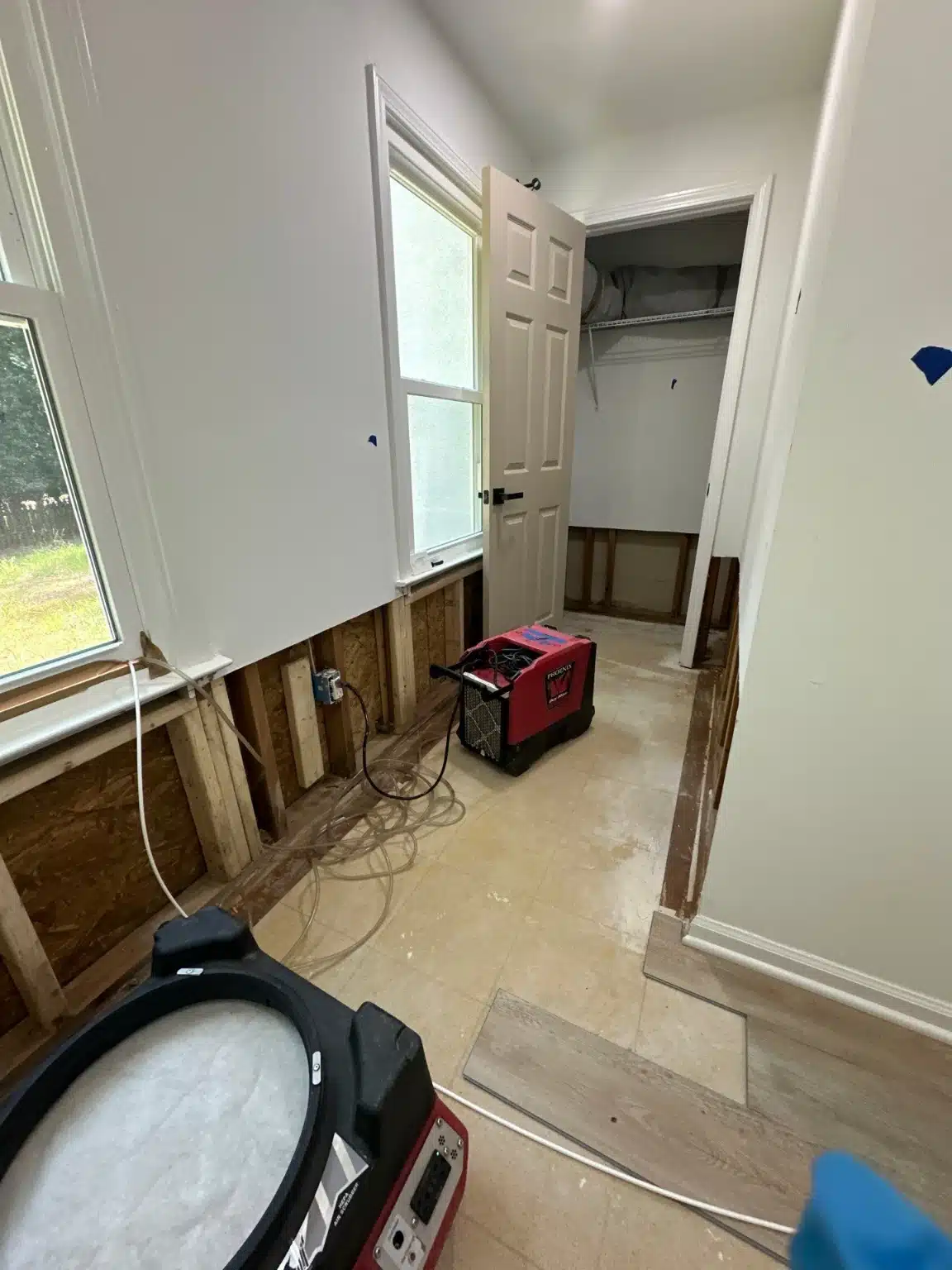
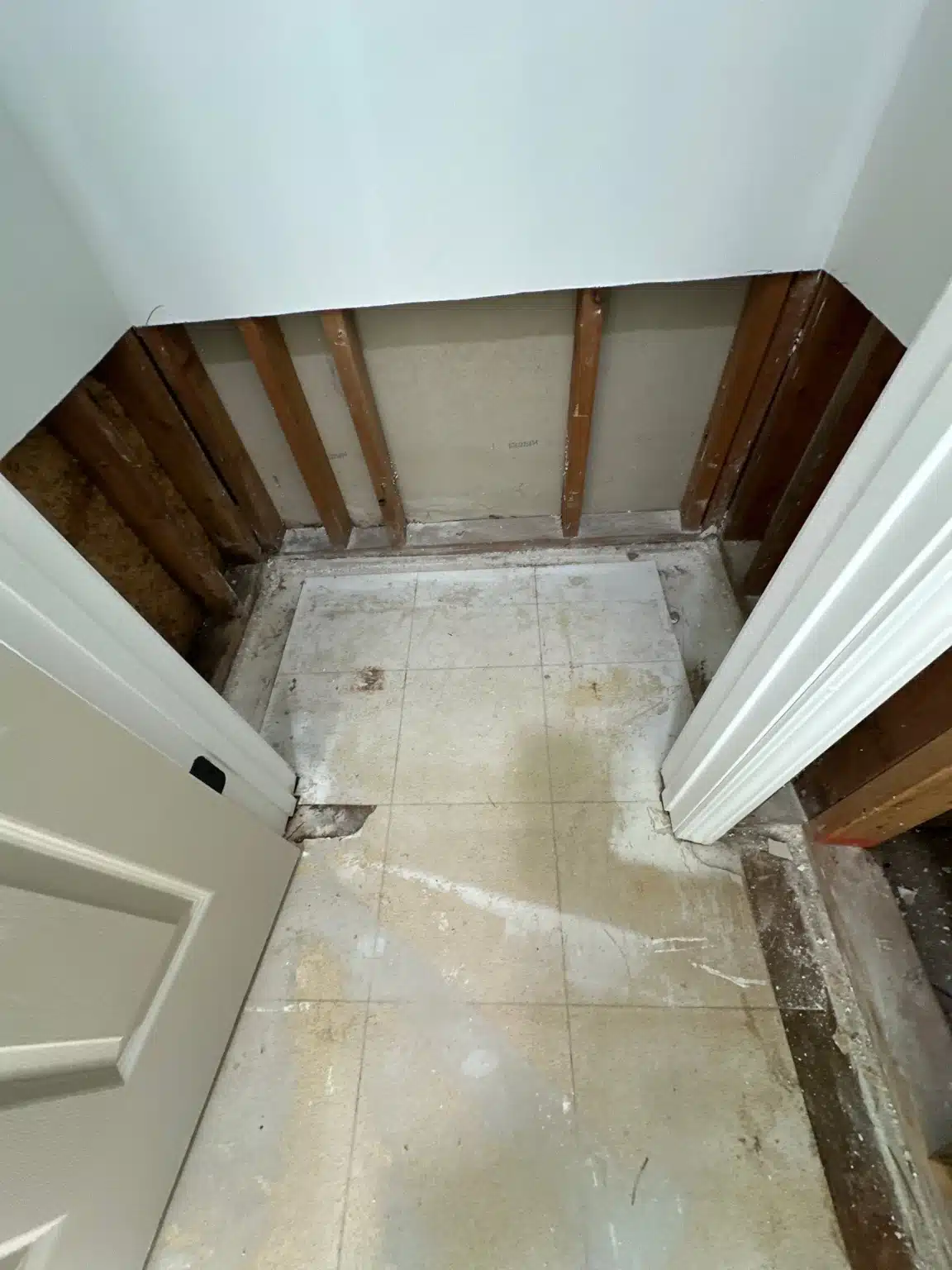
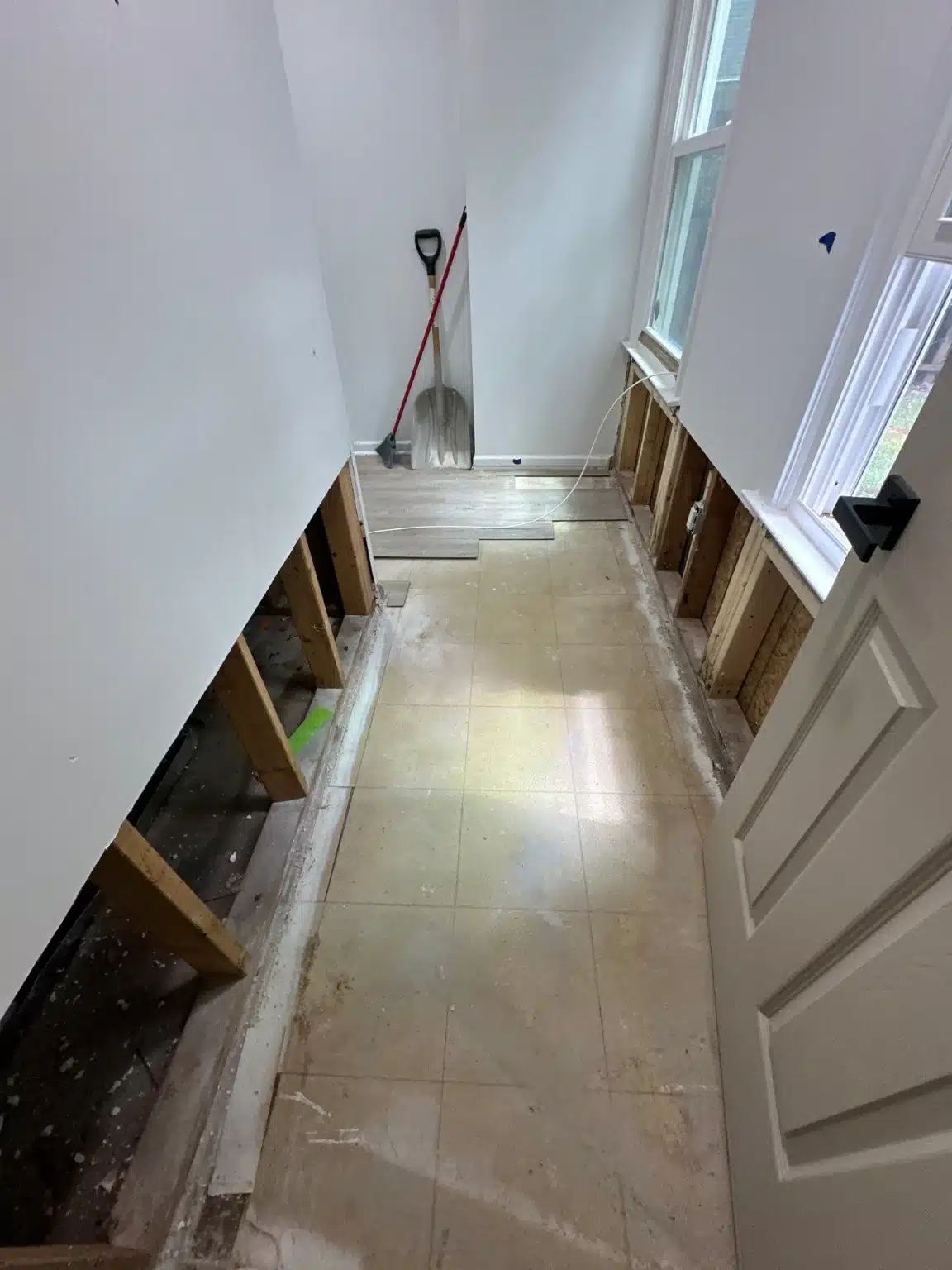
Baseboards came off, the lower drywall was flood cut along the affected run, and the flooring was lifted where readings marked the subfloor. That exposes the bottom plate and the stud bays so the assembly can be treated and dried from both sides — leaving the drywall in place would trap the moisture behind new finishes.
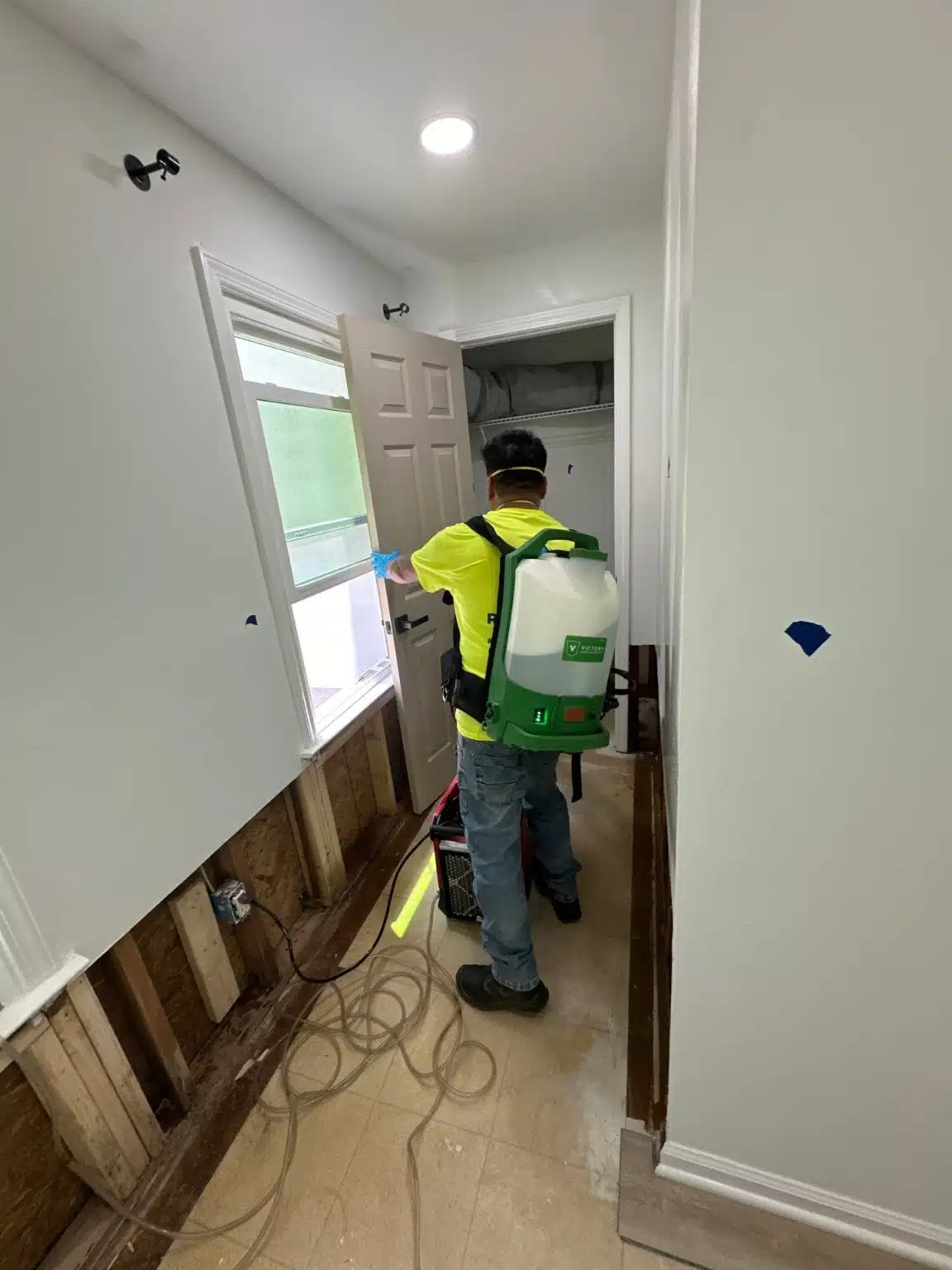
Framing that could be saved was HEPA-vacuumed and treated with an EPA-registered antimicrobial. Non-salvageable porous material was bagged before it left the work zone. On older properties, an independent testing firm checks building materials before any tear-out begins. Where material needs specialist removal, a licensed abatement contractor handles it, and we schedule our work around theirs.
Dried, Cleared and Documented
Equipment was placed against the opened assemblies, not aimed at the middle of the rooms.
Readings were logged at each visit and the equipment stayed until the bottom plate and subfloor reached their dry standard. Drying to a number rather than to how a surface feels is the whole point of the mitigation phase, and it is why rebuilding early guarantees a repeat.
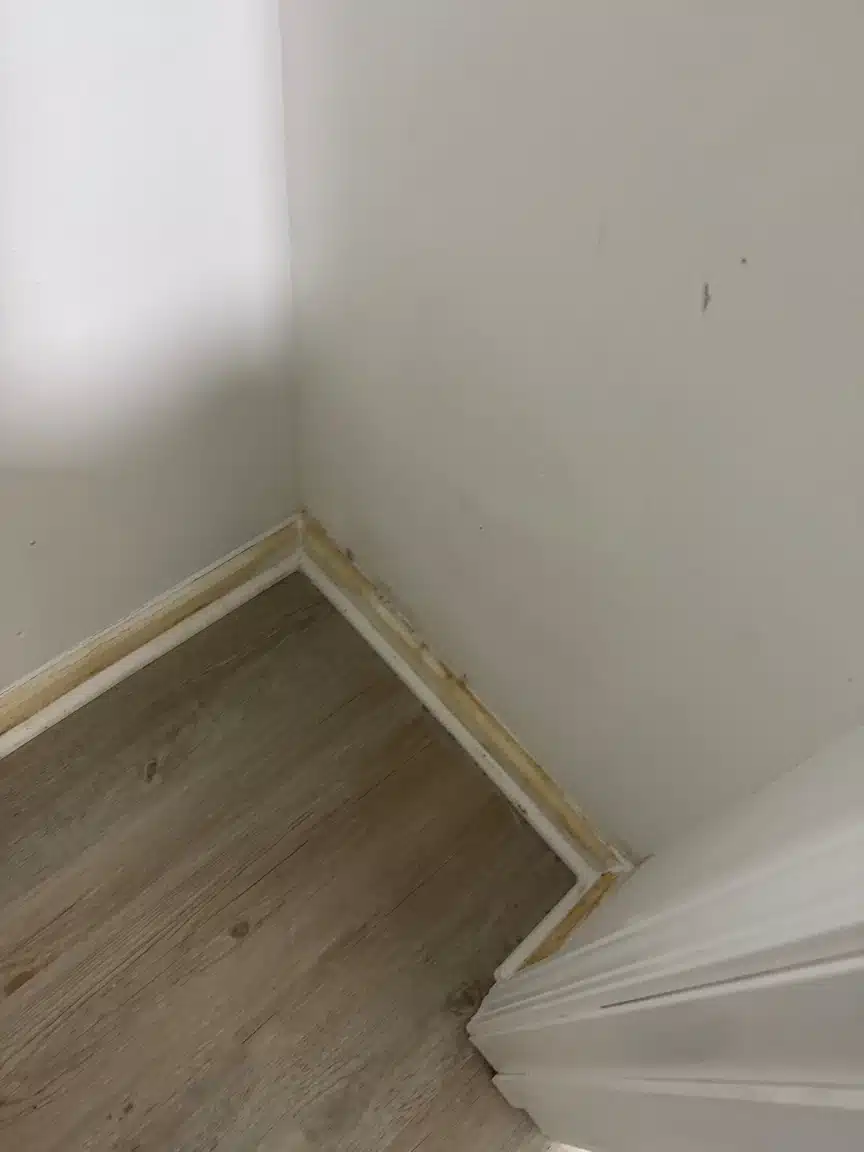
Under IICRC S520, clearance is not our call to make. An independent industrial hygienist performs the sampling and containment comes down only once results confirm safe levels. That report joins the file alongside the daily logs, which is what an adjuster needs to authorise the claim.
One thing worth saying plainly: remediation does not fix a leaking air conditioner. The mechanical repair has to happen too, or the same wall is wet again next summer. Where an owner wants the finishes put back under the same contract once everything is dry, we handle that as well — see reconstruction and rebuild.
Full Project Gallery
Twelve frames from the same basement: what the leak left behind, how the boundary was set, the removal, and the cleared space.
Services Used on This Job
Musty Smell in a Basement With an AC Unit?
Call 404-777-7077 to arrange an assessment.
Tell us where the unit sits and how long the smell has been there. We will map the wall base with meters before anything is cut, and show you exactly where the moisture stops.
For non-emergency questions, email info@onestop-restoration.com.
24/7 dispatch
Norcross base, on the I-285 corridor.
- 404-777-7077Answered by a live professional, 24 hours a day
- info@onestop-restoration.comFor non-emergency questions
- 6699 Peachtree Industrial BlvdNorcross, GA