
Home/Projects/Duluth basement ceiling
Project · Duluth, GAWater Damage in a Finished Basement Ceiling
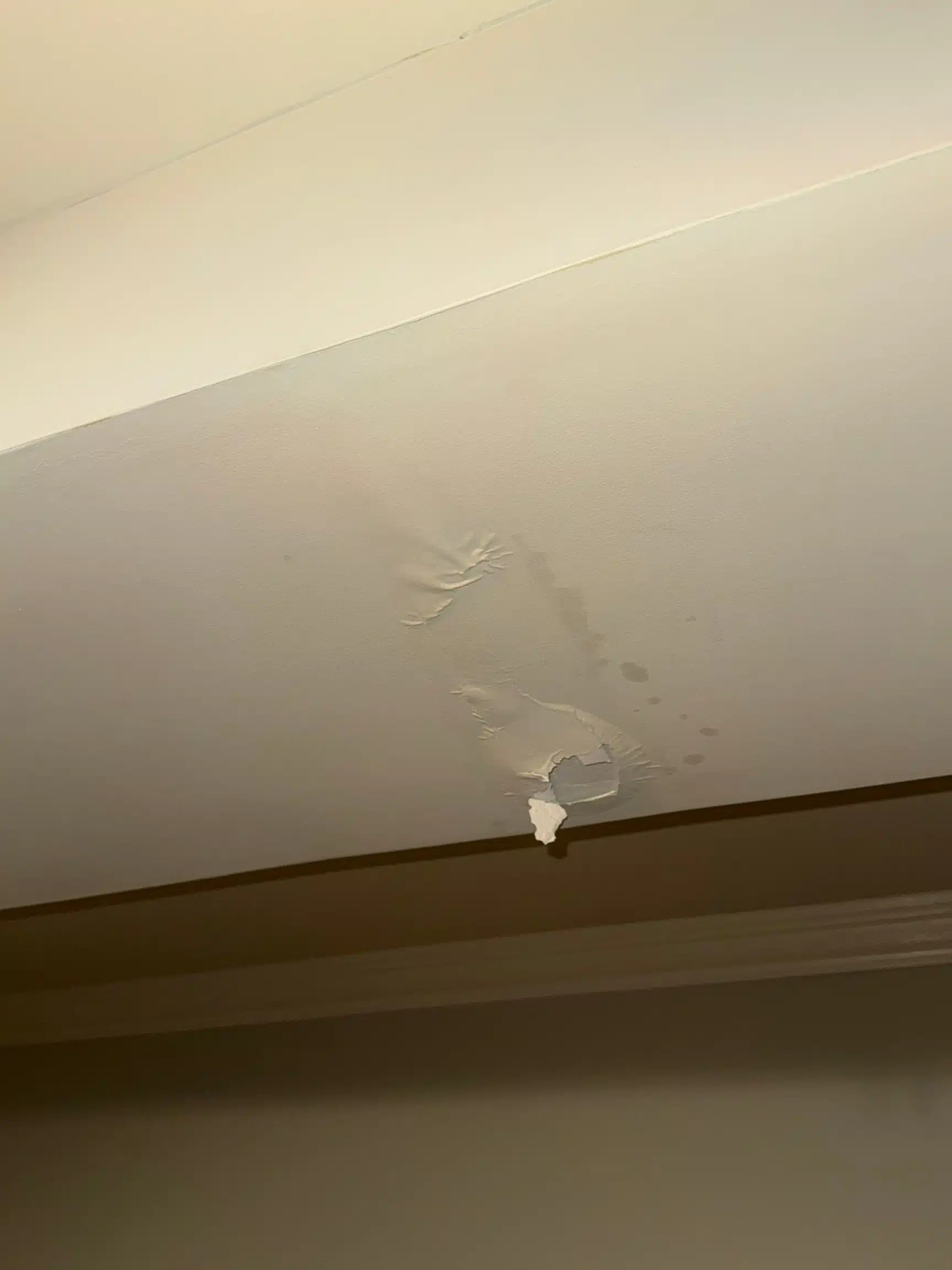
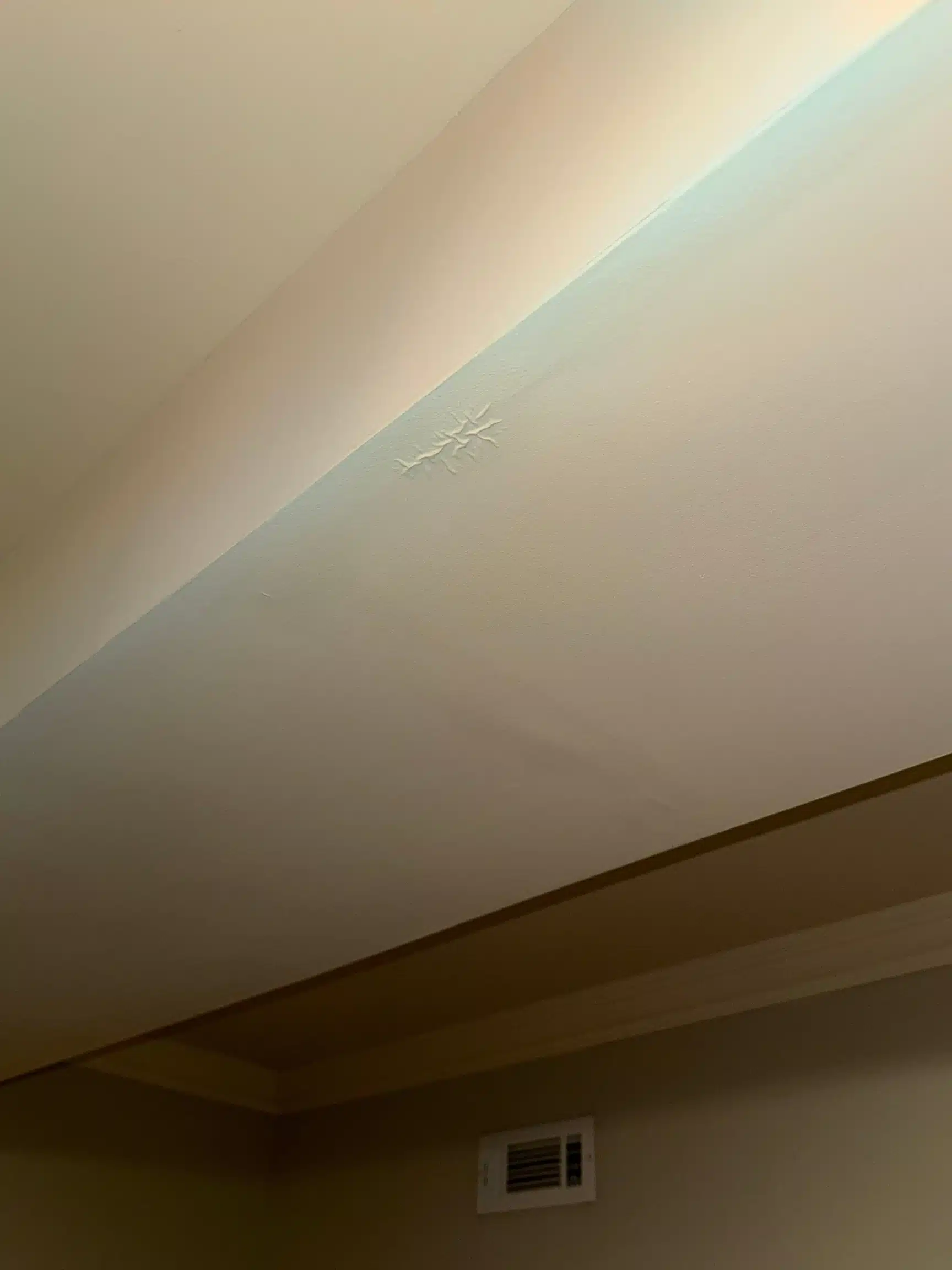
Staining and bubbling paint appeared on the ceiling of a finished basement in Duluth. Nothing was visibly wrong on the floor above, which is normal — a basement ceiling is usually where an upstairs leak announces itself first.
One Stop Restoration traced the moisture back to its source, mapped how far it had travelled inside the ceiling cavity, and scoped the work from the readings rather than from the stain.
What a Stain on a Basement Ceiling Actually Tells You
The mark is where the water finally came out, not where it got in.
Water leaving a supply line, a drain, a dishwasher or an HVAC condensate line on the main floor drops into the joist bay below and then runs. It travels along the top of the ceiling drywall, follows the joists, and pools wherever the assembly gives it somewhere to sit. It appears at the lowest point it can reach, or at a penetration.
That is why the staining here surfaced around a light fixture and along a ceiling edge. Fixtures and vents are holes in an otherwise sealed plane, so they are where water finds daylight first. The wet area above the drywall is almost always larger than the visible mark, and it usually sits some distance from the actual failure.
Bubbling paint says something more specific: moisture has been sitting against that surface long enough to break the bond. This was not a spill that happened an hour ago.
Tracing It Back Before Opening the Ceiling
Cutting at the stain finds the symptom. It rarely finds the source.
We scanned the ceiling and the floor above with thermal imaging to find the temperature anomalies that hidden moisture creates, then confirmed each one with a moisture meter. Readings were taken along the joist run and at the fixture penetrations, and logged by location.
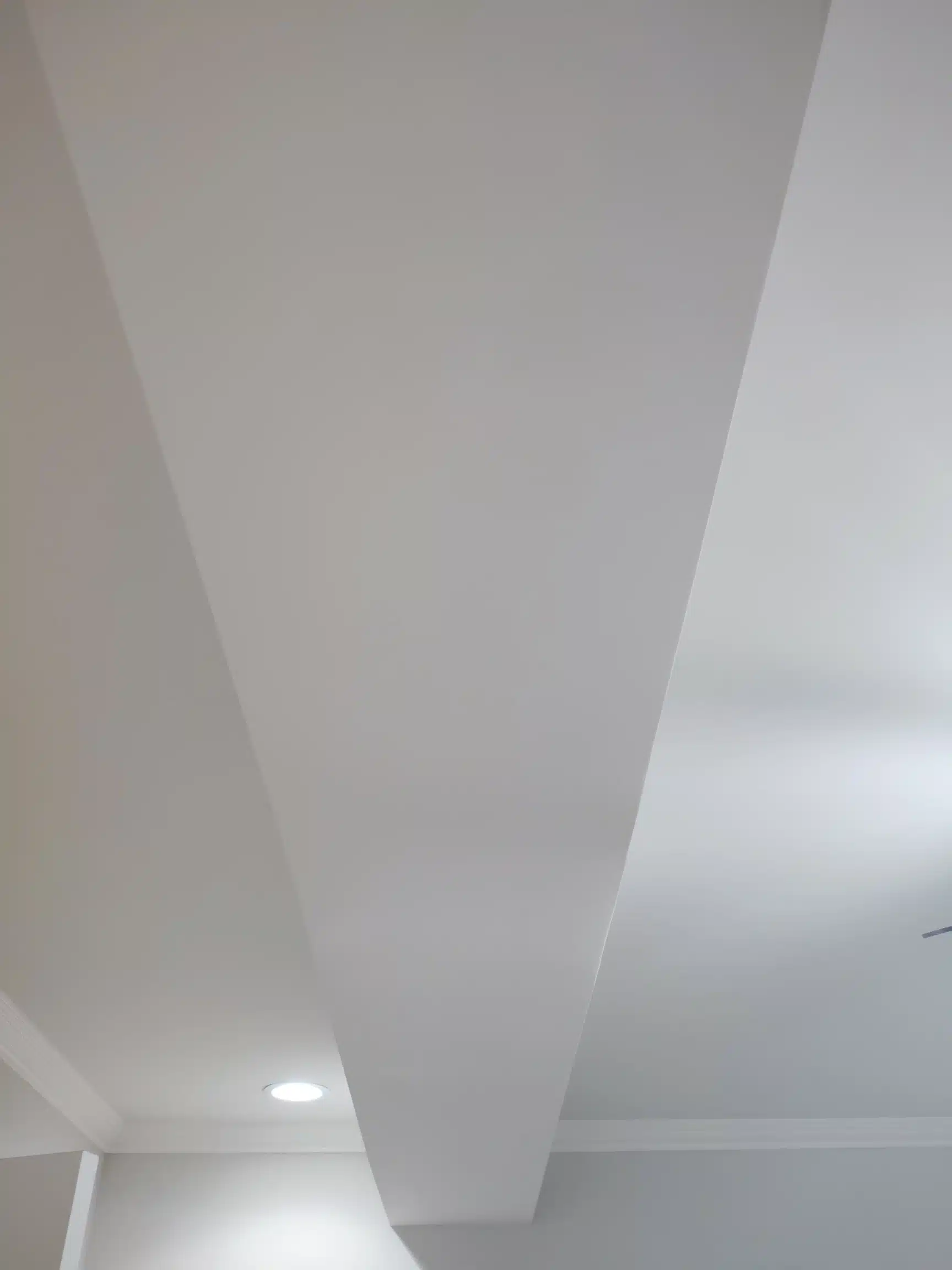
Soffits and bulkheads matter here. A dropped ceiling run usually exists because there are services inside it, so it is both a likely origin and a channel that carries water sideways. We read those before assuming a boundary.
That map defines the opening. We cut where the data says the assembly is wet, which keeps the repair proportionate and gives the adjuster a documented reason for every square foot. It is the same moisture detection process behind every job we scope.
Why a Basement Ceiling Is Time-Sensitive in Georgia
A wet ceiling cavity below grade is close to ideal conditions for growth.
The cavity is enclosed, unventilated and cool, sitting in a part of the house that already runs the highest humidity. There is no drying gradient to carry moisture out of it, so wet drywall paper and framing stay wet. In metro Atlanta that means the window to dry a structure without a mold problem is measured in days, not the 72 hours national guidance assumes.
Where drying is possible, structure comes first: the assembly is opened as the readings dictate, dried with equipment set against it, and logged until it reaches its dry standard. Finishes go back only after the numbers confirm the framing is dry, because rebuilding over damp material traps the problem behind new drywall.
If growth has already established by the time the stain appears, the job moves under containment and the mold remediation protocol instead.
Project Photos
Three frames from the initial assessment: how the damage presented before anything was opened.
Services Used on This Job
Stain Spreading Across a Ceiling?
Call 404-777-7077. We answer the phone 24 hours a day.
Tell us which room sits above it and whether the mark is growing. We will scan before anything is opened and show you where the moisture actually stops.
For non-emergency questions, email info@onestop-restoration.com.
24/7 dispatch
Norcross base, on the I-285 corridor.
- 404-777-7077Answered by a live professional, 24 hours a day
- info@onestop-restoration.comFor non-emergency questions
- 6699 Peachtree Industrial BlvdNorcross, GA