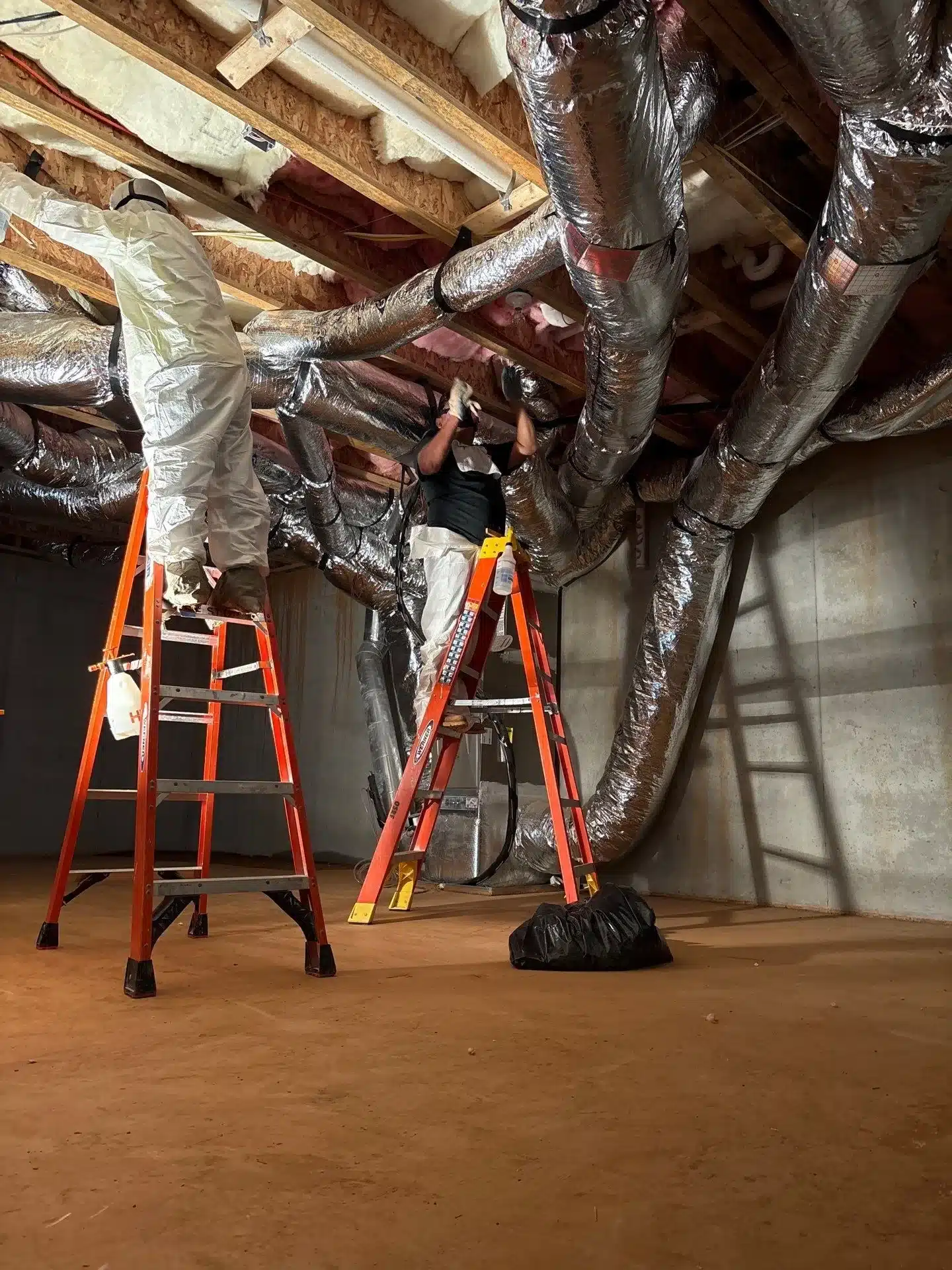
Worker on ladders installing wrapped metal ductwork in a space with exposed wooden joists and concrete floor.

Fulton County

Water damage restoration in Sandy Springs

When you call about water, fire, or mold in Sandy Springs, we ask about the damage and arrange an assessment of affected materials.

Call us about active damage in Sandy Springs so we can establish what happened and which rooms are affected. We handle water removal, mold remediation, fire and smoke cleanup, and storm recovery for homes and commercial properties. Our water damage restoration work includes moisture detection and structural drying.

Mitigation and rebuilding run under one contract, with one point of contact. We carry the damage assessment into the rebuild scope, including affected drywall, flooring, cabinetry, and framing. That keeps the removal plan connected to the work needed afterward.
How creeks and slopes affect cleanup

Creek debris can change where water reaches a Sandy Springs home. The city explains that restricted creek flow can contribute to flooding and streambank erosion. Along Nancy Creek and other creek-adjacent sites, we assess exterior entry points and moisture retained in lower walls and floors when scoping flood cleanup.

North Fulton’s wooded foothill terrain also affects how we reach the building. On sloped lots, equipment access and placement need attention before drying begins. Where storm damage extends outside, grading, retaining walls, and erosion controls may become part of reconstruction planning rather than an interior-only repair.

Qualifying work in the basin’s designated Sensitive Area carries additional stormwater retention and infiltration requirements. If reconstruction disturbs the site or changes drainage, we identify that scope before rebuild drawings are finalized. Homeowners should plan for drainage review alongside the repairs to damaged rooms.

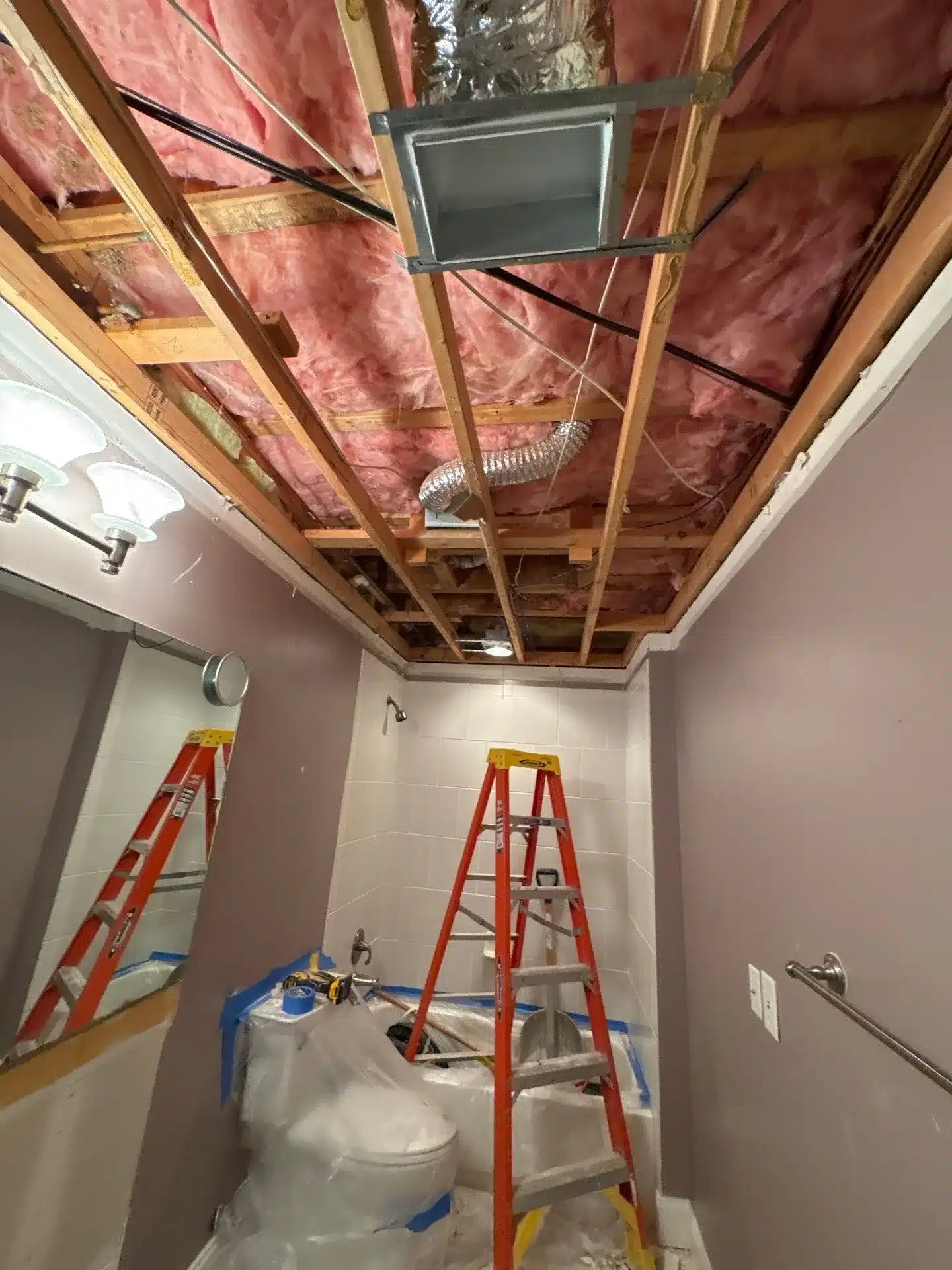
Bathroom ceiling open to framing with wooden joists, pink insulation, electrical wiring, and red ladders below

Cleanup and rebuilding for damaged properties

We handle water, mold, fire, smoke, and storm damage in Sandy Springs, with restoration scopes for residential, commercial, and industrial buildings.

Water removal and drying

We extract standing water after pipe leaks and other water losses, then check affected materials with moisture meters. Drying targets moisture remaining in floors, walls, and framing.

Flood and sewage cleanup

We handle floodwater and sewage backup cleanup, assessing affected materials and the extent of water entry. The scope addresses contaminated areas and moisture retained in lower building assemblies.

Mold remediation

We assess affected areas, contain the work, and remove mold-damaged materials within the agreed scope. Independent clearance testing provides a separate check after remediation.

Fire and smoke restoration

We assess fire damage and smoke-affected surfaces, including walls, ceilings, and fixtures. Cleanup and reconstruction address affected finishes and building materials within one coordinated scope.

Commercial and industrial restoration

We handle water restoration in commercial and industrial properties. Moisture maps and documented drying readings help managers track affected areas and the work needed before rebuilding.

Reconstruction and rebuild

We coordinate rebuilding after mitigation, including drywall, flooring, cabinetry, and structural framing. The rebuild scope carries forward the damage assessment and required permit steps.

Measure moisture before opening the structure

Thermal imaging helps us locate temperature differences that need a closer look. We follow with pin and pinless moisture meters to check materials and build a moisture map before opening walls. For water beneath concrete, that assessment helps define the cleanup and drying area around the affected floor. We compare findings across the affected space rather than drawing the removal boundary around a visible stain.

The removal scope follows those readings and the condition of the material. We explain which sections need opening and where drying can be monitored through repeat measurements. The moisture map also gives our crews a reference for later checks. As the structure dries, recorded readings help connect the original damage boundary to the remaining work and the reconstruction scope.

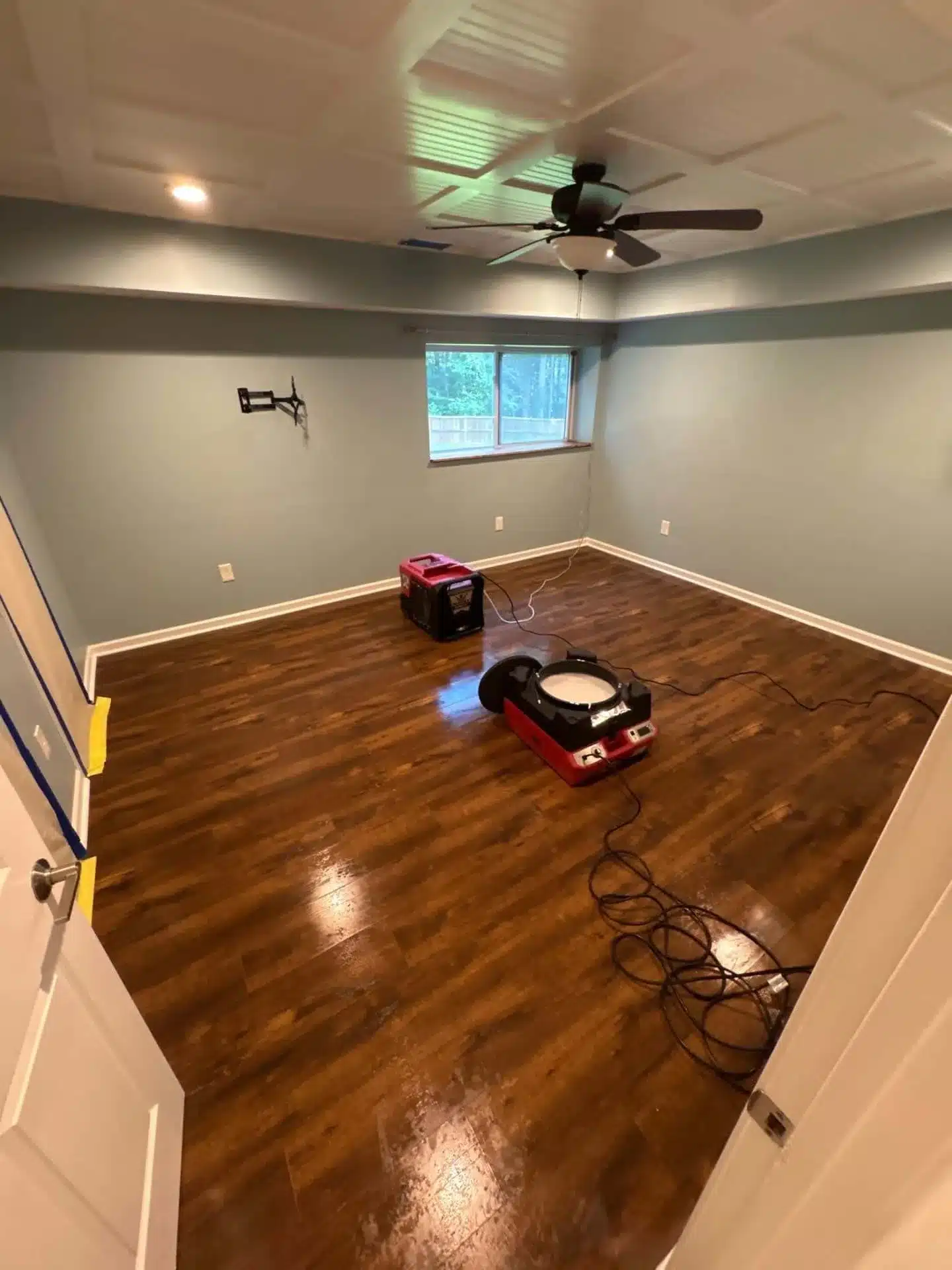
Wet hardwood floor in room with drying fans and dehumidifier running.

From the first call to handover

Your call starts the process from initial assessment through final handover.

  • We answer your call and gather details about the water damage.
  • We assess affected areas and map moisture before planning cleanup.
  • We extract standing water and remove damaged materials as authorized.
  • We dry the structure and track moisture throughout the drying process.
  • We coordinate approved reconstruction, review the finished work, and hand over.

A damage file the adjuster can review

Daily readings give the adjuster a record of changing conditions inside the affected rooms. We keep moisture readings and psychrometric logs, which record air temperature and humidity during drying. We also use 3D Matterport scans to document the space. These records connect the condition of the building to the equipment and work included in the estimate.

Our Xactimate line-item estimates break the scope into individual tasks for review. We offer direct insurance billing and keep the cleanup and reconstruction records together. Only your carrier authorizes coverage and payment under your policy. Documentation supports that review by showing the damage and work performed. Our Georgia claim rules guide explains policy questions to discuss with your carrier.

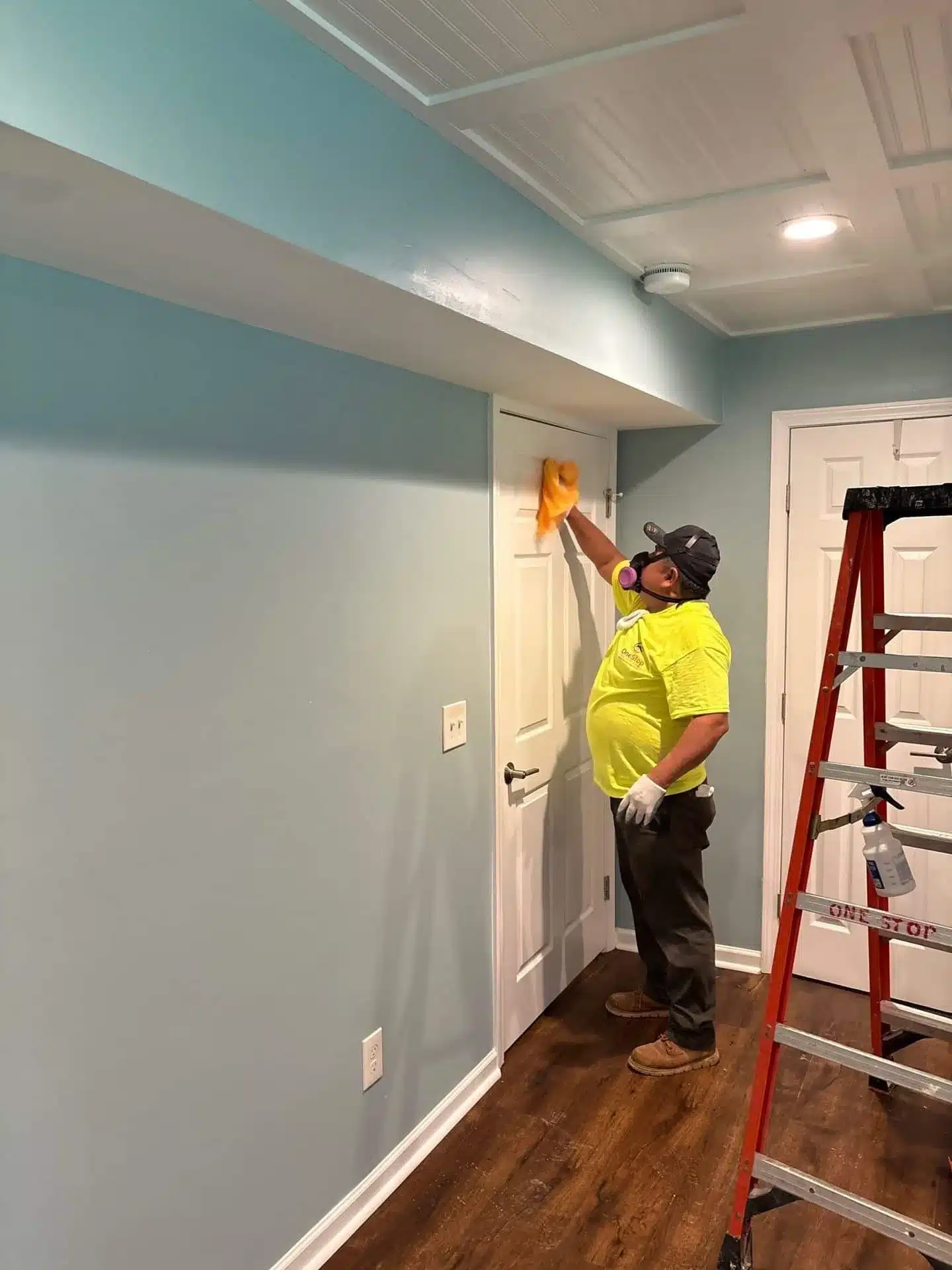
Worker in yellow shirt cleaning ceiling light fixture in blue hallway with wooden floor

Permit planning before the rebuild

The City of Sandy Springs Permits and Revenue Office administers construction permitting through the city’s online portal. Its residential reconstruction permit covers buildings damaged by fire or natural disaster when work stays within the original footprint. Structural work or work involving multiple trades generally needs a building permit, so we check the proposed scope before reconstruction.

CountyFulton County
Permits issued byCity of Sandy Springs Permits and Revenue Office
AreaSandy Springs, GA

Service across the city and nearby

We serve Sandy Springs in Fulton County, confirming the property address and access details when arranging an assessment of the damage.

  • Dunwoody, Brookhaven, Roswell, Peachtree Corners, Norcross, Smyrna

What affects the cost in Sandy Springs

Restoration costs in Sandy Springs depend on the water source, affected area, materials, moisture travel, and equipment access on sloped, wooded North Fulton lots. Access, required containment, equipment needs, and the amount of material that can be dried instead of removed also shape the scope. We inspect and map the damage before defining the work.

Reconstruction costs depend on structural repairs, finish selections, trade work, and whether Sandy Springs requires residential reconstruction, building, or one-trade permits. Site disturbance can require grading, drainage, retaining-wall, erosion-control plans, or Nancy Creek Sensitive Area stormwater review. We separate the work into line items so you can see what is included. If insurance is involved, we can provide direct billing and supporting documentation, but your carrier decides what the policy covers and authorizes.

Questions from Sandy Springs homeowners

Can I reach your team on a holiday?
Yes. We offer live local answering and emergency availability around the clock, including holidays. Call 404-777-7077 for active damage so we can discuss the property and arrange the next step. For a non-urgent issue, you can use our callback form.
How do you clean up water beneath a concrete floor?
Once the source is stopped, we clean up water beneath the slab and dry affected materials. We use moisture meters and infrared imaging to map affected areas. Those findings guide the removal, drying, and reconstruction scope.
Who checks the work after mold remediation ends?
We coordinate clearance sampling with an independent hygienist. That keeps the post-remediation check separate from our removal work. Our role covers the remediation scope and coordination of that outside review; the independent provider handles the clearance sampling described in the project plan.

Talk with us about Sandy Springs damage

Call 404-777-7077 about damage at your Sandy Springs property, or send details through our callback form so we can discuss the next step.

One Stop Restoration404-777-7077
6699 Peachtree Industrial Blvd, Unit D, Norcross, GA 30092