
Fulton County

Water damage restoration in Sandy Springs

Water damage restoration in Sandy Springs, from the first call through drying, documentation and the rebuild, handled by one local team.

Call us about active damage in Sandy Springs so we can establish what happened and which rooms are affected. We handle water removal, mold remediation, fire and smoke cleanup, and storm recovery for homes and commercial properties. Our water damage restoration work includes moisture detection and structural drying.

Mitigation and rebuilding run under one contract, with one point of contact. We carry the damage assessment into the rebuild scope, including affected drywall, flooring, cabinetry, and framing.

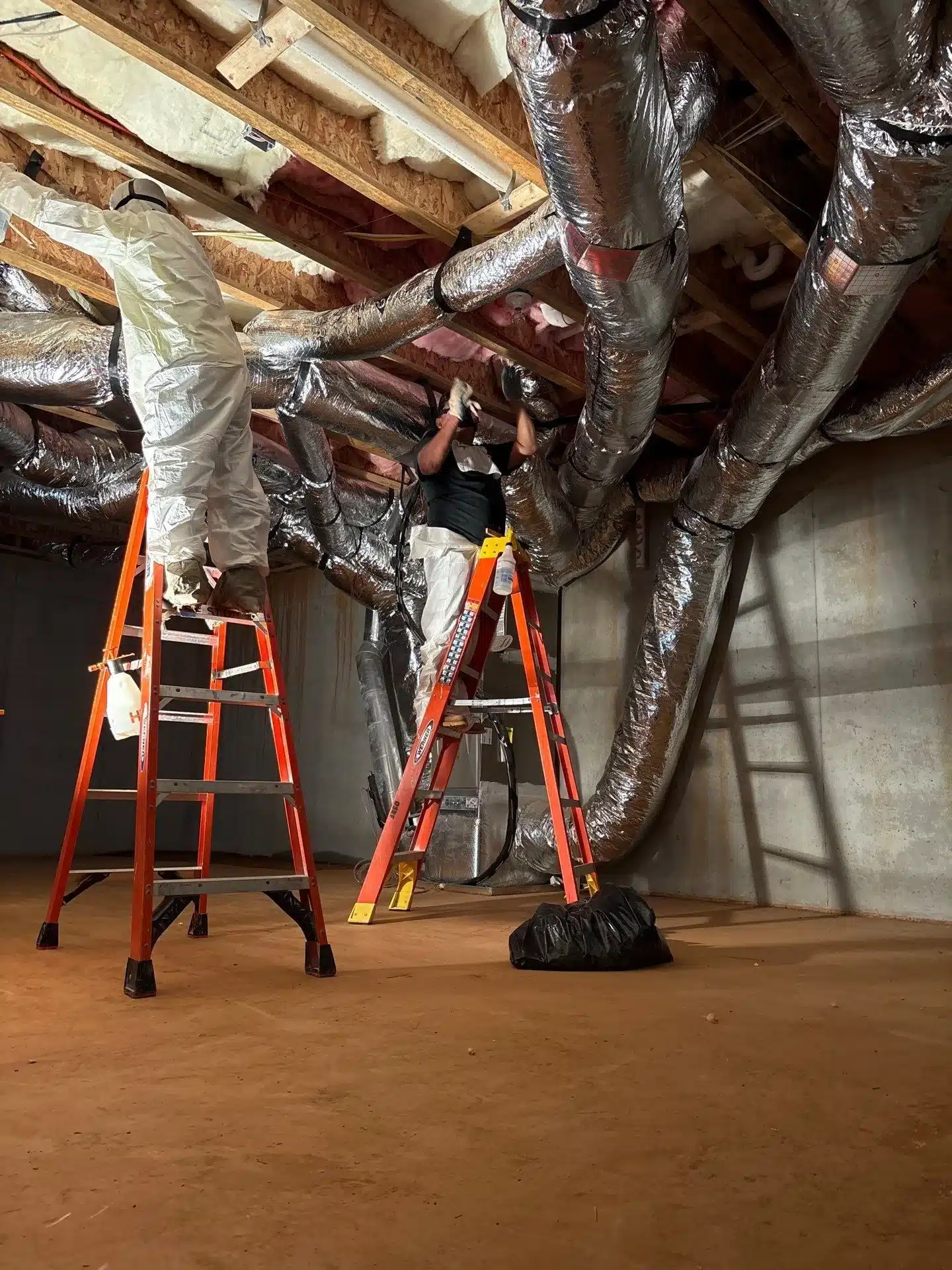
Technician on ladders reinstalling wrapped ductwork between exposed joists during a restoration job

How creeks and slopes affect cleanup

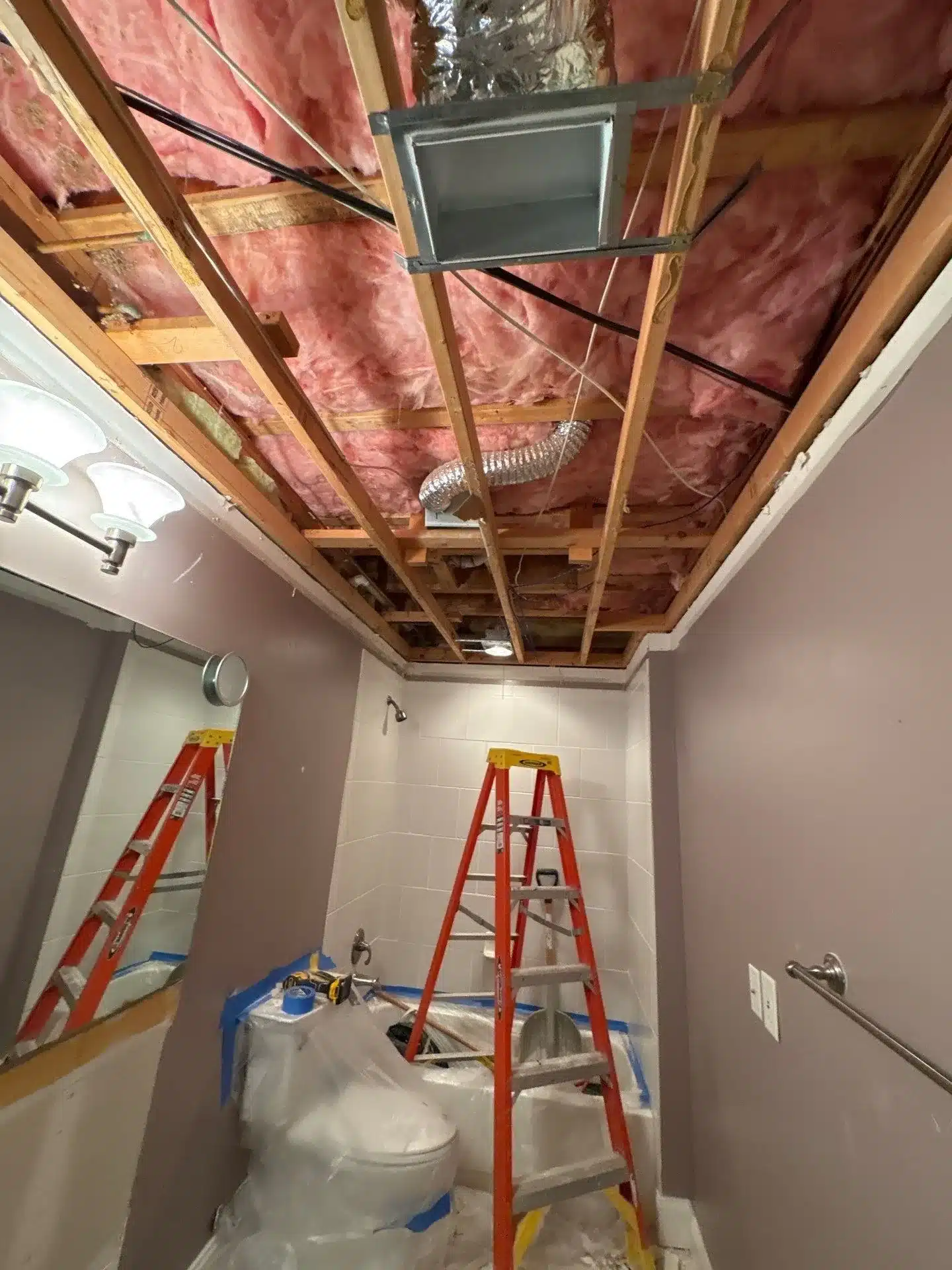
Bathroom ceiling opened to the framing after a leak, with insulation and wiring exposed

Creek debris can change where water reaches a Sandy Springs home. The city explains that restricted creek flow can contribute to flooding and streambank erosion. Along Nancy Creek, Marsh Creek and other creek-adjacent lots, we check exterior entry points and moisture held in lower walls and floors when scoping flood cleanup.

Many Sandy Springs homes sit on hilly, wooded lots, often with finished basements cut into the slope. Water that runs downhill toward the foundation tends to show up in those lower rooms first, so we check basement walls and floors even when the leak started upstairs.

Sloped lots also affect equipment access and placement before drying begins. Where storm damage extends outside, grading, retaining walls and drainage may become part of reconstruction planning rather than an interior-only repair, and we flag that scope before rebuild drawings are finalized.
Cleanup and rebuilding for damaged properties

We handle water, mold, fire, smoke, and storm damage in Sandy Springs, with restoration scopes for homes, offices and commercial buildings around Perimeter Center.

Water removal and drying

We extract standing water after burst pipes and other water losses, then check affected materials with moisture meters. Drying targets moisture remaining in floors, walls, and framing.

Flood and sewage cleanup

We handle floodwater and sewage backup cleanup, assessing affected materials and the extent of water entry. The scope addresses contaminated areas and moisture retained in lower building assemblies.

Mold remediation

We assess affected areas, contain the work, and remove mold-damaged materials within the agreed scope. Independent clearance testing provides a separate check after remediation.

Fire and smoke restoration

We assess fire damage and smoke-affected surfaces, including walls, ceilings, and fixtures. Cleanup and reconstruction address affected finishes and building materials within one coordinated scope.

Commercial and industrial restoration

We handle commercial water damage in offices, retail and industrial properties. Moisture maps and documented drying readings help managers track affected areas before rebuilding.

Reconstruction and rebuild

We coordinate rebuilding after mitigation, including drywall, flooring, cabinetry, and structural framing. The rebuild scope carries forward the damage assessment and any permitting the work calls for.

Measure moisture before opening the structure

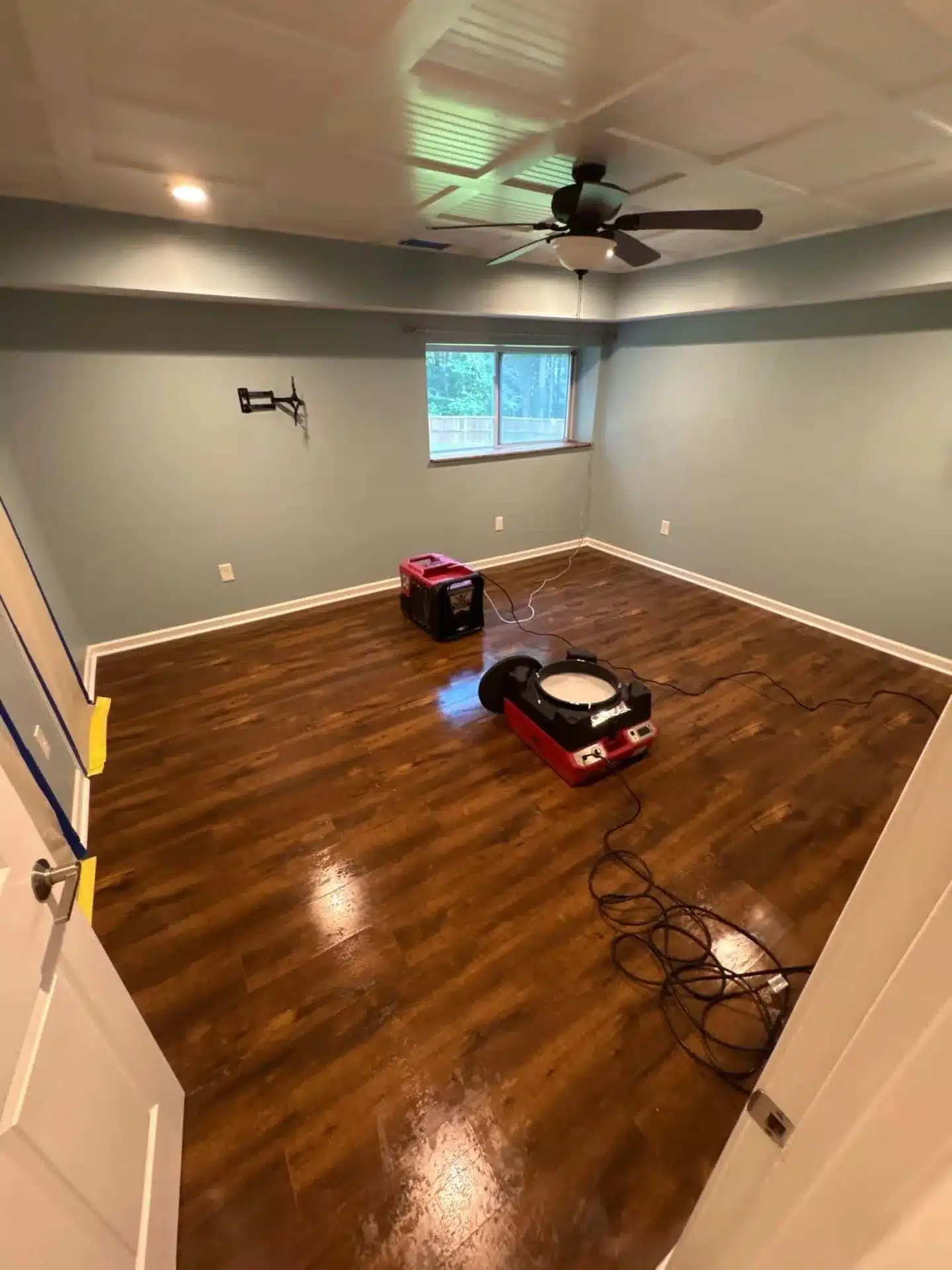
Wet hardwood floor with air movers and a dehumidifier drying the room

Thermal imaging helps us find temperature differences that need a closer look. We follow with pin and pinless moisture meters to build a moisture map before opening walls. In Sandy Springs basements and slab-on-grade homes, that often means tracing water along the floor line and behind finished walls, and checking for water beneath concrete.

The removal scope follows those readings, not the visible stain. We explain which sections need opening and where drying can be monitored through repeat measurements. As the structure dries, recorded readings connect the original damage boundary to the remaining work and the reconstruction scope.

From the first call to handover

Most clean-water losses in Sandy Springs follow the same five steps. For clean-water losses, structural drying typically reaches its dry standard in three to five days; dense materials, hardwood and basements can take longer.

  1. Call and dispatch. We ask what happened, help you stop the source, and dispatch a crew.
  2. Assess and map. We inspect the affected rooms and build a moisture map with meters and thermal imaging.
  3. Extract and remove. We remove standing water and only the wet materials the readings show cannot be dried.
  4. Dry and monitor. Air movers and dehumidifiers run while we record readings until materials reach their dry standard.
  5. Rebuild and hand over. We restore drywall, flooring and finishes, then walk the property with you.

What affects the cost of water damage repair

Every Sandy Springs job is priced from its own scope, so we don't quote a flat figure before we see the damage. The main factors are:

  • Water category. Clean water from a supply line costs less to handle than sewage or floodwater, which need more removal and cleaning.
  • Area and materials. Square footage, ceiling height, and materials such as hardwood, plaster or finished basement walls change drying time and removal.
  • Time since the loss. Water left for days spreads further and raises the chance of mold, which adds remediation work.
  • Rebuild scope. Cabinetry, flooring and finishes replaced after drying are often the largest part of the total.

Our water damage restoration cost guide explains these factors in more detail.

A damage file the adjuster can review

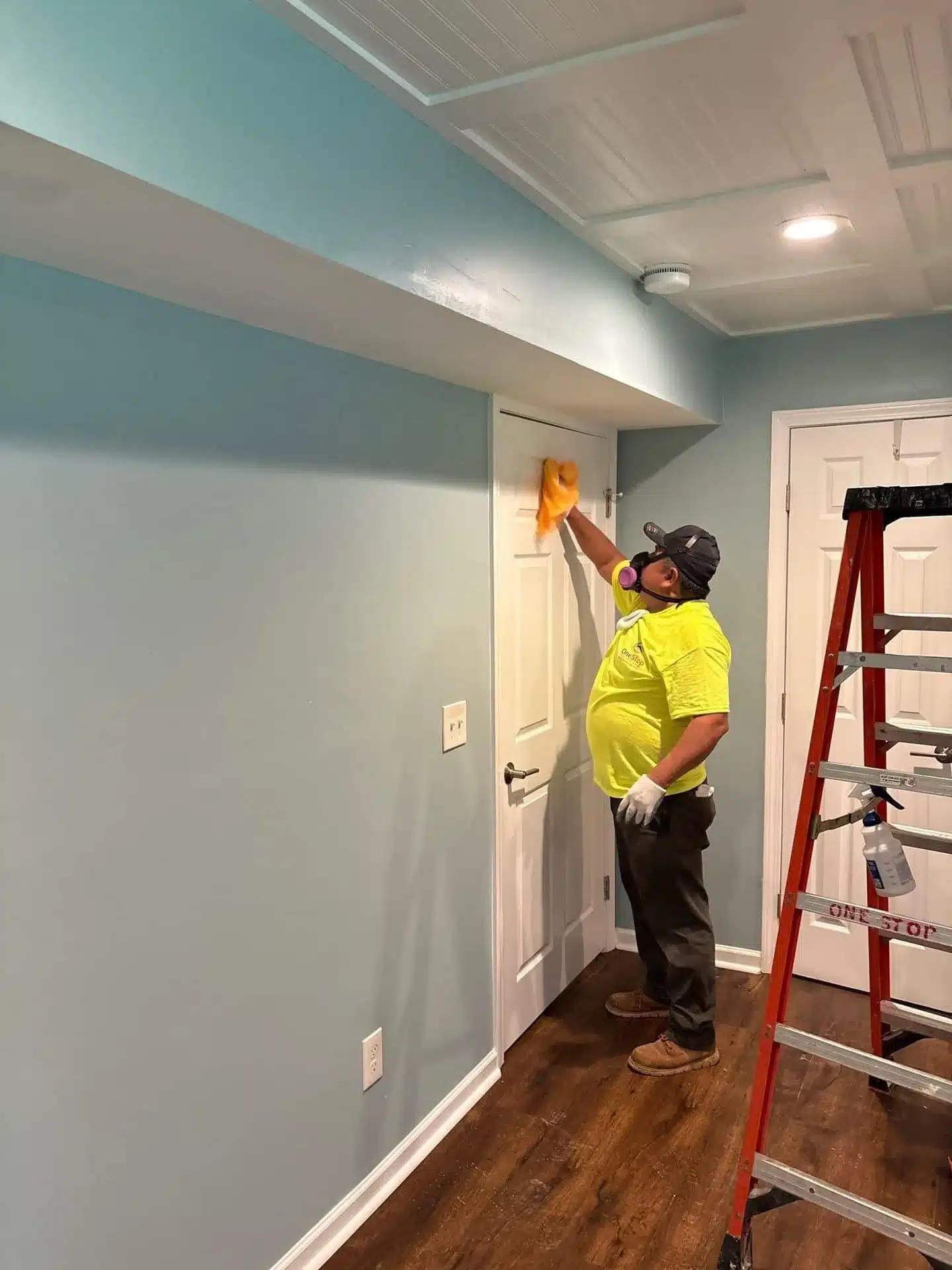
Technician cleaning a ceiling light fixture in a hallway during restoration

Daily readings give the adjuster a record of changing conditions inside the affected rooms. We keep moisture readings and psychrometric logs, which record air temperature and humidity during drying, and use 3D Matterport scans to document the space.

Our Xactimate line-item estimates break the scope into individual tasks for review, and we offer direct insurance billing. Only your carrier authorizes coverage and payment under your policy.

For Sandy Springs homes near creeks, the cause matters: a standard homeowners policy usually covers sudden water such as a burst pipe, but excludes rising floodwater, which needs separate flood insurance. Our Georgia claim rules guide explains what to discuss with your carrier.

Permit planning before the rebuild

The City of Sandy Springs administers construction permitting through its online portal. Its residential reconstruction permit covers buildings damaged by fire or natural disaster when work stays within the original footprint. Not every repair needs a permit; we check the proposed scope and handle any permitting the work calls for before reconstruction starts.

On older properties, an independent testing firm checks building materials before any tear-out begins. Where material needs specialist removal, a licensed abatement contractor handles it, and we schedule our work around theirs.

CountyFulton County
Permits issued byCity of Sandy Springs
AreaSandy Springs, GA

Service across the city and nearby

We serve homes and businesses across Sandy Springs and the neighboring cities, confirming the property address and access details when arranging an assessment. See recent work on our projects page.

  • Perimeter Center
  • City Springs
  • North Springs
  • Riverside
  • Dunwoody
  • Roswell
  • Brookhaven
  • Buckhead

Questions from Sandy Springs homeowners

Can I reach your team on a holiday?
Yes. We answer around the clock, including holidays. Call 404-777-7077 for active damage so we can discuss the property and arrange the next step. For a non-urgent issue, use our callback form.
My basement flooded after heavy rain near a creek. Is that covered?
Usually not under a standard homeowners policy, which excludes rising floodwater; that needs separate flood insurance. Water from a burst pipe or failed appliance is often covered. We document the cause and the damage either way, and your carrier makes the coverage decision.
How long does drying take?
For clean-water losses, structural drying typically takes three to five days. Hardwood, plaster, dense materials and basements can take longer. We take daily readings and stop drying only when materials reach their dry standard.
How do you clean up water beneath a concrete floor?
Once the source is stopped, we use moisture meters and infrared imaging to map the affected area, then remove and dry what the readings show is wet. Those findings guide the drying and reconstruction scope.
Who checks the work after mold remediation ends?
An independent hygienist handles clearance sampling, which keeps the post-remediation check separate from our removal work. We coordinate the visit and share the results with you.

Talk with us about Sandy Springs damage

Call 404-777-7077 about damage at your Sandy Springs property, or send details through our callback form so we can discuss the next step.

One Stop Restoration404-777-7077
6699 Peachtree Industrial Blvd, Unit D, Norcross, GA 30092