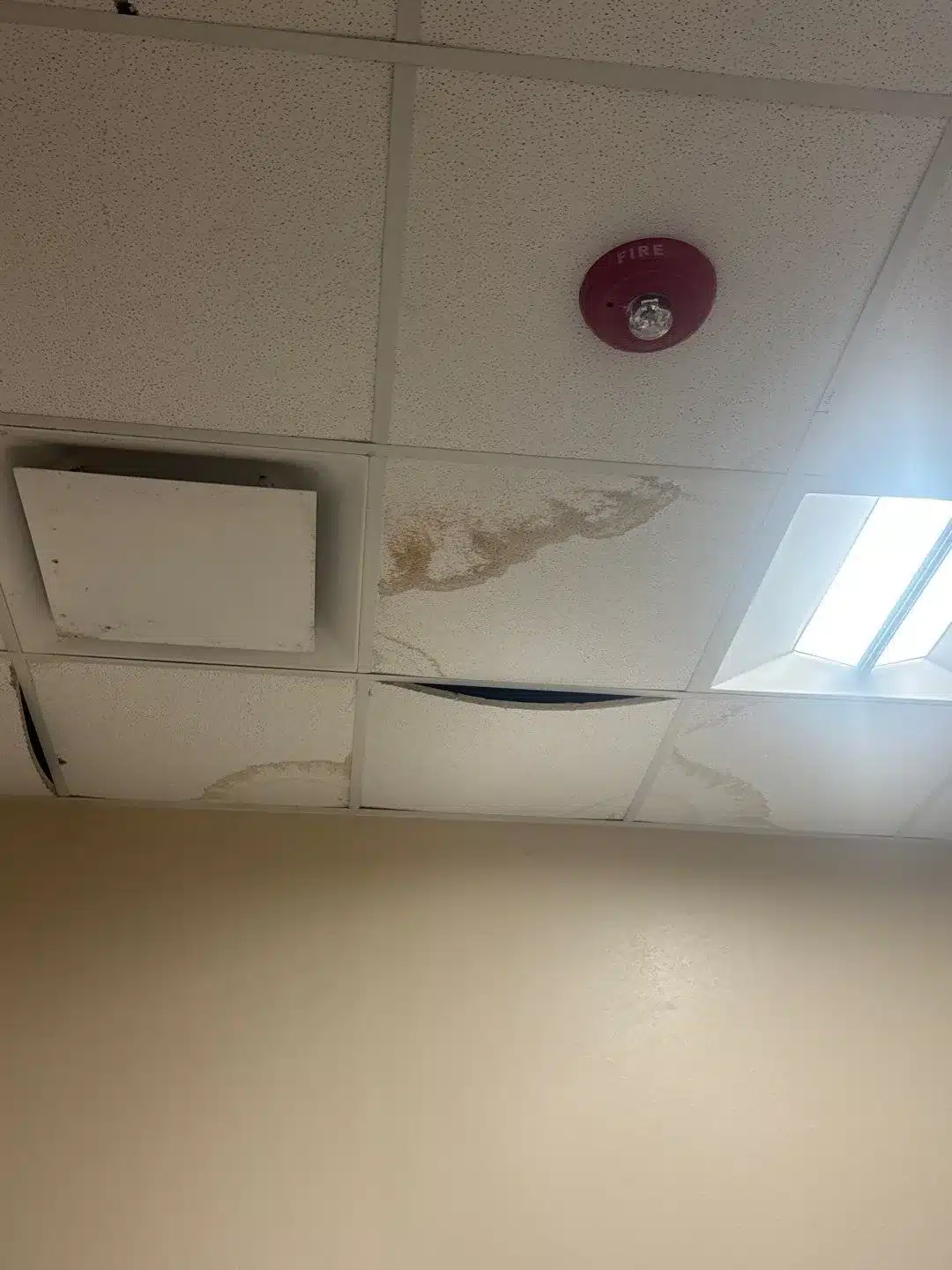
Water-stained acoustic ceiling tiles beside a red fire alarm and light panels during assessment

Commercial ceiling water stains: what to do next

A stained tile needs more than a cosmetic decision. An Atlanta commercial assessment shows how ceiling condition, hidden moisture, and workspace access shape the next steps.

Talk to our team

Keep people out from beneath a stained or sagging commercial ceiling tile and arrange an assessment before anyone disturbs it. The restoration scope depends on the tile’s condition, moisture beyond the visible stain, the source of the water, and access to the affected area.

During an Atlanta commercial assessment, we at One Stop Restoration found brown ceiling stains and a saturated tile that had partially collapsed and was sagging. We measured the workspace for the estimate; that measurement established dimensions, not the cause or extent of hidden moisture.
What should you do when a ceiling tile is stained or sagging?

First, keep employees and customers away from the affected ceiling. A sagging tile can fall, and reaching above it may expose someone to hazards that are not visible from the floor.

  • Restrict access beneath the stained or sagging ceiling.
  • Leave the affected tiles undisturbed rather than lifting, pushing, or pulling them down.
  • Protect nearby equipment only if you can do so without entering the affected area or approaching wet electrical components.
  • Arrange a task-specific assessment of the ceiling and surrounding work area.
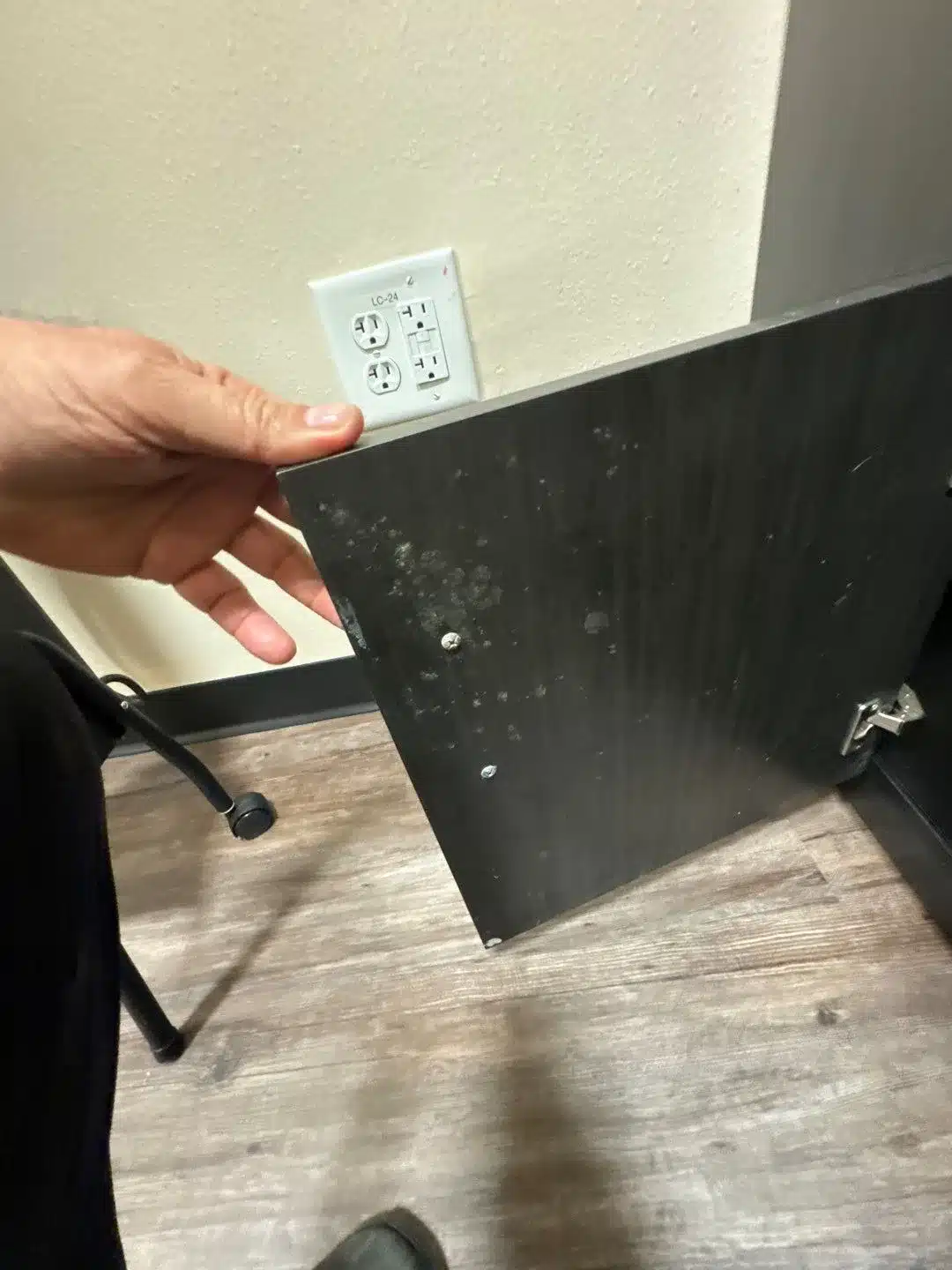
White electrical outlet on a cream-colored wall beside an open black cabinet door during assessment

What did we find during this commercial ceiling assessment?

We found multiple brown stains across the suspended ceiling and a saturated tile that had collapsed and was hanging downward.

significant water damage to the drop ceiling

One Stop Restoration owner

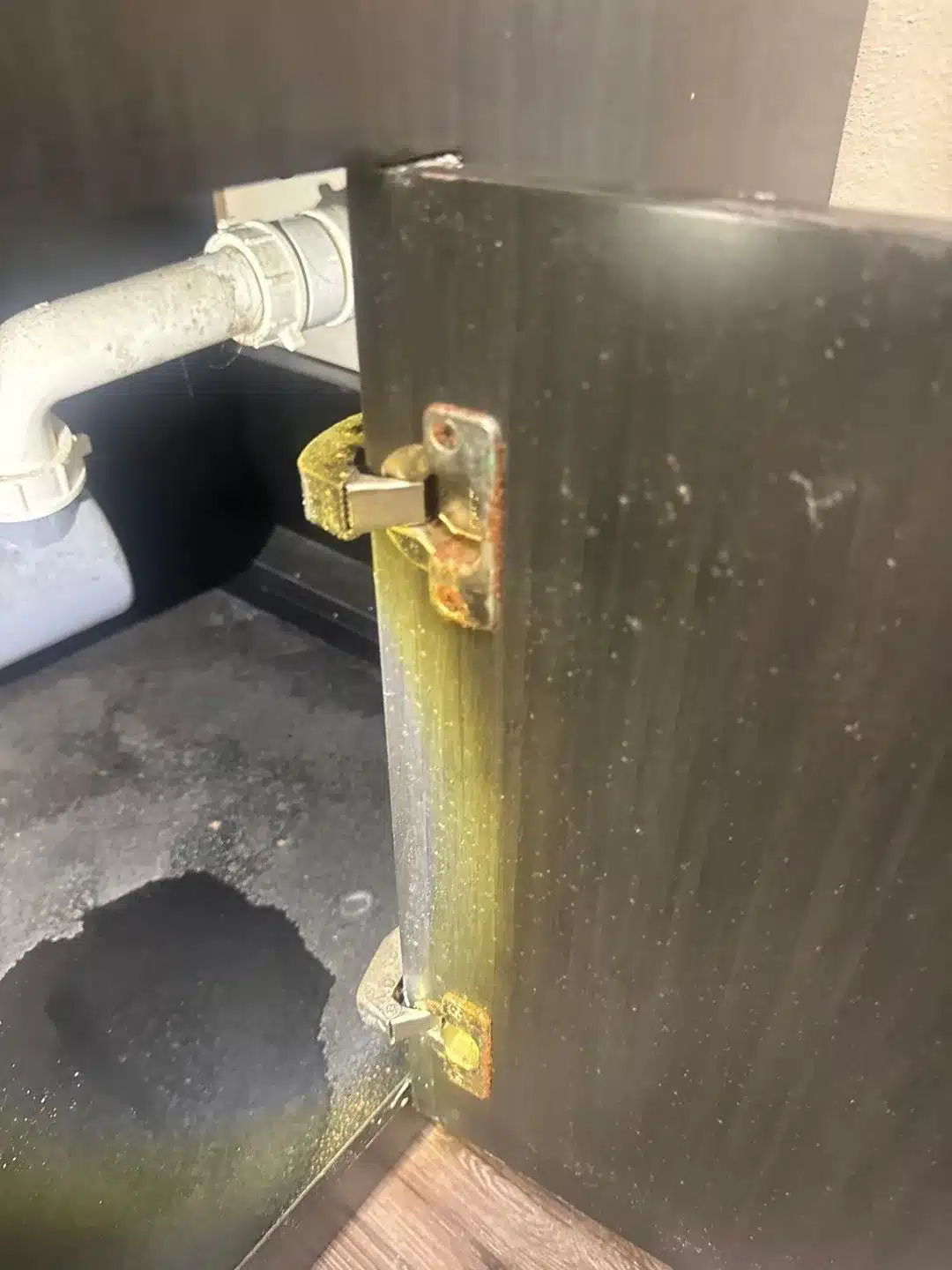
A separate area under a sink had standing water at the cabinet bottom, severe rust on the hinges, and apparent fungal growth on the wooden doors. Those conditions needed attention, but they did not establish that the sink-area leak caused the ceiling damage.

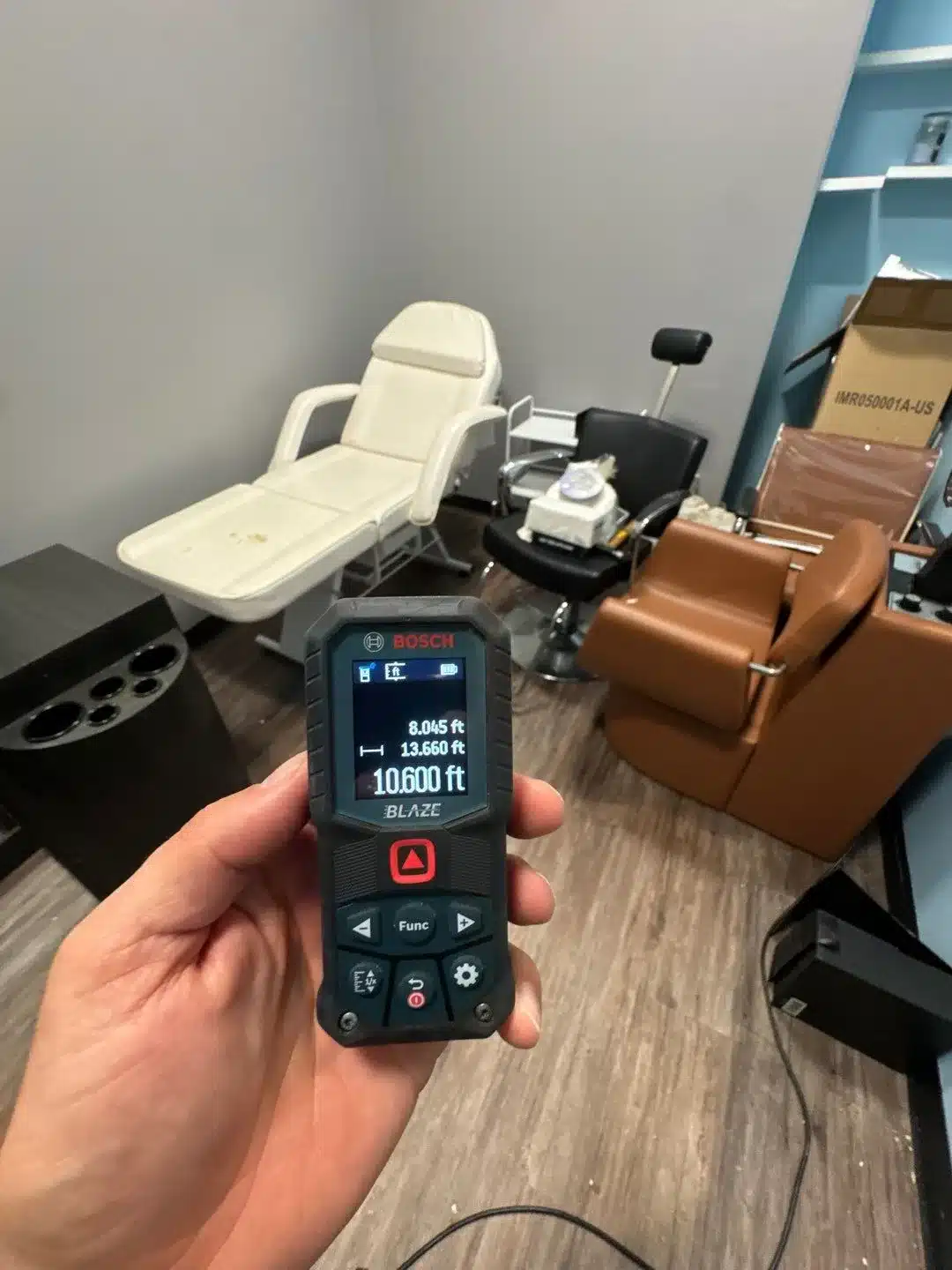
We used a Bosch laser distance measure to take workspace dimensions for the damage estimate. Those dimensions help establish quantities and layout. They do not tell an estimator whether a ceiling cavity is wet or which materials need restoration.

How do you find the leak and the moisture the stain does not show?

Finding the source requires checking the building conditions, not choosing a cause from the stain’s appearance. A ceiling stain alone cannot distinguish a roof leak from a plumbing line, drain, HVAC component, or condition on an upper floor.

Moisture assessment answers a different question: which materials are wet now? Infrared assessment can identify temperature differences that warrant closer inspection. Pin and pinless meters help evaluate moisture in materials. A moisture map records where those findings occur. Temperature differences alone do not prove water is present, and no single method guarantees detection everywhere.

Our moisture-detection methods include infrared assessment, pin and pinless metering, and moisture maps. It was not a moisture meter or a leak-detection result.

For a business owner, the useful distinction is between source correction and damage restoration. Replacing a stained tile without establishing those two scopes can leave the underlying problem unresolved.

Hand holding a Bosch laser distance measure in a workspace with reclining chairs during estimating

Why can waiting make a wet commercial ceiling harder to restore?

Continued wetting can weaken ceiling materials and allow moisture to affect adjacent areas. A saturated, sagging tile calls for a safety assessment, not painting over the stain or casual removal.

EPA recommends drying wet areas within 24–48 hours to help prevent mold. That is prompt-drying guidance, not a guaranteed mold-growth deadline. Passing that window does not automatically mean every affected material must be demolished.

OSHA’s guidance on building assessment and cleanup calls for task-specific evaluation of structural, electrical, dust, mold, and respiratory hazards. Its cleanup and repair guidance supports evaluating the actual work conditions; it does not certify a room as safe to occupy.

If the assessment also identifies wet drywall, that material needs its own decision. Our guide to wet drywall removal explains that separate issue without treating acoustic ceiling tiles and drywall as interchangeable.

Open black sink cabinet with a metal hinge and white plumbing pipe visible during assessment

What determines the cost, timing, and business disruption?

Cost and timing follow the affected materials, access conditions, and work required beyond tile replacement. A room measurement is one input; it is not a complete restoration scope.

  • Affected area and tile condition: the measured area, number of acoustic tiles involved, and whether they remain intact or have sagged and broken.
  • Moisture beyond the stains: wet materials above the ceiling or in adjacent assemblies can change the drying and repair work.
  • Workspace access: furniture, lighting, alarms, and occupied work areas affect how the work can be reached and separated from business activity.
  • Source correction: work by the appropriate source-repair trade can affect the restoration sequence.
  • Drying and monitoring: the materials involved and their response to drying determine what further work is needed.
  • Reconstruction: replacing finishes is a different stage from removing water and drying affected materials.
  • Permits and inspections: requirements depend on the proposed work and the authority responsible for the property address.

Frequently asked questions

Does a brown ceiling stain mean the leak is still active?

No. A brown mark can remain after a material has dried, so color alone cannot establish an active leak. New dripping or a changing stain is useful information to report, but a stable-looking stain still does not establish that the space above it is dry.

Can a stained acoustic ceiling tile be dried and reused?

Sometimes, but reuse depends on the tile’s material, physical condition, contamination, and manufacturer guidance. A tile that dries may still be distorted or stained. Ask whether the proposed replacement is needed because of lost integrity, contamination, or appearance; those are different reasons for the same visible work.

Should the whole business close when one ceiling tile is sagging?

One sagging tile does not establish whether the entire business must close. The decision needs an on-site assessment of the affected area, shared building systems, and access routes. Keeping one room off limits is not enough if the hazard extends into a hallway or another occupied space.

Who repairs the pipe, roof, or other source of the water?

The appropriate source-repair trade handles that work. We do not perform plumbing repair or roof replacement; contact a qualified plumbing or roofing contractor for those services. For an HVAC-related source, contact an HVAC service provider. Confirm who is responsible for correcting the source before finish repairs proceed.

Can mold develop above a suspended ceiling after a leak?

Yes. Moisture can remain on materials above the visible tiles, where room-level inspection may not reveal it. Mold color does not identify a species or establish toxicity. If growth is suspected, leave the tiles undisturbed and request an assessment rather than opening the ceiling to investigate yourself.

Dealing with water, fire or mold right now?

Tell us what you are seeing and where. We scope the damage from instrument readings before anything is opened, and document it for your insurer from the first hour.