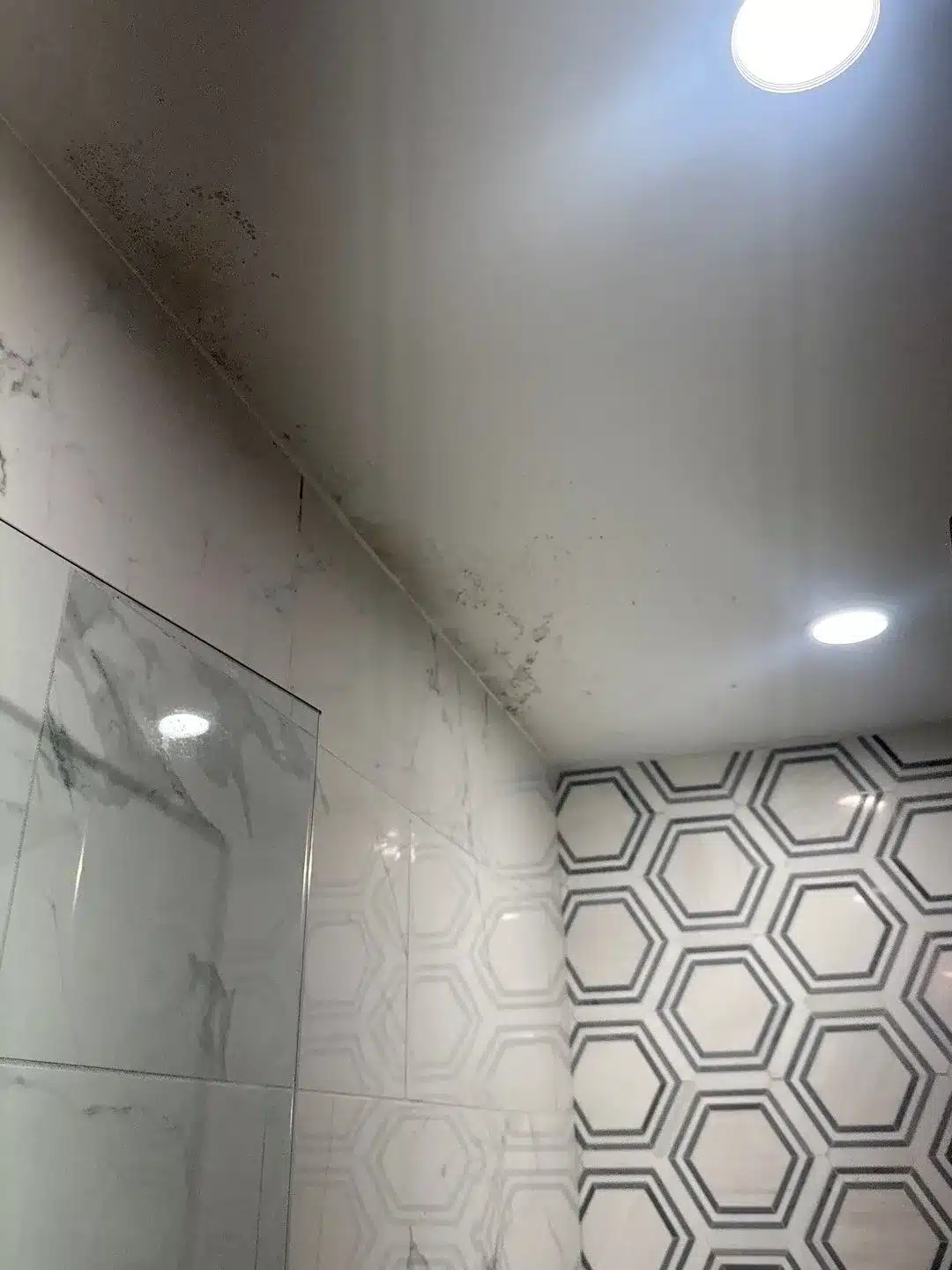
Dark mold-like spotting along a white bathroom ceiling’s junction with marble-look wall tile, beside recessed lights.

Why Black Mold Grows on Bathroom Ceilings in Greater Atlanta

Dark ceiling spots call for a moisture check, not a diagnosis by color. The source and condition of the ceiling determine what needs cleaning, drying, or replacement.

Talk to our team

Dark mold-like growth on a bathroom ceiling usually points to persistent moisture, but its color does not identify the mold. The next step is to determine whether shower-related condensation, a leak, or another source is keeping the ceiling damp before deciding what to remove.

At One Stop Restoration, we offer moisture detection, mold remediation, and reconstruction. A ceiling assessment helps separate the visible symptom from the extent of wet material.

Why does mold grow on a bathroom ceiling?

Mold can grow when a ceiling stays damp enough to support it. Showering adds water vapor to the room. When that humid air meets a cooler ceiling surface, moisture can condense there. Repeated wetting without enough drying can leave the surface persistently damp.

A leak creates a different problem. Water can wet the ceiling from above even when the bathroom air is relatively dry. Surface condensation and concealed wetting can also occur together, so the location of the spots is a clue rather than proof of the source.

EPA recommends keeping indoor relative humidity below 60%, ideally between 30% and 50%, and drying wet areas within 24–48 hours to help prevent mold. That drying window is prevention guidance, not a deadline that predicts when mold will appear. These humidity targets apply to indoor conditions; they are not a measured Greater Atlanta average.

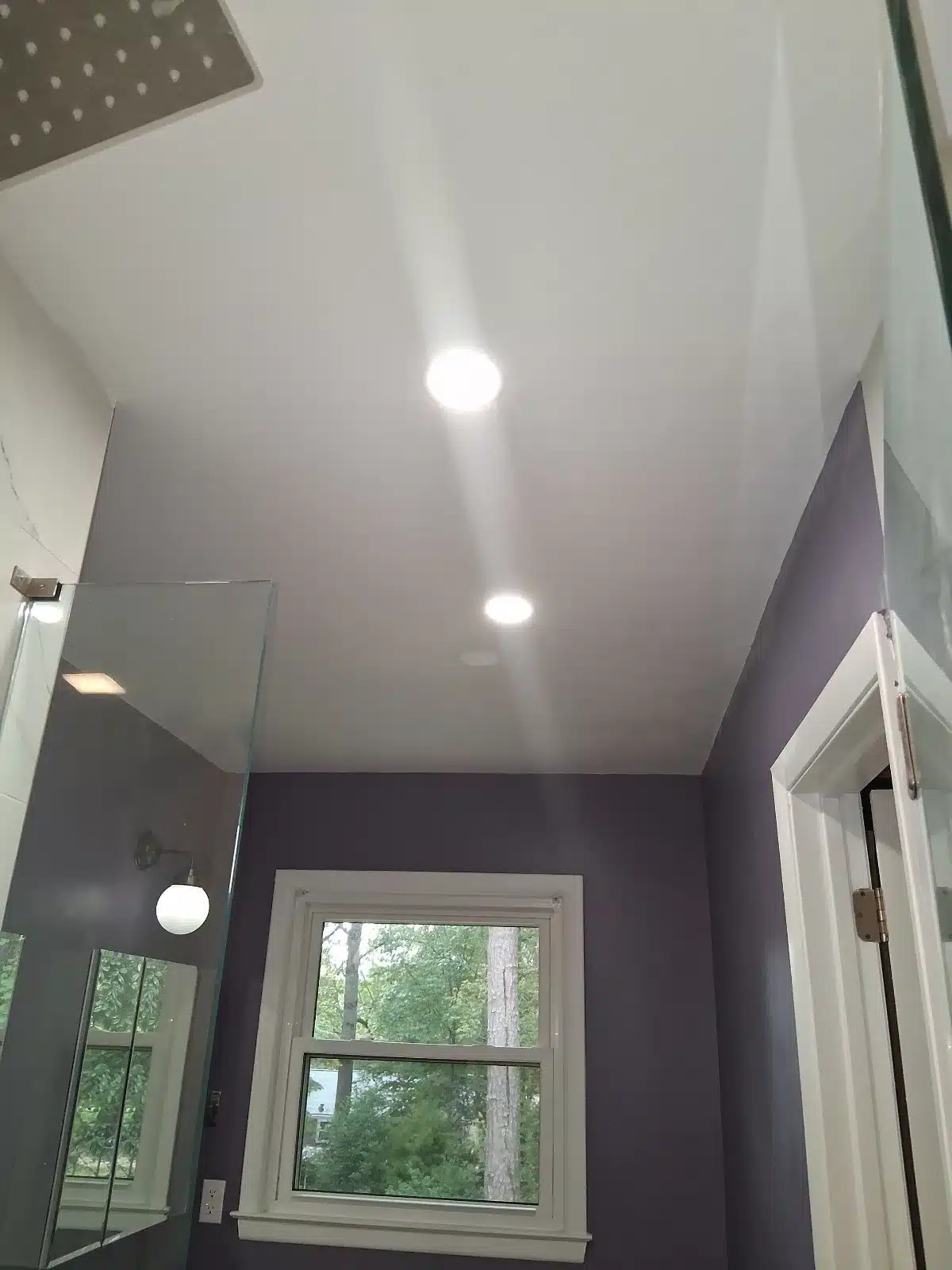
White bathroom ceiling above a shower, with two recessed lights, purple walls, and a white-trimmed window.

Does a black color identify the mold?

No. Black or dark-gray growth does not establish mold species, toxicity, or a health outcome. “Black mold” is a common search term, not a diagnosis that can be made from ceiling color.

Appearance alone also cannot tell you whether the problem stops at the painted surface. A dark patch does not prove that the whole ceiling needs replacement, and a small visible patch does not establish that the material above it is dry. The useful questions are what is wet, why it is wet, and what condition the affected material is in.

How do you find the moisture behind the ceiling spots?

Moisture evidence helps distinguish surface dampness from water within the ceiling. We use infrared assessment, pin and pinless moisture meters, and moisture maps as part of moisture detection.

Infrared assessment shows temperature differences that can guide closer checking; it does not see through the ceiling or identify mold. Pin meters use probes to take readings in material. Pinless meters scan without those probes. Each method has limits, so a single reading or thermal image should not be treated as a complete diagnosis.

A moisture map records where readings were taken and how the wet areas are distributed. Comparing the spotted area with surrounding ceiling areas can help define the investigation beyond what is visible. The pattern may support further checking above the ceiling, but it does not automatically justify opening every affected-looking surface.

They do not guarantee that every concealed source will be found, identify mold species, or replace source repair.

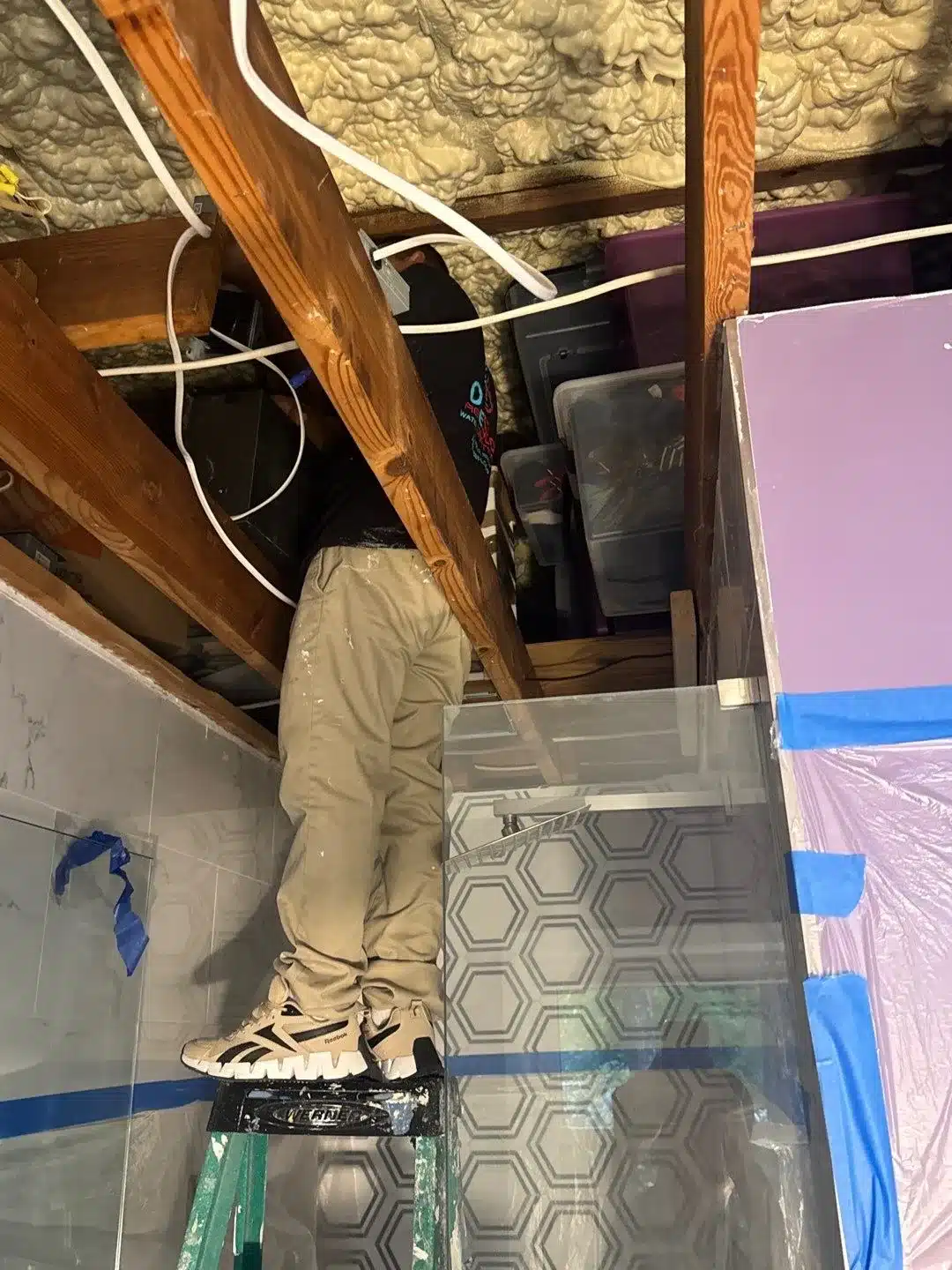
Worker on a stepladder beneath an open bathroom ceiling with exposed wood framing, insulation, and plastic wall protection.

What happens when the ceiling needs remediation and rebuilding?

The work should follow the moisture findings and material condition, not the darkness of the spots. Assessment establishes the affected area. Mold remediation addresses affected materials. Source repair stops the wetting, while reconstruction restores materials that needed removal.

Not every ceiling needs to be opened or replaced. Sound material with a limited surface problem presents a different decision from softened, deteriorated, or concealed mold-affected material. Our guide to wet drywall removal explains the broader keep-or-remove decision.

We coordinate mitigation through reconstruction, but separate trades retain separate responsibilities. We do not provide plumbing repair; contact a plumber when a plumbing defect needs correction. We do not perform air-quality or mold-clearance testing in-house; contact an independent testing provider if testing is needed.

When opening a ceiling is necessary, work-area protection and control of disturbed material matter. Rebuilding should follow correction of the moisture source and completion of the necessary remediation and drying. A fresh coat of paint alone does not resolve continuing wetting.

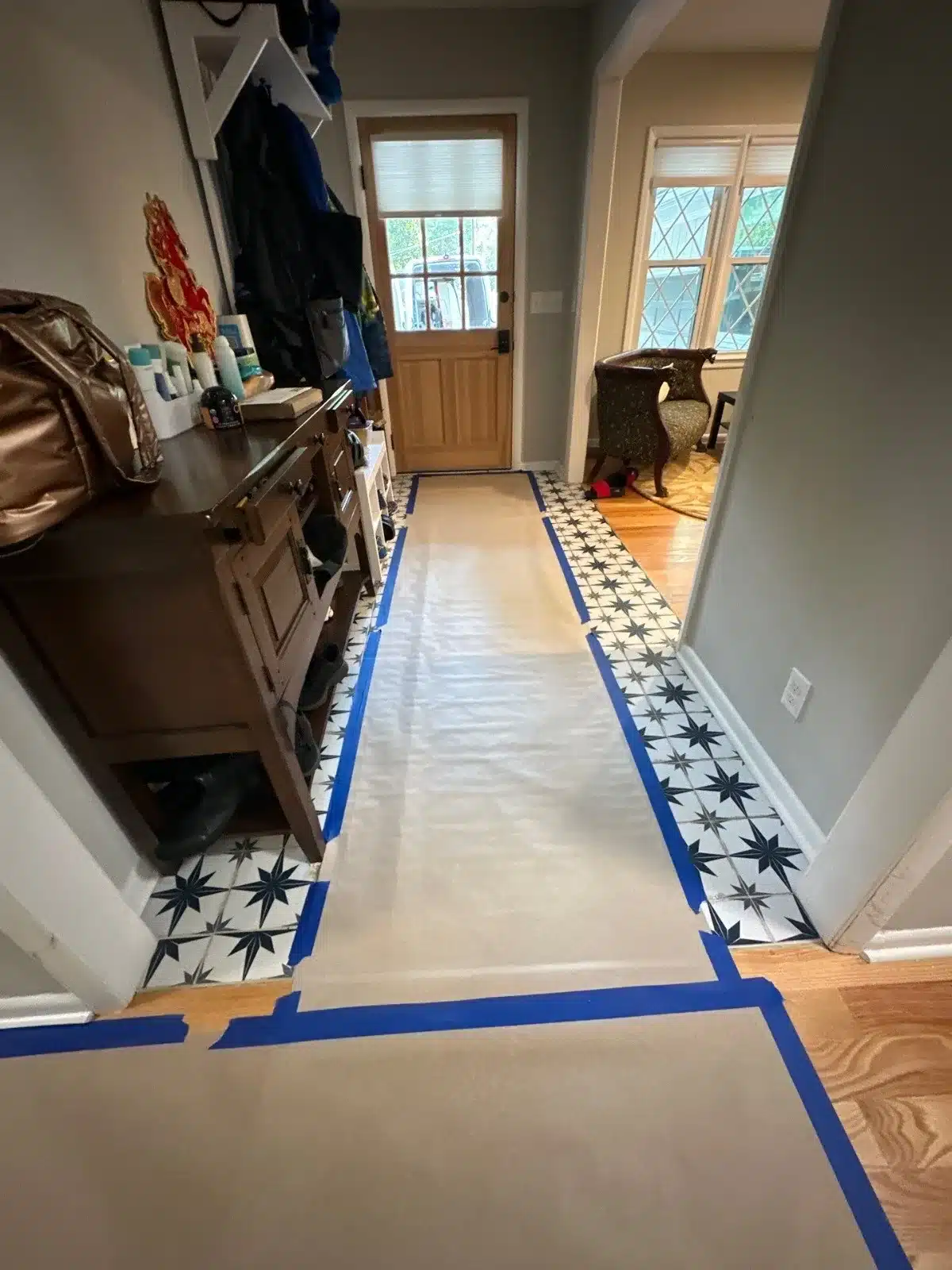
Protective paper secured with blue tape over a star-patterned hallway floor and adjoining hardwood.

What affects the scope, cost, and schedule?

Cost and completion depend on the affected materials, access, source correction, and rebuilding needs. The size of the visible patch alone is not enough to establish the scope.

  • Moisture findings: Surface dampness and moisture within a ceiling assembly can require different access and drying approaches.
  • Material condition: The amount that can remain, compared with the amount requiring removal, changes both remediation and reconstruction.
  • Source repair: Confirm who will correct the source and when that work can be completed. Regulated work needs the appropriately licensed trade; Georgia contracting requirements depend on scope, class, and applicable exemptions.
  • Reconstruction: The area opened and the finishes being restored affect the work after remediation.
  • Household access: Bathroom availability, access above the ceiling, and protection of adjacent finishes affect work-area planning.
  • The Atlanta Office of Buildings uses Accela, but that is not the permit route for every Greater Atlanta address.
  • Historic review: Within Atlanta, parcel designation and proposed work determine the applicable review. Atlanta historic preservation guidance distinguishes review routes; an older-looking home does not automatically require a hearing.
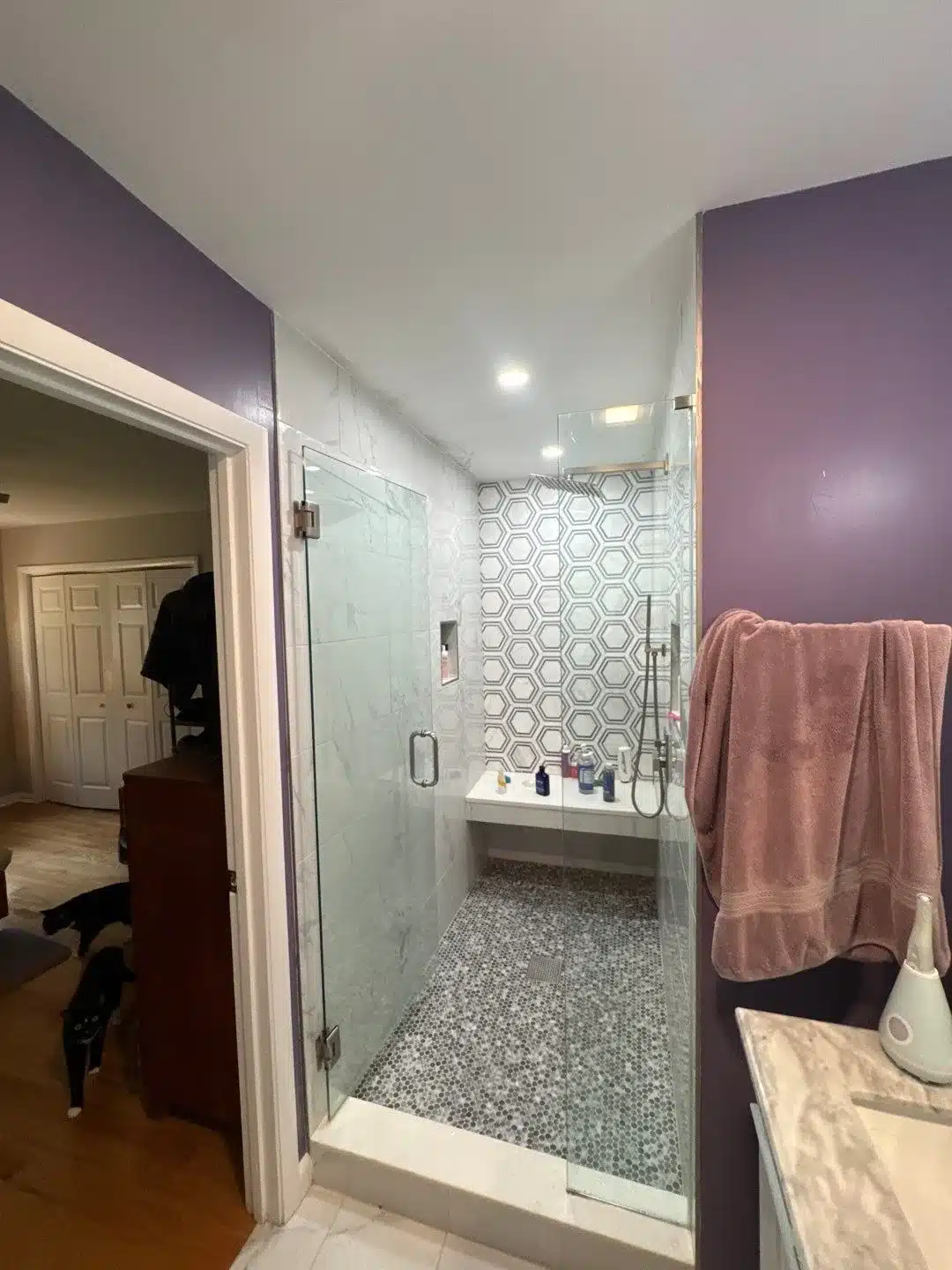
Glass-enclosed shower with marble-look wall tiles, a hexagonal-patterned feature wall and a bench.

What can you do now to limit additional moisture?

Frequently asked questions

Will homeowners insurance cover bathroom ceiling mold?

Coverage cannot be determined from the ceiling spots alone. Your insurer must evaluate the cause and the terms of your policy; a restoration scope does not establish coverage or payment. Ask your insurer about your specific circumstances, and use our Georgia water damage claim guide for background before making assumptions about covered work.

Can One Stop Restoration rebuild the ceiling after mold remediation?

Yes. We offer reconstruction and rebuild as well as mold remediation. Before authorizing work, confirm whether the proposed scope includes ceiling replacement and finish work, and which items remain separate.

Who repairs the leak if plumbing caused the ceiling moisture?

Call a licensed plumber to repair the leak; we do not provide plumbing repair.

Does Georgia require a separate mold-remediator license?

The Georgia Department of Public Health describes mold inspection, testing, and remediation as unregulated; its guidance does not establish a separate mold-remediator license requirement. That does not remove other applicable construction, chemical-use, safety, or local duties. Check credentials against the actual work proposed, especially when remediation also involves rebuilding.

Dealing with water, fire or mold right now?

Tell us what you are seeing and where. We scope the damage from instrument readings before anything is opened, and document it for your insurer from the first hour.