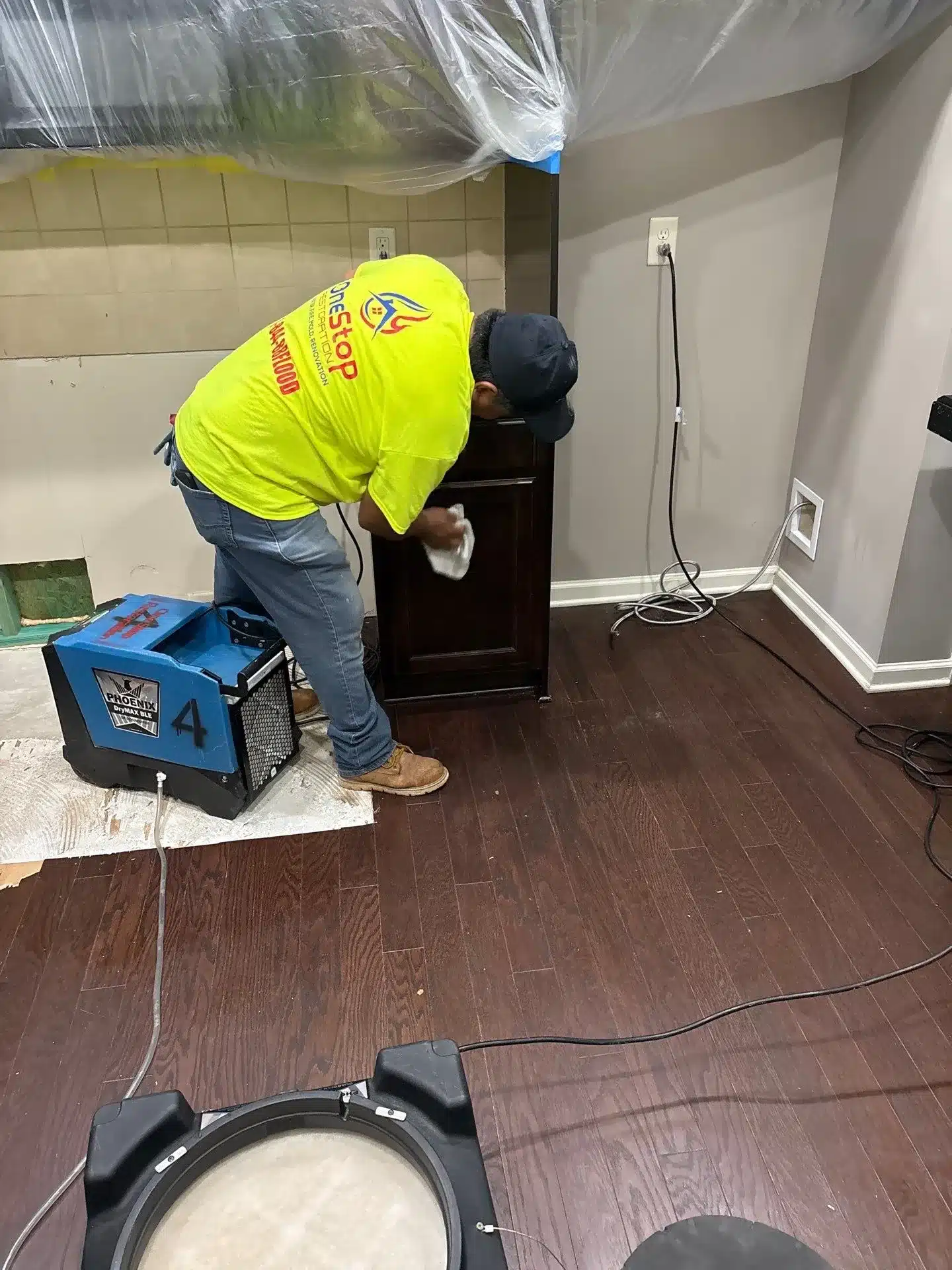
Worker in yellow shirt cleaning a dark wooden cabinet in a room with wood flooring and plastic sheeting overhead.

Greater metro area

Water damage restoration in Atlanta

When you call about water, fire or mold in Atlanta, we ask what happened, check access and explain the next assessment steps.

For active damage in Atlanta, call 404-777-7077 to discuss emergency cleanup. One Stop Restoration handles water removal, structural drying, mold remediation, sewage cleanup, and fire and storm damage for homes and commercial properties. Emergency telephone answering is available 24/7, including holidays.

Our coordinated approach takes the project from mitigation—limiting further damage—through reconstruction, with one file and one point of contact. You can discuss both the immediate cleanup and the rebuilding work with us, rather than treating them as unrelated projects.
Rain, freezes and replacement materials

Atlanta’s rainfall makes the entry path part of the assessment. The airport station’s 1991–2020 climate normals report 50.43 inches of annual precipitation. After rain-related damage, we check affected ceilings, lower walls and ground-level spaces rather than stopping at the visible puddle. Tell us where water first appeared and whether it returns during rain; that helps separate an ongoing entry problem from moisture left inside materials.

Seasonal freezes also make supply-line damage relevant. After a pipe leak, cleanup may need to reach adjoining rooms or the ceiling below. We do not repair plumbing; call a plumber to correct the source. Our work addresses the water and affected building materials.

For properties in historic, landmark or special overlay districts, replacement choices may need design approval. Keep details of damaged exterior materials available. Checking the property’s designation before ordering replacements helps establish which approvals belong ahead of reconstruction.

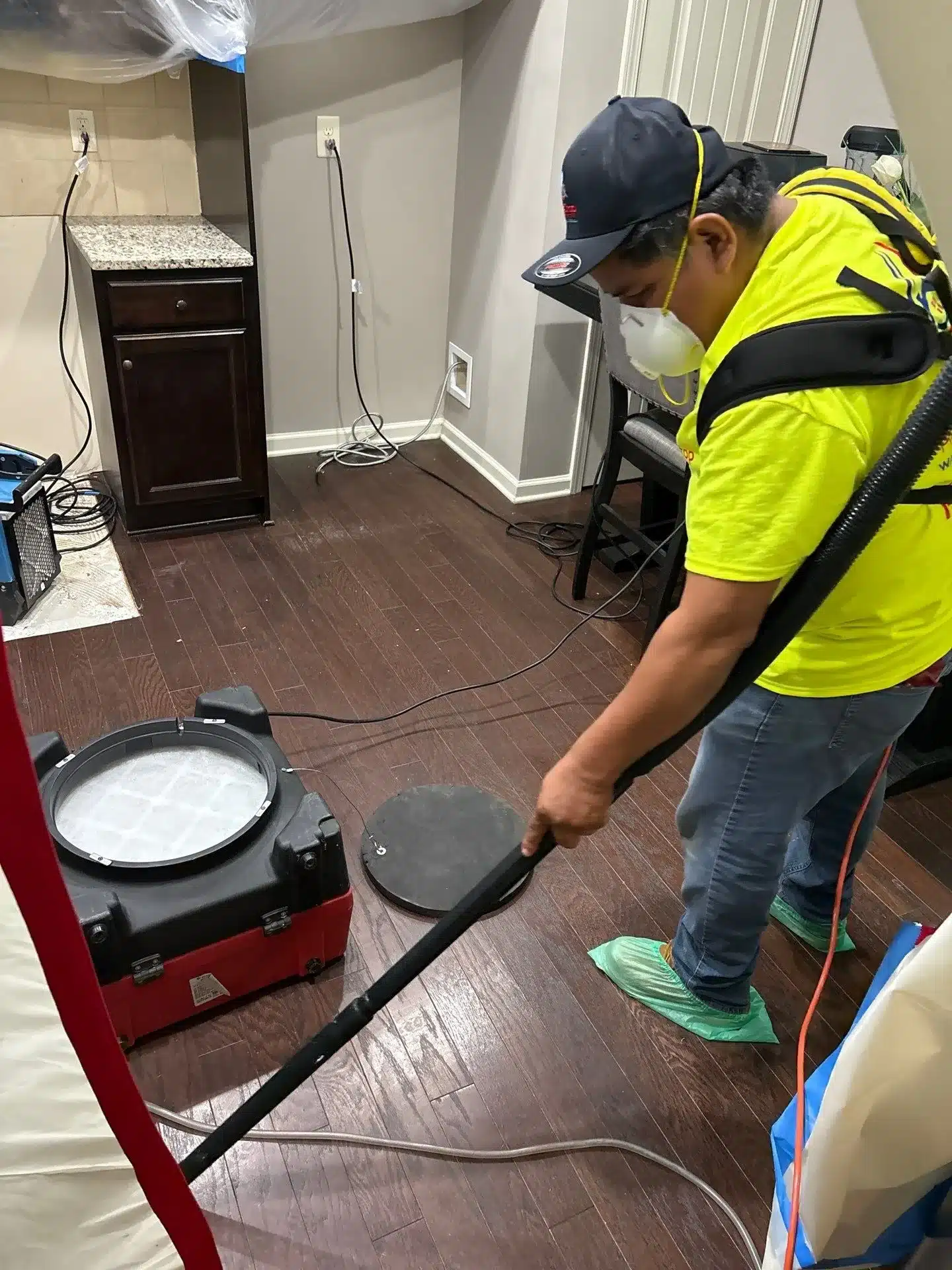
Worker in safety vest operating water extraction equipment on dark wood flooring indoors

Cleanup, drying and rebuilding services

We handle water, mold, sewage, fire and storm damage in Atlanta homes, commercial buildings and industrial spaces.

Water removal and drying

We extract standing water, check moisture in surrounding materials and dry affected structures after pipe leaks, slab leaks or flooding. We do not repair plumbing; contact a plumber for source repairs.

Mold remediation

We contain affected work areas and remove mold-damaged materials while addressing remaining moisture. Clearance sampling is performed by an independent hygienist, separate from our remediation work.

Sewage backup cleanup

We remove sewage-contaminated water, assess affected porous materials and clean the work area. We establish removal boundaries and drying needs before planning replacement finishes.

Fire and storm restoration

We assess fire, smoke and storm damage, clean affected building surfaces and plan structural repairs. Water from firefighting or storm entry is included in the moisture assessment.

Commercial and industrial mitigation

We assess water damage in commercial and industrial properties, then plan extraction and drying around affected areas and access needs. Managers can identify restricted spaces and operating constraints during assessment.

Reconstruction and rebuild

We rebuild affected drywall, flooring, cabinetry and structural framing after mitigation. We review replacement materials, the agreed scope and applicable approvals before moving into reconstruction.

Measure before opening walls and floors

A stain shows where moisture became visible. We use infrared assessment to find temperature differences that need closer inspection, then check materials with pin or pinless moisture meters. A thermal image guides the inspection; meter readings help establish which materials are wet. We compare affected areas with nearby dry material and follow the path through adjoining walls, floors and ceilings.

Those findings help set the removal boundary. We consider the material’s condition, contamination and access for drying before recommending what stays or goes. We explain where an opening is needed and what we expect to inspect behind it. Our wet drywall removal guide explains the factors behind that decision. If opening a cavity reveals additional damage, we review the changed scope with you.

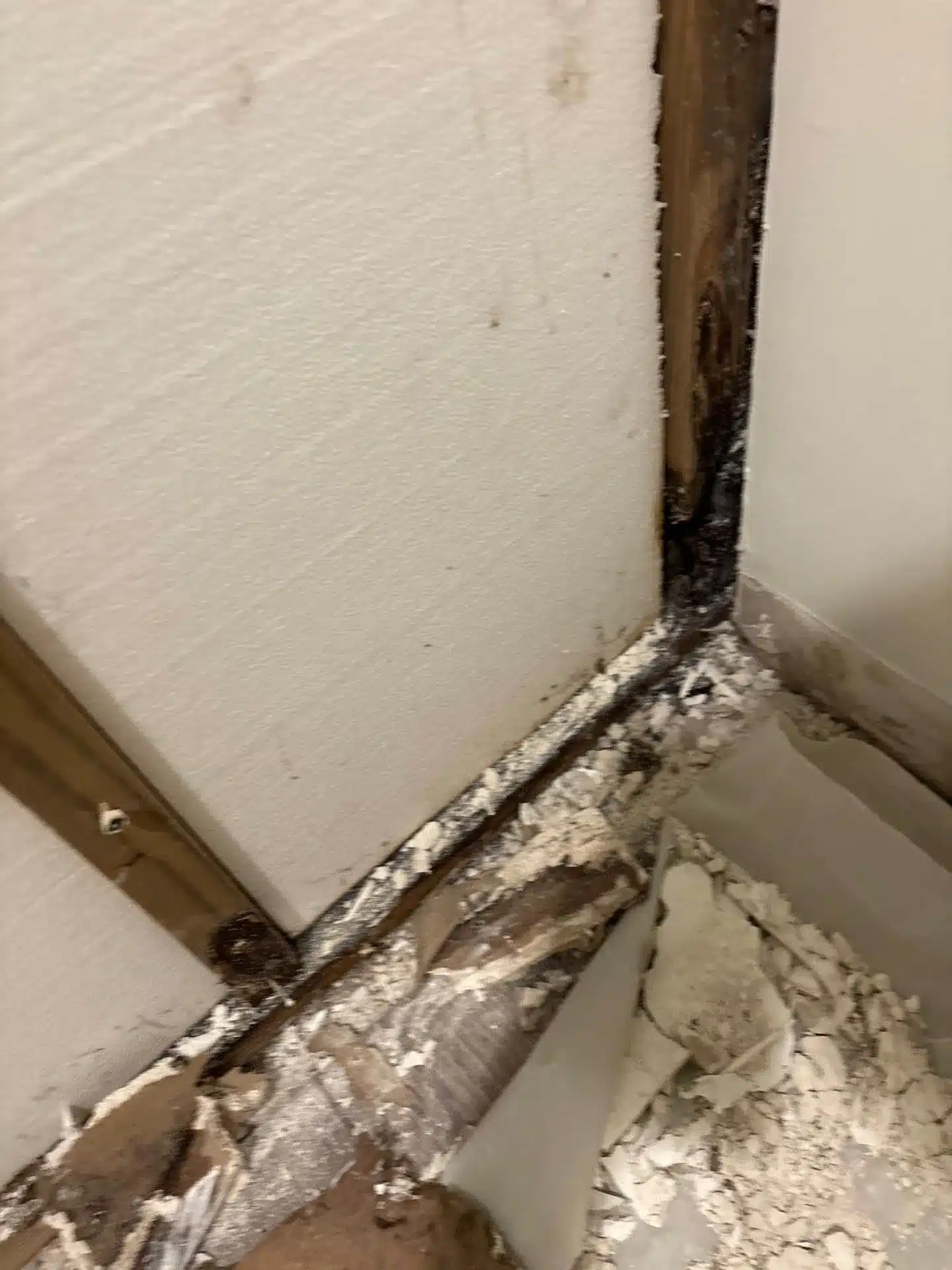
White drywall corner with dark wood stud and joint compound dust along the seam

From your call to handover

We explain the next stage before moving from cleanup into rebuilding.

  • Tell us the source, affected rooms, access restrictions and immediate safety concerns.
  • We inspect affected materials and explain the proposed cleanup and removal boundaries.
  • We remove water, address damaged materials and set up controlled drying.
  • We check drying progress and review any changes to the work scope.
  • We confirm reconstruction requirements, complete agreed repairs and walk through the finished work.

Give the adjuster a clear scope

Our documented project file brings together moisture readings, moisture maps and the proposed restoration scope for the adjuster’s review. The readings record conditions found during assessment; the maps identify affected areas. We describe proposed work by task so the adjuster can compare the estimate with the documented damage. Clear records help explain why work is needed and support the carrier’s payment review.

Ask your adjuster what supporting information is needed and how to submit additional findings. If concealed damage changes the estimate, we explain the added work and its basis in the project file. Direct insurance billing is available. Documentation supports a claim, but it does not guarantee payment. Only your carrier authorizes coverage and determines payment under your policy, including applicable deductibles.

Check approvals before reconstruction begins

Within city limits, the Office of Buildings issues building permits and conducts inspections. Applications use the city’s Accela-based permitting route. Confirm the property address and proposed scope before submission. Plan for application review and any requested corrections before permit issuance and the start of permitted reconstruction.

Before tearing out older finishes, ask a qualified specialist which state testing requirements apply to the materials and proposed work. We do not perform asbestos abatement; stop work if suspect materials are found and call a licensed asbestos specialist before disturbing them.

Permits issued byCity of Atlanta Department of City Planning, Office of Buildings
AreaAtlanta, GA

Service across the city and nearby

We serve Atlanta and nearby Decatur and Brookhaven, with coverage across Fulton and DeKalb counties; share your property address when calling.

  • Buckhead Village, Peachtree Hills, Midtown, Downtown, Old Fourth Ward, West End, Grant Park, East Atlanta
  • East Point, Hapeville, Decatur, Brookhaven, Smyrna, College Park

What affects the cost in Atlanta

Water damage restoration costs in Atlanta depend on how far moisture has traveled, which materials are affected and what access drying requires. A wet floor surface calls for a different scope than water trapped beneath flooring or inside a ceiling. Contamination and damaged cabinetry or framing also change the removal and rebuilding work.

For designated historic or overlay properties, replacement-material review and permit requirements can affect the reconstruction scope. We separate cleanup, drying and rebuilding items so you can review the proposed work. Our restoration cost guide explains the main cost drivers; the property assessment establishes your scope.

Questions from Atlanta homeowners

What should I do while water is still entering?
Keep clear of standing water near electrical equipment. If you can reach the water shutoff safely, turn it off for a supply-line leak. Call 404-777-7077 and describe where water is entering. We handle water removal and drying. We do not repair plumbing; contact a plumber to correct a pipe leak.
Will all the wet drywall need to come out?
We assess the drywall’s condition, contamination and moisture before recommending removal. Infrared assessment helps identify areas to check, and moisture meters help define the affected boundary. We explain which sections may stay and which need opening. Concealed damage can change the scope once a cavity is accessible.
Does an older house automatically need historic approval?
Approval depends on the property’s designation and proposed work. Historic, landmark or overlay properties may need design review before a building-permit application proceeds. Check the address and replacement scope before ordering exterior materials. Depending on the property, review may involve a Certificate of Appropriateness or Urban Design Commission approval.
Who checks the property after mold remediation is complete?
Clearance sampling is assigned to an independent hygienist. We perform remediation, not in-house clearance testing. Before work begins, ask how the clearance scope and findings will be communicated. The moisture source also needs attention so the rebuilding plan addresses the conditions that allowed materials to remain damp.
Can you handle water damage in an occupied commercial building?
We provide commercial water restoration and industrial mitigation. Tell us which areas are occupied, how crews can enter and whether any spaces have restricted access. We use those details when planning the assessment, extraction and drying. The work scope and building conditions determine which areas can remain accessible.

Discuss damage at your Atlanta property

Call 404-777-7077 about damage at your Atlanta property, or send non-urgent details to info@onestop-restoration.com so we can discuss the next step.

One Stop Restoration404-777-7077
6699 Peachtree Industrial Blvd, Unit D, Norcross, GA 30092